
Del i serien Religion and Global Politics
Islamic Political Identity in Turkey
Häftad, Engelska, 2005
1 139 kr
Beställningsvara. Skickas inom 5-8 vardagar. Fri frakt för medlemmar vid köp för minst 249 kr.
Finns i fler format (1)
In November of 2002, the Justice and Development Party swept to victory in the Turkish parliamentary elections. Because of the party's Islamic roots, its electoral triumph has sparked a host of questions both in Turkey and in the West: Does the party harbor a secret Islamist agenda? Will the new government seek to overturn nearly a century of secularization stemming from Kemal Atatürk's early-twentieth-century reforms? Most fundamentally, is Islam compatible with democracy? In this penetrating work, M. Hakan Yavuz seeks to answer these questions, and to provide a comprehensive analysis of Islamic political identity in Turkey. He begins in the early twentieth century, when Kemal Atatürk led Turkey through a process of rapid secularization and crushed Islamic opposition to his authoritarian rule. Yavuz argues that since Atatürk's death in 1938, however, Turkey has been gradually moving away from his militant secularism and experiencing "a quiet Muslim reformation." Islamic political identity is not homogeneous, says Yavuz, but can be modern and progressive as well as conservative and potentially authoritarian. While the West has traditionally seen Kemalism as an engine for reform against "reactionary" political Islam, in fact the Kemalist establishment has traditionally used the "Islamic threat" as an excuse to avoid democratization and thus hold on to power. Yavuz offers an account of the "soft coup" of 1997, in which the Kemalist military-bureaucratic establishment overthrew the democratically elected coalition government, which was led by the pro-Islamic Refah party. He argues that the soft coup plunged Turkey into a renewed legitimacy crisis which can only be resolved by the liberalization of the political system. The book ends with a discussion of the most recent election and its implications for Turkey and the Muslim world. Yavuz argues that Islamic social movements can be important agents for promoting a democratic and pluralistic society, and that the Turkish example holds long term promise for the rest of the Muslim world. Based on extensive fieldwork and interviews, this work offers a sophisticated new understanding of the role of political Islam in one of the world's most strategically important countries.
Produktinformation
- Utgivningsdatum2005-11-24
- Mått235 x 161 x 18 mm
- Vikt494 g
- FormatHäftad
- SpråkEngelska
- SerieReligion and Global Politics
- Antal sidor342
- FörlagOUP USA
- ISBN9780195188233
Tillhör följande kategorier
Hoppa över listan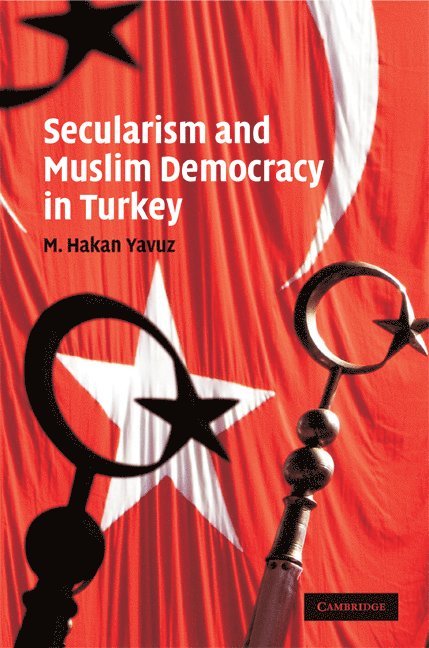


Du kanske också är intresserad av
Del 28
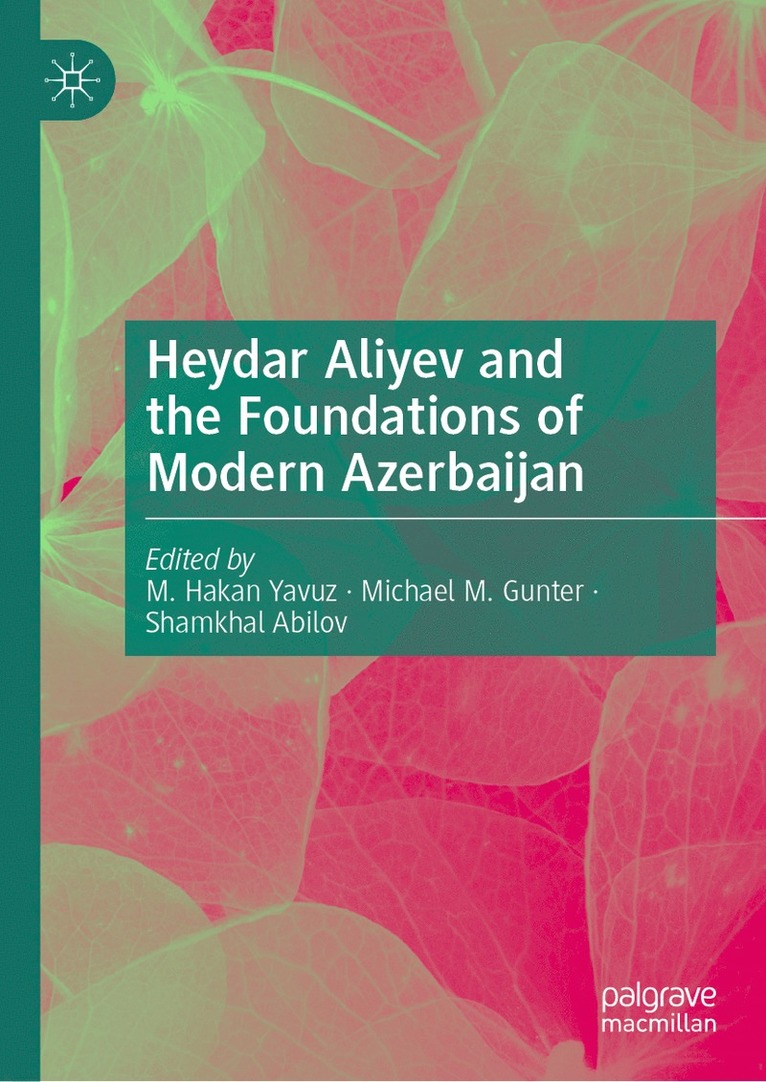
Heydar Aliyev and the Foundations of Modern Azerbaijan
M. Hakan Yavuz, Michael M. Gunter, Shamkhal Abilov
Inbunden, 2024
2 209 kr