
Del i serien SUNY series in the Thought and Legacy of Leo Strauss
Islamic Philosophy and the Crisis of Modernity
Leo Strauss's Relationship with al-Fārābī, Avicenna, and Averroes
Häftad, Engelska, 2025
539 kr
Skickas . Fri frakt för medlemmar vid köp för minst 249 kr.
Finns i fler format (1)
Unveils the profound influence of medieval Islamic philosophy on the thought of Leo Strauss.This study examines the impact of the medieval Muslim philosophers al-Fārābī, Ibn Sīnā (Avicenna) and Ibn Rushd (Averroes) on Leo Strauss. Through meticulous source analysis, Georges Tamer critically evaluates Strauss's interpretation of their works. Furthermore, he explores how Islamic philosophy shaped Strauss's understanding of Maimonides and Plato, providing a compelling solution to the modernity crisis he identified. Offering fresh perspectives on the evolution of Strauss's thought and his distinctive approach to Arabic sources, Tamer sheds light on the pivotal role of al-Fārābī, the most significant Muslim philosopher in Strauss's view, including key aspects of al-Fārābī's political philosophy and his nuanced take on Plato's ideas. Islamic Philosophy and the Crisis of Modernity is a valuable addition to current scholarship on Strauss. Both philosophically erudite and philologically rigorous, Tamer presents the reader with a balanced perspective on Strauss's insights without being overly reverential or dismissive.
Produktinformation
- Utgivningsdatum2025-06-02
- Mått152 x 229 x 23 mm
- Vikt476 g
- FormatHäftad
- SpråkEngelska
- SerieSUNY series in the Thought and Legacy of Leo Strauss
- Antal sidor336
- FörlagState University of New York Press
- ISBN9798855800128
Tillhör följande kategorier
Hoppa över listan





Mer från samma författare
Del 1
Concept of Human Rights in Judaism, Christianity and Islam
Catharina Rachik, Georges Tamer
Häftad, 2022
489 kr
Del 3
Concept of Justice in Judaism, Christianity and Islam
Catharina Rachik, Georges Tamer
Häftad, 2025
469 kr
Exegetical Crossroads
Georges Tamer, Regina Grundmann, Assaad Elias Kattan, Karl Pinggéra
Inbunden, 2017
1 989 kr
Hoppa över listan



Mer från samma serie
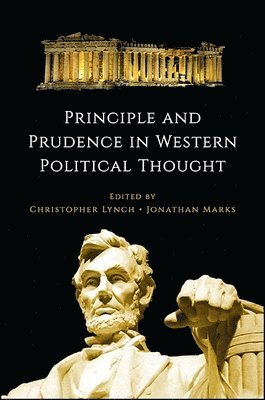
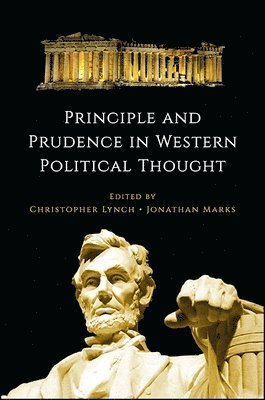
Principle and Prudence in Western Political Thought
Christopher Lynch, Jonathan Marks
Häftad, 2017
619 kr
Hoppa över listan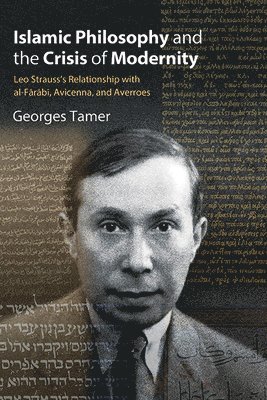


Du kanske också är intresserad av
Principle and Prudence in Western Political Thought
Christopher Lynch, Jonathan Marks
Inbunden, 2016
1 409 kr
- Nyhet
Del 3
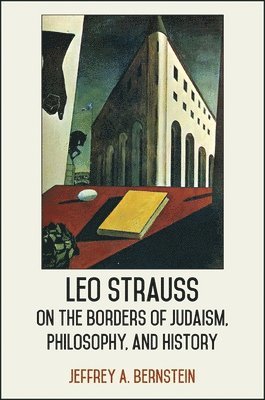
Leo Strauss on the Borders of Judaism, Philosophy, and History
Jeffrey A. Bernstein
Inbunden, 2015
1 399 kr
Principle and Prudence in Western Political Thought
Christopher Lynch, Jonathan Marks
Häftad, 2017
619 kr