
Ironic Filmmaking of Stephen Frears
Inbunden, Engelska, 2016
2 749 kr
Beställningsvara. Skickas inom 10-15 vardagar. Fri frakt för medlemmar vid köp för minst 249 kr.
Finns i fler format (1)
Stephen Frears has a career approaching over half-a-century, directing films of astonishing variety, beauty, and daring, and yet many often have trouble remembering his name. The Ironic Filmmaking of Stephen Frears celebrates this great filmmaker, beginning with a short biography of Frears, general observations on unifying themes and styles in his oeuvre, and the characterization of his manner of directing. By focusing on 10 key films, Lesley Brill finds coherence in Frears' characteristic irony and in his concentration on many kinds of love. In movies such as My Beautiful Laundrette, Dangerous Liaisons, High Fidelity, The Queen, Philomena, and many others, Frears portrays widely varied situations and characters with a combination of insight, skepticism, and sympathy. He has the passionate, unjudgmental focus of an artist who stands simultaneously at a distance from his subjects and within their worlds. Through Frears' work is widely admired, Brill argues that he has attracted little scholarly writing because of a combination of the diffidence of his self-presentation and the difficulty of explicating the complex ideas and characters of his films. The Ironic Filmmaking of Stephen Frears is meant to inspire others to further examine his films individually and his career as a whole.
Produktinformation
- Utgivningsdatum2016-08-11
- Mått152 x 229 x 19 mm
- Vikt535 g
- FormatInbunden
- SpråkEngelska
- Antal sidor272
- FörlagBloomsbury Publishing Plc
- ISBN9781501320330
Hoppa över listan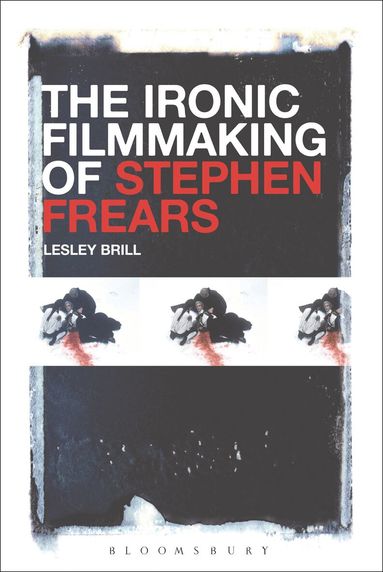

Du kanske också är intresserad av
- Nyhet
Del 7
- Nyhet
Del 4
- Nyhet
Del 6
- Nyhet
Del 3
- Nyhet
- Nyhet
Del 11