
Del 27 i serien Postcolonialism Across the Disciplines
Into Our Labours
Work and its Representation in World-Literary Perspective
Inbunden, Engelska, 2022
2 929 kr
Beställningsvara. Skickas inom 5-8 vardagar. Fri frakt för medlemmar vid köp för minst 249 kr.
Finns i fler format (1)
Into our Labours explores the literary representation of work across the globe since 1850, setting out to show that the literature of modernity is best understood in the light of the worlding of capitalism. The book proposes that a determinative relation exists between changing modes of work and changes in the forms, genres, and aesthetic strategies of the writing that bears witness to them. Two aspects of the ‘worlding’ of modernity, especially, are emphasised. First, an ‘inaugural’ experience of capitalist social relations, whose literary registration sometimes makes itself known through a crisis of representation, as the forms of space- and time-consciousness demanded by life in contexts in which market-oriented commodity production has become the dominant form of social labour are counterposed with inherited ways of seeing and knowing, now under acute pressure if not already obsolete. Second, a moment corresponding to the consolidation, regularisation and global dispersal of capitalist development. Into Our Labours focuses on the naturalisation of capitalist social relations: forms of sociality and solidarity, ideologies of familialism, individualism and work, relations between the sexes and the generations. Arguing that the only plausible term for the vast body of literary work engendered by the worlding of capitalist social relations is ‘modernist’, the book proposes that it is then important to challenge the still-entrenched Eurocentric understandings of modernism. Modernism is neither originally nor paradigmatically ‘Western’ in provenance; and its temporal parameters are much broader than are usually assumed in modernist studies, extending both backward and forward in time.
Produktinformation
- Utgivningsdatum2022-04-15
- Mått163 x 239 x undefined mm
- FormatInbunden
- SpråkEngelska
- SeriePostcolonialism Across the Disciplines
- Antal sidor200
- FörlagLiverpool University Press
- ISBN9781802070101
Tillhör följande kategorier
Hoppa över listan
Mer från samma författare
The Cambridge Companion to Postcolonial Literary Studies
Neil Lazarus, Neil Lazarus
Häftad, 2004
709 kr
Del 6
Nationalism and Cultural Practice in the Postcolonial World
Neil Lazarus, Timothy Brennan
Inbunden, 1999
2 289 kr
Del 6
Nationalism and Cultural Practice in the Postcolonial World
Neil Lazarus, Timothy Brennan
Häftad, 1999
979 kr
Del 11
Del 17
Combined and Uneven Development
Sharae Deckard, Nicholas Lawrence, Neil Lazarus, Graeme Macdonald, Upamanyu Pablo Mukherjee, Benita Parry, Stephen Shapiro
Inbunden, 2015
3 069 kr
Hoppa över listan
Mer från samma serie
Del 15
Del 11
Del 16
Del 17
Combined and Uneven Development
Sharae Deckard, Nicholas Lawrence, Neil Lazarus, Graeme Macdonald, Upamanyu Pablo Mukherjee, Benita Parry, Stephen Shapiro
Inbunden, 2015
3 069 kr
Del 17
Combined and Uneven Development
Sharae Deckard, Nicholas Lawrence, Neil Lazarus, Graeme Macdonald, Upamanyu Pablo Mukherjee, Benita Parry, Stephen Shapiro
Häftad, 2015
749 kr
Del 18
Del 19
Del 20
Del 21
Del 5
Hoppa över listan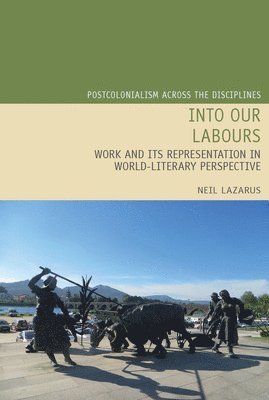
Du kanske också är intresserad av
Del 27
Del 17
Combined and Uneven Development
Sharae Deckard, Nicholas Lawrence, Neil Lazarus, Graeme Macdonald, Upamanyu Pablo Mukherjee, Benita Parry, Stephen Shapiro
Inbunden, 2015
3 069 kr
Del 11
The Cambridge Companion to Postcolonial Literary Studies
Neil Lazarus, Neil Lazarus
Häftad, 2004
709 kr
Del 6
Nationalism and Cultural Practice in the Postcolonial World
Neil Lazarus, Timothy Brennan
Häftad, 1999
979 kr
Del 17
Combined and Uneven Development
Sharae Deckard, Nicholas Lawrence, Neil Lazarus, Graeme Macdonald, Upamanyu Pablo Mukherjee, Benita Parry, Stephen Shapiro
Häftad, 2015
749 kr