
International Organizations and Small States
Participation, Legitimacy and Vulnerability
Inbunden, Engelska, 2021
1 639 kr
Beställningsvara. Skickas inom 5-8 vardagar. Fri frakt för medlemmar vid köp för minst 249 kr.
Finns i fler format (1)
International Organizations (IOs) are vital institutions in world politics in which cross-border issues can be discussed and global problems managed. This path-breaking book shows the efforts that small states have made to participate more fully in IO activities. It draws attention to the challenges created by widened participation in IOs and develops an original model of the dilemmas that both IOs and small states face as the norms of sovereign equality and the right to develop coincide.Drawing on extensive qualitative data, including more than 80 interviews conducted for this book, the authors find that the strategies which both IOs and small states adopt to balance their respective dilemmas can explain both continuity and change in their interactions with institutions ranging from UN agencies to the World Trade Organization.
Produktinformation
- Utgivningsdatum2021-10-19
- Mått156 x 234 x 17 mm
- Vikt499 g
- FormatInbunden
- SpråkEngelska
- Antal sidor218
- FörlagBristol University Press
- ISBN9781529207682
Tillhör följande kategorier
Hoppa över listan





Mer från samma författare
Memory and Institutional Amnesia in Government
Alastair Stark, Hridesh Gajurel, Jack Corbett, Dennis C. Grube, Heather Lovell, Rodney J. Scott
Inbunden, 2026
1 589 kr
Extreme Guns and Babes for an Adult World: Black and white Edition
Jack Corbett, Jeremy McTeague
Häftad
319 kr
Hoppa över listan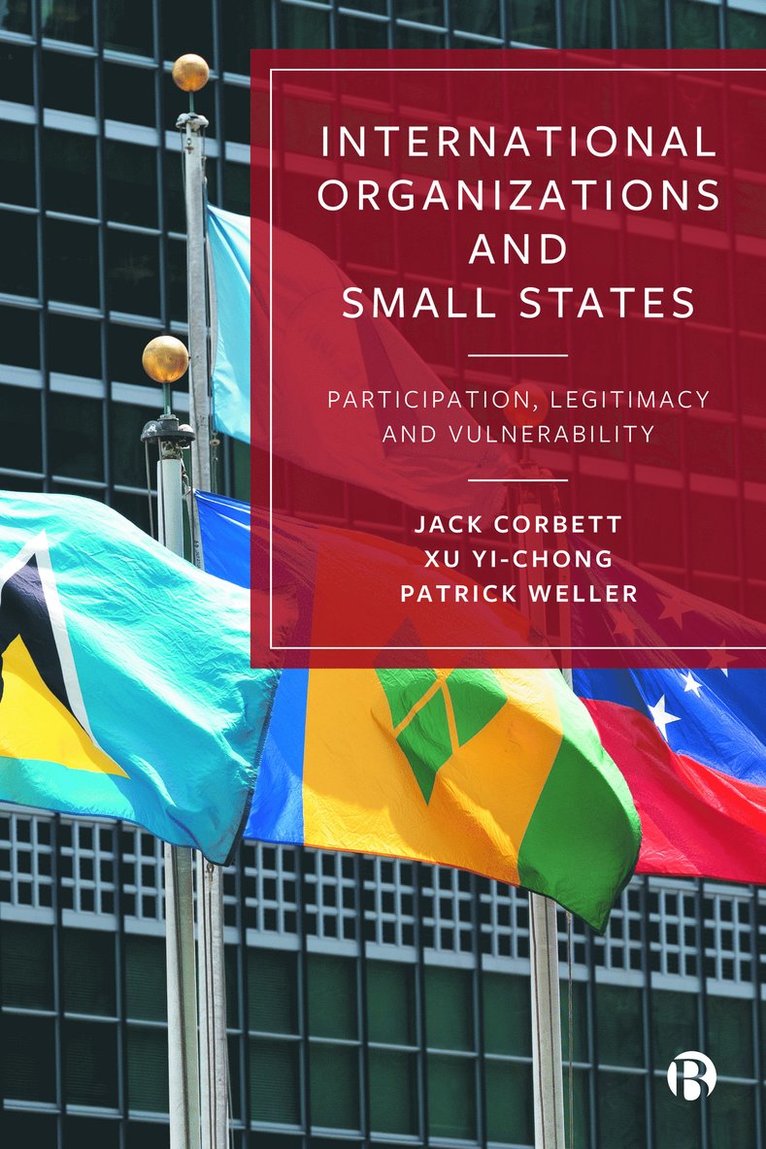


Du kanske också är intresserad av
International Organizations and Small States
Jack Corbett, Xu Yi-chong, Patrick Weller
Häftad, 2023
519 kr
Political Economy of Sovereign Wealth Funds
Xu Yi-chong, Gawdat Bahgat, Xu Yi-Chong, Gawdat Bahgat
Inbunden, 2010
739 kr