
Del 1
Intellectuals at a Crossroads
The Changing Politics of China's Knowledge Workers
Inbunden, Engelska, 2003
1 399 kr
Tillfälligt slut
Finns i fler format (1)
A survey of contemporary Chinese intellectuals.Zhidong Hao's fascinating book, Intellectuals at a Crossroads, examines groups of contemporary Chinese intellectuals, their successes, failures, identity contradictions, and ethical dilemmas. Three categories of intellectuals are studied: organic intellectuals who serve specific interests, from government and business to working class movements; critical intellectuals who defy authority with continued social criticism; and "unattached" intellectuals who are fast being professionalized. Using a historical-comparative approach enhanced with demographic and rare interview data, the book bridges the traditional with the modern and the Chinese with the foreign by exploring how these intellectuals are adapting to their roles and influencing political, economic, and social change in the "new" China.
Produktinformation
- Utgivningsdatum2003-08-28
- Mått152 x 229 x 40 mm
- Vikt798 g
- FormatInbunden
- SpråkEngelska
- SerieSUNY series, INTERRUPTIONS: Border Testimony(ies) and Critical Discourse/s
- Antal sidor524
- FörlagState University of New York Press
- ISBN9780791455791
Tillhör följande kategorier
Hoppa över listan
Mer från samma författare
Del 1
Del 54
Del 54
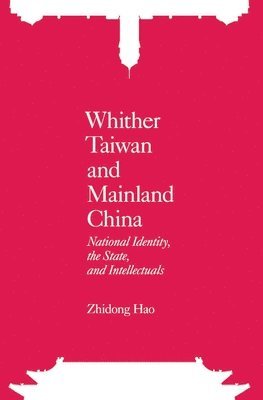
Whither Taiwan and Mainland China – National Identity, the State, and Intellectuals
Zhidong Hao
Inbunden, 2010
819 kr
Hoppa över listan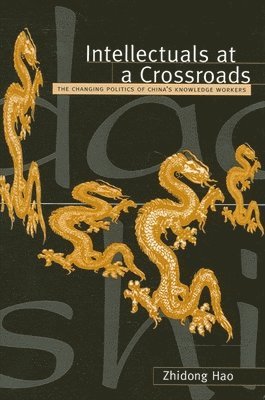

Du kanske också är intresserad av
Del 1
Whither Taiwan and Mainland China – National Identity, the State, and Intellectuals
Zhidong Hao
Inbunden, 2010
819 kr
Del 1
Del 54
Del 54