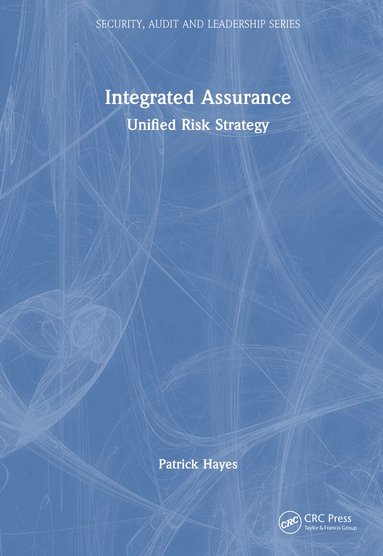
Integrated Assurance: Unified Risk Strategy by Patrick Hayes is a refreshing and grounded look at the real challenges that large enterprises face when trying to align cybersecurity, IT operations, and risk. Hayes does not pretend that these groups naturally work together or that a new tool will magically solve long-standing issues. Instead, he offers a practical, experience-based model that acknowledges the organizational friction many leaders encounter every day.One of the strongest and most memorable points in the book is Hayes’ message that security is no longer a separate function but an operational competency that must evolve in step with the business. This idea stands out because it reflects the reality of modern organizations. Security cannot succeed in isolation, and Hayes demonstrates that meaningful progress occurs only when security is embedded into daily operations, rather than existing as an external audit function. The writing feels genuinely thoughtful and relatable. Hayes draws on decades of experience as a CISO, enterprise security architect, and technology executive, and his expertise is evident in the clarity of his explanations. He walks readers through complex environments without overwhelming them, addressing global operations, legacy systems, regulatory demands, and the growing need to unify DevOps and cybersecurity practices.Overall, Integrated Assurance provides a human-centered and efficient blueprint for leaders seeking to break down silos and build a resilient organization. It gives both strategic guidance and reassurance, reminding readers that alignment is achievable when everyone understands that security is a shared responsibility. This book is an excellent resource for CISOs, CIOs, enterprise architects, and risk leaders navigating the complexities of modern enterprise security.Tim Godlove, Ph.D. The book delivers a comprehensive blueprint for unifying cybersecurity, IT operations, and enterprise risk management. Hayes articulates what many leaders in complex organizations are striving toward—a truly integrated, data-driven assurance model that embeds resilience into daily operations rather than treating it as an afterthought. Top Themes and Strengths • Unified Risk Strategy: Moves assurance from fragmented oversight to a shared governance model that connects IT, risk, and business performance. • Operational Integration: Demonstrates how to translate frameworks like NIST, COBIT, ITIL, and ISO into a single, coherent system. • Integrated Assurance Maturity Model (IAMM): A pragmatic tool for assessing and improving enterprise assurance maturity. • Federated Governance: Balances global oversight with local compliance and operational agility. • Human-Centric Assurance: Recognizes the cultural and behavioral side of resilience, not just the technical. • Technology and AI Enablement: Envisions real-time, continuous control validation through automation and AI. • Strategic Value: Positions assurance as a leadership discipline that enhances trust, transparency, and long-term performance. The writing blends practical insight with strategic foresight. Hayes captures the tension between innovation and compliance that every global enterprise faces and provides an actionable way forward. This is one of the most complete works I’ve seen connecting governance, risk, and operations in a way that senior leaders can implement without overcomplicating execution. It reads like a field guide for modern CISOs, CIOs, and enterprise architects navigating digital trust at scale. Brian AlbertsonHayes’s book is an important contribution to the growing body of work that pushes cybersecurity risk management from the margins—a nice to have—to center stage. But he takes the story still further, widening the aperture to make a compelling case for a more collaborative comprehensive and focused approach IT operations, cyber security and risk management. It’s not enough to just build a good cyber program, Hayes argues, but rather it must have its roots in a whole of company coordinated effort to deal with all three tasks in concert. This book is about both the why and the mechanics and hard work required to get there.At the outset looking at the state of cyber security Hayes pronounces dead stovepipes that that have for too long looked at IT operations, cyber security and risk management and activities separate from each other and, more crucially, failing to align with—and enable—meeting business objectives. In making his case Hayes’s most important strengths are not just readily apparent expertise and experience but the thought he has put into to how think comprehensively about building the whole required to mitigate internal and external risk.To this end, Hayes builds his book around two themes: collaboration and alignment. He argues that we need to view IT operating systems, cybersecurity, and cybersecurity risk of a piece developing a system that integrates all three tasks in concert in a collaborative environment that draws on the business side for expertise as much as technical experts to ensure alignment. This is not an easy task and Hayes never wanders, never loses focus—it’s always about building a coherent sustainable system consistent with his broadly gauged approach.For users, Integrated Assurance is an end-to-end planning tool. Hayes’s work is a carefully thought out “construction project” in four parts that captures the complexity of the process and that never loses sight of the the end game.The planning process is the same regardless of the type or size of the companyIn the first four chapters (Part I) Hayes sets out the business case for his approach and defines and explains in detail how operations management (IT), cybersecurity and risk management are of a piece in enabling business objectives. To break the mold Hayes starts at the top assigning senior executives the task of buying into his argument and pulling together and supporting the right cross-company team to work the process and build a sustainable well-funded program. .Chapters 5 through 8 (Part 2) walk users step by step through the process of integrating IT and cybersecurity and cyber risk management with and and how cybersecurity together they relate to governance and risk management..The remaining chapters (Parts 3 and 4) focus on the real impact of an integrated approach and steps to integrate and sustain his approach over the long term. One of the last tables, for example, is plan executives can use to permanently embed the Hayes’s approach int strategic planning.The chapters are a roadmap. Each is a building blocks set out in sequence intended to move each of the component parts of the process forward in parallel, reinforcing themes of integration and alignment. Hayes’s deep and wide expertise are readily apparent. The chapters follow a standardized format that starts with clear learning objectives that explain what’s ahead and how meeting them moves the process forward; concepts and terminology important to the main points follow.The text is built around frameworks, that as guides help users organize their planning, and details the range of software and other tools that facilitate collaboration and standardize procedures to meet specific requirements. . Hayes summarizes the text in well-crafted easily read tables that have appearance—perhaps deliberately—of menus to make choices clear to planning teams, not just technical experts. in Chapter recaps and summaries reinforce learning and look ahead to tee-up what next.A list of abbreviations, a comprehensive glossary of terms, and useful index add to the text’s accessibility.It’s hard to capture in a brief review what Hayes has accomplished here. In a 260 page text he moves cyber security to center stage, makes a compelling case for a whole of company planning process to identify and mitigate cyber risk, and gives users a detailed path to a plan that from the start prioritizes breaking down stovepipes and winning management buy as prerequisites to build what the title acknowledges is a Unified Risk Strategy.I would note that carrying the story still further the coming of AI has all but eliminated entry level positions and meet the new requirements as Hayes sets out will require new applicants to demonstrate analytic and critical thinking skills to fit into the far more complex operating environment that Hayes is advocating.- Jay Grusin, PhD