
Innerworldly Individualism
Charismatic Community and its Institutionalization
Häftad, Engelska, 2016
1 009 kr
Beställningsvara. Skickas inom 10-15 vardagar. Fri frakt för medlemmar vid köp för minst 249 kr.
Inner worldly Individualism looks to colonial history, in particular, seventeenth-century New England, to understand the sources of modern nation building. Seligman analyses how cultural assumptions of collective identity and social authority emerged out of the religious beliefs of the first generation of settlers in New England. He goes on to examine how these assumptions crystallized three generations later into patterns of normative order, forming the foundation of an American consciousness. Seligman uses sociological research grounded in early American history as his laboratory, and does so in a highly original way.Seligman uses Max Weber's paradigm of sociological inquiry to explore how a combination of ideational and structural factors helped to develop modern conceptions of authority and collective identity among New England communities. Seligman addresses a number of significant issues, including social change, the mutual interaction and development of process and structure, and the role of charisma in the forging of a social order. His book profoundly increases our understanding of the ideological and social processes prevalent in early American history as well as their contemporary influence on civil identity.Inner worldly Individualism uniquely intertwines sociological study with cultural history. It uses American history to develop and elucidate problems of broad theoretical significance. Seligman's argument is bolstered by a close examination of concrete detail. His book will be of interest to anthropologists, sociologists, political theorists, and historians of American culture.
Produktinformation
- Utgivningsdatum2016-03-30
- Mått152 x 229 x 14 mm
- Vikt340 g
- FormatHäftad
- SpråkEngelska
- Antal sidor254
- FörlagTaylor & Francis Inc
- ISBN9781412862936
Tillhör följande kategorier
Hoppa över listan

Mer från samma författare
Ritual and Its Consequences
Adam B. Seligman, Robert P. Weller, Michael J, Simon
Inbunden, 2008
1 869 kr
Ritual and its Consequences
Adam B Seligman, Robert P Weller, Michael J Puett, Bennett Simon
Häftad, 2008
699 kr
Religious Education and the Challenge of Pluralism
SELIGMAN, Seligman, Adam B. Seligman
Inbunden, 2014
3 369 kr
Religious Education and the Challenge of Pluralism
Adam B. Seligman, Adam B. Seligman
Häftad, 2014
849 kr
Living with Difference
Adam B. Seligman, Rahel R. Wasserfall, David W. Montgomery
Inbunden, 2016
1 049 kr
Hoppa över listan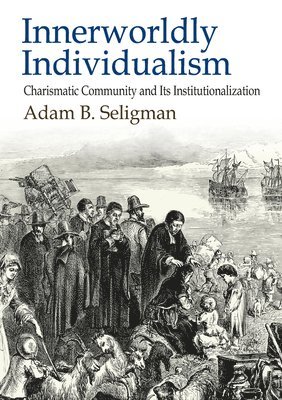


Du kanske också är intresserad av
Del 2020
Über die Herausforderung der Verschiedenheit und die neue Wertereligion
Adam B. Seligman, Linda Woodhead MBE, Birgit Weyel
Inbunden, 2024
779 kr
Del 50