
Industry 4.0 and the Future of Work
Global Production Networks, Global Disassembly Networks, and the Circular Economy
Inbunden, Engelska, 2024
2 549 kr
Beställningsvara. Skickas inom 5-8 vardagar. Fri frakt för medlemmar vid köp för minst 249 kr.
This timely book offers an in-depth examination of the changing nature of work and the increasing production of waste in a crisis-ridden era dominated by climate change and worker precarity.Focusing on the future of work and workers, the book explores the crucial relationship between global production networks and global disassembly networks, recognising the importance of this interdependence within a circular economy. Authors Al Rainnie, Andrew Herod and Susan McGrath-Champ conduct cross-disciplinary analyses to assess the effect of digitalization and automation upon the structure of work, in particular considering platform capitalism and the gig economy. They highlight concerns with respect to the Green New Deal and circular economy policies, emphasizing the need for a sensitive approach to geographical variations within capitalist landscapes.Industry 4.0 and the Future of Work is a crucial read for students and researchers specializing in development economics, economic geography, labour economics, labour and industrial relations, discard studies and the sociology of work. Its cross-disciplinary approach will also be of interest to students of environmental studies, digital technology and history.
Produktinformation
- Utgivningsdatum2024-11-08
- Mått156 x 234 x undefined mm
- FormatInbunden
- SpråkEngelska
- FörlagEdward Elgar Publishing Ltd
- ISBN9781800375369
Tillhör följande kategorier
Hoppa över listan

Mer från samma författare
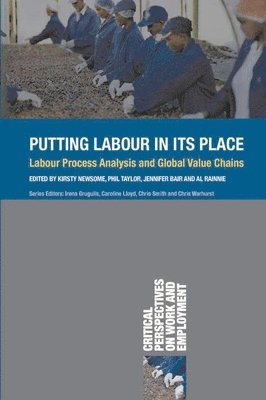
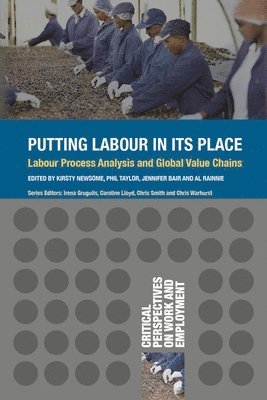
Putting Labour in its Place
Kirsty Newsome, Philip Taylor, Jennifer Bair, Al Rainnie
Häftad, 2015
1 219 kr
Putting Labour in its Place
Kirsty Newsome, Philip Taylor, Jennifer Bair, Al Rainnie
Inbunden, 2015
3 169 kr
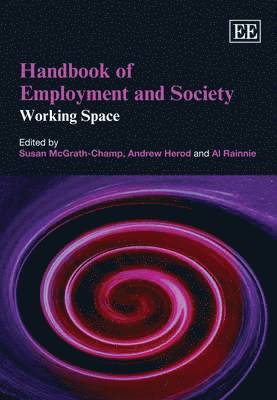
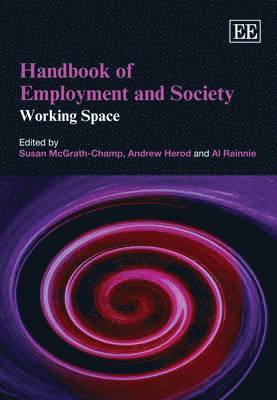
Handbook of Employment and Society
Susan McGrath-Champ, Andrew Herod, Al Rainnie
Inbunden, 2010
4 959 kr
Hoppa över listan
Du kanske också är intresserad av
Handbook of Employment and Society
Susan McGrath-Champ, Andrew Herod, Al Rainnie
Inbunden, 2010
4 959 kr
Putting Labour in its Place
Kirsty Newsome, Philip Taylor, Jennifer Bair, Al Rainnie
Inbunden, 2015
3 169 kr
Putting Labour in its Place
Kirsty Newsome, Philip Taylor, Jennifer Bair, Al Rainnie
Häftad, 2015
1 219 kr