
Del i serien Routledge Studies in Mediterranean Politics
In-Between Border Spaces in the Levant
Häftad, Engelska, 2023
879 kr
Beställningsvara. Skickas inom 10-15 vardagar. Fri frakt för medlemmar vid köp för minst 249 kr.
Finns i fler format (1)
This book focuses on interstitial spaces or in- between borders in the Middle East. Using various case studies, it raises the question how actors living in these regions perform their belonging despite the apparent constraints of history and politics.In recent years, the Middle East has seen States attempts to shape buffer zones or safe zones in border regions, for example, in Syria’s borderlands in the aftermath of the civil war. Typically studies on in- between borders refer to three interrelated aspects: space (territorial, symbolic), power (states or non-state actors) and identity (definition of the self/other). In this volume, the authors investigate these axes of research through the notions of sovereignty and belonging in order to assess how these concepts may highlight in-betweenness through a political dimension. Stemming from a perception of the borders as processes, these various studies aim to explore the theoretical potential of in- between border spaces to re-think sovereignty and identity belonging in such interstitial zones. While notions such as heterotopia, margins, liminality, borderlands, buffer zones, no man’s land or frontiers will be explored, each case study highlights how actors, territory and powers relate to each other in order to improve our understanding of historical and political process that are shaping identities under spatial constraints.The chapters in this book were originally published as a special issue of the journal, Mediterranean Politics.
Produktinformation
- Utgivningsdatum2023-09-25
- Mått156 x 234 x 9 mm
- Vikt240 g
- FormatHäftad
- SpråkEngelska
- SerieRoutledge Studies in Mediterranean Politics
- Antal sidor146
- FörlagTaylor & Francis Ltd
- ISBN9780367632366
Tillhör följande kategorier
Hoppa över listan




Mer från samma författare
Using Picture Books to Promote Empathy, Belonging, and Social Justice in Pre-K and Kindergarten
Isauro M. Escamilla, Iliana Alanís, Daniel Meier
Inbunden, 2026
1 689 kr
Using Picture Books to Promote Empathy, Belonging, and Social Justice in Pre-K and Kindergarten
Isauro M. Escamilla, Iliana Alanís, Daniel Meier
Häftad, 2026
569 kr
Hoppa över listan



Mer från samma serie
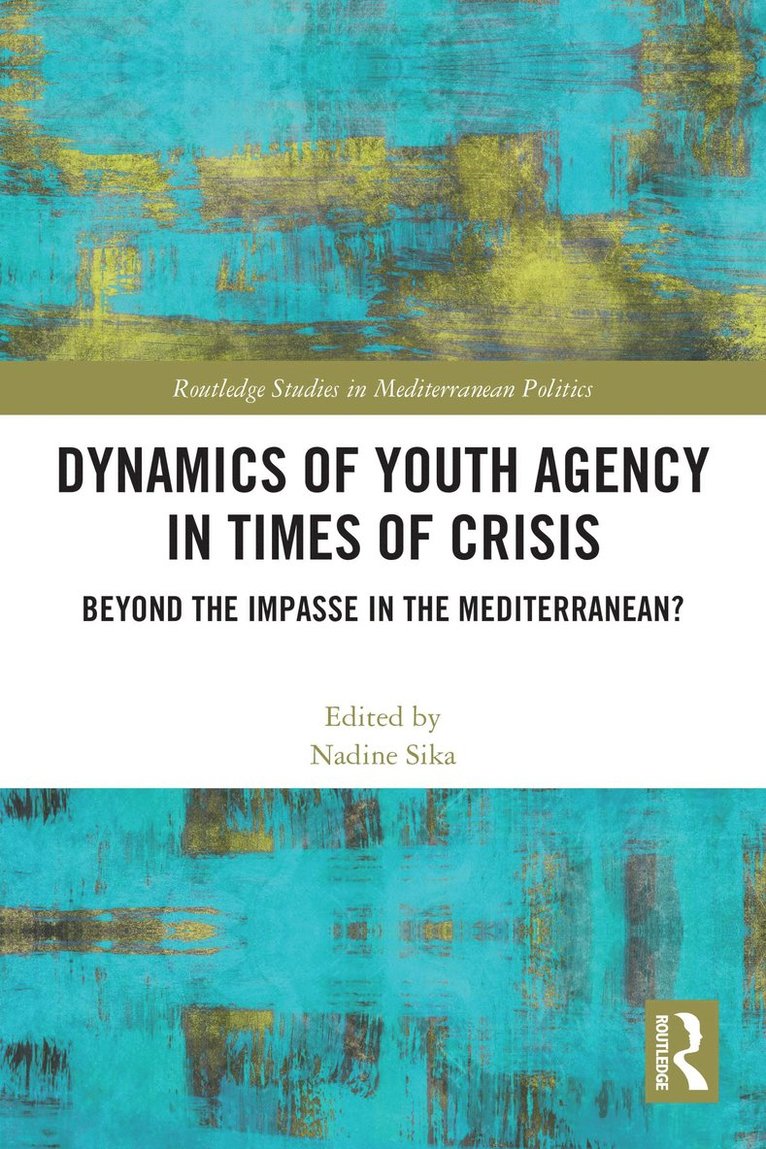
Dynamics of Transformation, Elite Change and New Social Mobilization
Heiko Wimmen, Muriel Asseburg
Häftad, 2019
959 kr
Network Mobilization Dynamics in Uncertain Times in the Middle East and North Africa
Frédéric Volpi, Janine A. Clark
Inbunden, 2019
3 209 kr
EU in the Mediterranean after the Arab Uprisings
Roberto Roccu, Benedetta Voltolini
Häftad, 2020
879 kr
Network Mobilization Dynamics in Uncertain Times in the Middle East and North Africa
Frédéric Volpi, Janine A. Clark
Häftad, 2020
879 kr
Islamism and Social Movements in North Africa, the Sahel and Beyond
Aurelie Campana, Cédric Jourde
Häftad, 2019
919 kr
Hoppa över listan



Du kanske också är intresserad av
Using Picture Books to Promote Empathy, Belonging, and Social Justice in Pre-K and Kindergarten
Isauro M. Escamilla, Iliana Alanís, Daniel Meier
Häftad, 2026
569 kr