
Del 3
Ian McEwan
Subversive Readings, Informed Misreadings
Häftad, Engelska, 2025
1 039 kr
Beställningsvara. Skickas inom 10-15 vardagar. Fri frakt för medlemmar vid köp för minst 249 kr.
Finns i fler format (1)
This book offers a discussion of seven “canonical” novels by Ian McEwan (The Cement Garden, The Comfort of Strangers, The Child in Time, The Innocent, Black Dogs, Atonement, On Chesil Beach), introducing radical new readings, which are offered not as ultimate and conclusive “solutions” of the textual puzzles, but as possibilities to engage with the text creatively, to enrich the critical consensus and restore interpretative freedom to the readers. This project formulates a strategy of “inclusive reading” – an approach to the text that does not seek to reduce it to a single interpretation, and yet is comprehensively informed through the analysis of the primary text, critical discussion, authorial comments and the context of the composition. Each reading demonstrates the metafictional structure of the texts, indicating that McEwan’s works may be treated as invitations to roam within their worlds, examining the multiple frames of their structure and the meanings generated thereby. All the chapters attend to submerged, repressed, or deliberately masked voices. The Cement Garden is seen as a multi-layered dream, with a shifting hierarchy of dreamers; The Comfort of Strangers is viewed as an inverted metafiction, with insubstantial characters corrupting more complex heroes; The Child in Time is read as Stephen’s book written for his dead daughter; The Innocent as a memory narrative of Leonard who refuses to notice Maria’s role as a spy. In Black Dogs the over-exposure of unreliability is studied as a screen for personal trauma; in the analysis of Atonement Briony’s claim to authorship is questioned and Cecilia is suggested as an alternative narrative agent. Finally, examining On Chesil Beach, both characters’ voices are reconstructed in search of the superior narrative power, which in the end is seen to be elusive, as the text seeks to undermine the hierarchy of voices.
Produktinformation
- Utgivningsdatum2025-09-28
- Mått152 x 229 x 16 mm
- Vikt420 g
- FormatHäftad
- SpråkEngelska
- Serie21st Century Perspectives on British Literature and Society
- Antal sidor274
- FörlagTaylor & Francis Ltd
- ISBN9781032649467
Tillhör följande kategorier
Hoppa över listan






Mer från samma serie
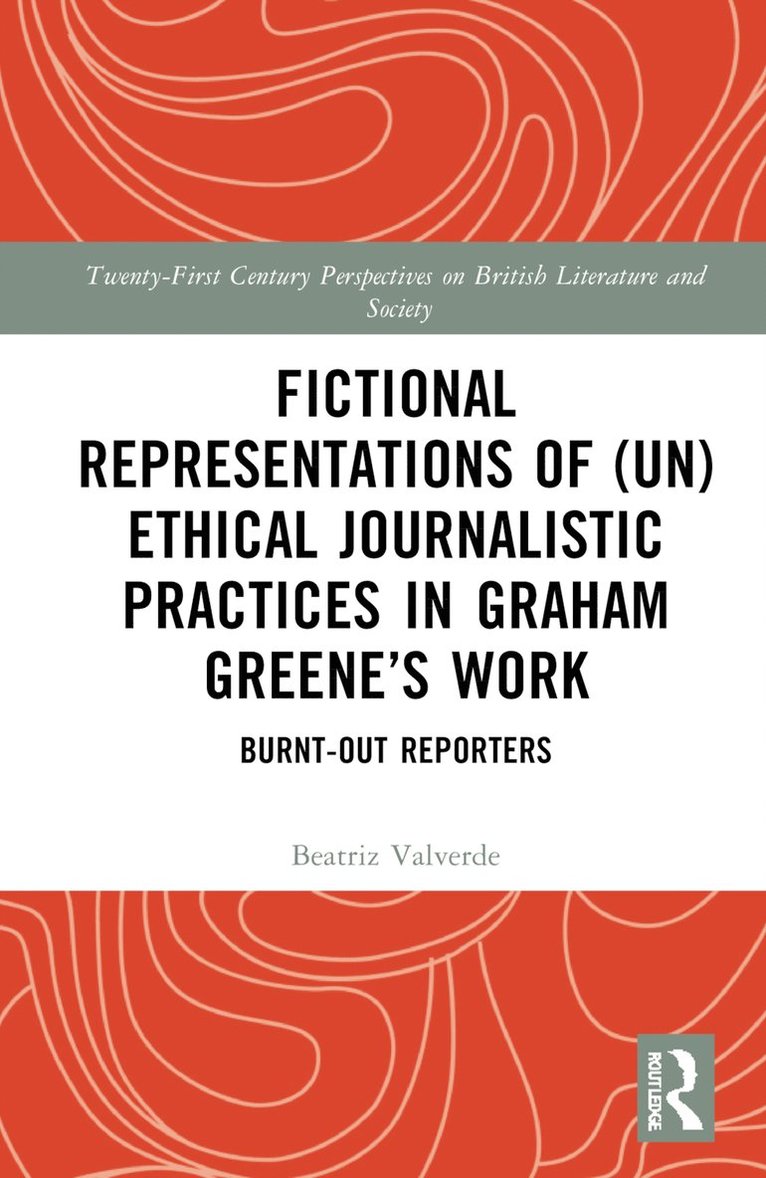
Fictional Representations of (Un)ethical Journalistic Practices in Graham Greene’s Work
Beatriz Valverde
Inbunden, 2024
3 699 kr
Hoppa över listan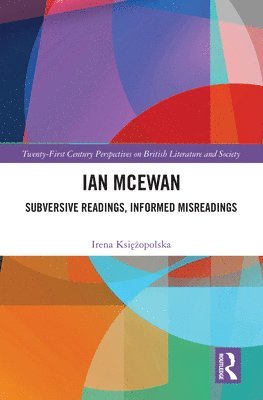



Du kanske också är intresserad av
Del 3
Fictional Representations of (Un)ethical Journalistic Practices in Graham Greene’s Work
Beatriz Valverde
Inbunden, 2024
3 699 kr
- Nyhet
Del 3
- Nyhet