
Hurricane Harvey's Aftermath
Place, Race, and Inequality in Disaster Recovery
Häftad, Engelska, 2020
419 kr
Beställningsvara. Skickas inom 5-8 vardagar. Fri frakt för medlemmar vid köp för minst 249 kr.
Finns i fler format (1)
Heartbreaking stories from survivors along the Texas Gulf CoastHurricane Harvey was one of the worst American natural disasters in recorded history. It ravaged the Texas Gulf Coast, and left thousands of people homeless in its wake. In Hurricane Harvey's Aftermath, Kevin M. Fitzpatrick and Matthew L. Spialek offer first-hand accounts from survivors themselves, providing a rare, on-the-ground perspective of natural disaster recovery. Drawing on interviews from more than 350 survivors, the authors trace the experiences of individuals and their communities, both rich and poor, urban and rural, white, Latinx, and Black, and how they navigated the long and difficult road to recovery after Hurricane Harvey. From Corpus Christi to Galveston, they paint a vivid, compelling picture of heartache and destruction, as well as resilience and recovery, as survivors slowly begin rebuilding their lives and their communities. An emotionally provocative read, Hurricane Harvey's Aftermath provides insight into how ordinary people experience and persevere through a disaster in an age of environmental vulnerability.
Produktinformation
- Utgivningsdatum2020-08-11
- Mått152 x 229 x 18 mm
- Vikt318 g
- FormatHäftad
- SpråkEngelska
- Antal sidor208
- FörlagNew York University Press
- ISBN9781479800759
Tillhör följande kategorier
Hoppa över listan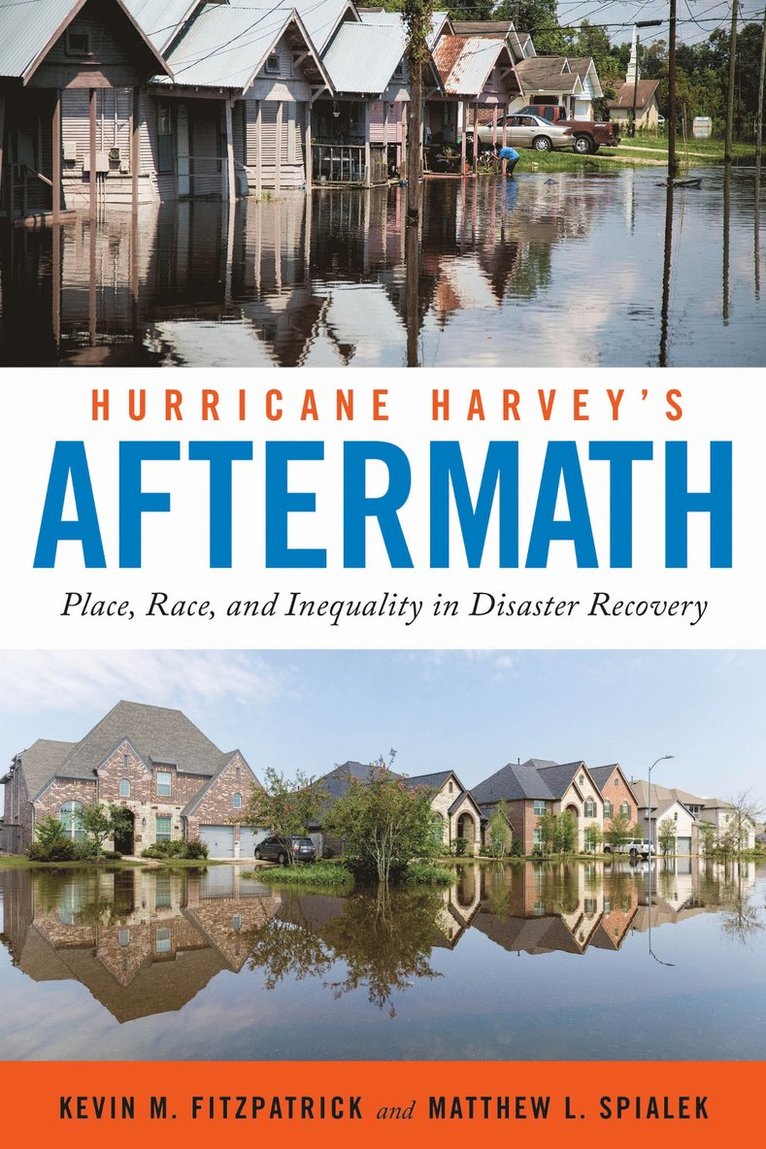







Du kanske också är intresserad av
- Nyhet
Del 3
Del 2
- Nyhet
Del 11
- Nyhet
- Nyhet
Del 6
- Nyhet
Del 4
Del 1
Del 3