Beställningsvara. Skickas inom 3-6 vardagar. Fri frakt för medlemmar vid köp för minst 249 kr.
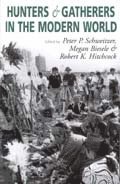
In an age of heightened awareness of the threat that western industrialized societies pose to the environment, hunters and gatherers attract particularly strong interest because they occupy the ecological niches that are constantly eroded. Despite the denial of sovereignty, the world's more than 350 million indigenous peoples continue to assert aboriginal title to significant portions of the world's remaining bio-diversity. As a result, conflicts between tribal peoples and nation states are on the increase. Today, many of the societies that gave the field of anthropology its empirical foundations and unique global vision of a diverse and evolving humanity are being destroyed as a result of national economic, political, and military policies.Although quite a sizable body of literature exists on the living conditions of the hunters and gatherers, this volume is unique in that it represents the first extensive east-west scholarly exchange in anthropology since the demise of the USSR. Moreover, it also offers new perspectives from indigenous communities and scholars in an exchange that be termed "south-north" as opposed to " north-north," denoting the predominance of northern Europe and North America in scholarly debate.The main focus of this volume is on the internal dynamics and political strategies of hunting and gathering societies in areas of self-determination and self-representation. More specifically, it examines areas such as warfare and conflict resolution, resistance, identity and the state, demography and ecology, gender and representation, and world view and religion. It raises a large number of major issues of common concerns and therefore makes important reading for all those interested in human rights issues, ethnic conflict, grassroots development and community organization, and environmental topics.
Megan Biesele is President, School of Expressive Culture, Texas A&M University, College Station, Texas. She helped found the Kalahari Peoples Fund in 1973 and currently serves as its Coordinator.
List of IllustrationsPrefaceIntroductionRobert K. Hitchcock and Megan BieseleChapter 1. Silence and Other Misunderstandings: Russian Anthropology, Western Hunter-Gatherer Debates, and Siberian PeoplesPeter P. SchweitzerPART I: WARFARE AND CONFLICT RESOLUTION Chapter 2. Visions of Conflict, Conflicts of Vision among Contemporary Dene ThaJean-Guy A. GouletChapter 3. Warfare among the Hunters and Fishermen of Western SiberiaLiudmila A. ChindinaChapter 4. Homicide and Aggression among the Agta of Eastern Luzon, the Philippines, 1910–1985Marcus B. GriffinChapter 5. Conflict Management in a Modern Inuit CommunityJean L. BriggsChapter 6. Wars and Chiefs among the Samoyeds and Ugrians of Western SiberiaAndrei V. GolovnevChapter 7. Ritual Violence among the Peoples of Northeastern SiberiaElena P. BatianovaChapter 8. Patterns of War and Peace among Complex Hunter-Gatherers: The Case of the Northwest Coast of North AmericaLeland DonaldPART II: RESISTANCE, IDENTITY AND THE STATEChapter 9. The Concept of an International Ethnoecological RefugeOlga MurashkoChapter 10. Aboriginal Responses to Mining in Australia: Economic Aspirations, Cultural Revival, and the Politics ofIndigenous ProtestDavid S. TriggerChapter 11. Political Movement, Legal Reformation, and Transformation of Ainu IdentityTakashi IrimotoChapter 12. Tracking the “Wild Tungus” in Taimyr: Identity, Ecology, and Mobile Economies in Arctic SiberiaDavid G. AndersonChapter 13. Marginality with a Difference, or How the Huaorani Preserve Their Sharing Relations and Naturalize Outside PowersLaura RivalPART III: ECOLOGY, DEMOGRAPHY, AND MARKET ISSUESChapter 14. “Interest in the Present” in the Nationwide Monetary Economy: The Case of Mbuti Hunters in ZaireMitsuo IchikawaChapter 15. Dynamics of Adaptation to Market Economy among the Ayoréode of Northwest ParaguayVolker von BremenChapter 16. Can Hunter-Gatherers Live in Tropical Rain Forests? The Pleistocene Island Melanesian EvidenceMatthew SpriggsChapter 17. The Ju/’hoansi San under Two States: Impacts of the South West African Administration and the Government of the Republic of NamibiaMegan Biesele and Robert K. HitchcockChapter 18. Russia’s Northern Indigenous Peoples: Are They Dying Out?Dmitrii D. BogoiavlenskiiPART IV: GENDER AND REPRESENTATION Chapter 19. Gender Role Transformation among Australian AboriginesRobert TonkinsonChapter 20. Names That Escape the State: Hai//om Naming Practicesc versus Domination and IsolationThomas WidlokChapter 21. Central African Government’s and International NGOs’ Perceptions of Baka Pygmy DevelopmentBarry S. HewlettChapter 22. The Role of Women in Mansi SocietyElena G. FedorovaChapter 23. Peacemaking Ideology in a Headhunting Society: Hudhud, Women’s Epic of the IfugaoMaria V. StaniukovichPART V: WORLD-VIEW AND RELIGIOUS DETERMINATIONChapter 24. Painting as Politics: Exposing Historical Processes in Hunter-Gatherer Rock ArtThomas A. DowsonChapter 25. Gifts from the Immortal Ancestors: Cosmology and Ideology of Jahai SharingCornelia M. I. van der SluysChapter 26. Time in the Traditional World-View of the Kets: Materials on the Bear CultEvgeniia A. AlekseenkoChapter 27. Lexicon as a Source for Understanding Sel’kup Knowledge of ReligionAlexandra A. KimNotes on ContributorsAppendix: A Note on the Spelling of Siberian EthnonymsIndex
"... the fact that a third of the articles are devoted to peoples in Siberia, rarely encountered in the general anthropological literature, makes this volume particularly attractive." · Anthropologie et Societes "This volume is rich in ethnographic detail and nicely illustrates the theoretical and topical diversity the field of hunter-gatherer studies has to offer." · Anthropos"This volume is important not only because of the questions it raises as far as hunter-gatherer studies is concerned but also because it goes some way toward extricating the study of foraging and former foraging societies from the somewhat esoteric theoretical preoccupations that have dominated hunter-gatherer studies in the past." · American Anthropologist