
Del i serien Princeton Frontiers in Physics
How Did the First Stars and Galaxies Form?
Häftad, Engelska, 2010
539 kr
Beställningsvara. Skickas inom 5-8 vardagar. Fri frakt för medlemmar vid köp för minst 249 kr.
Though astrophysicists have developed a theoretical framework for understanding how the first stars and galaxies formed, only now are we able to begin testing those theories with actual observations of the very distant, early universe. We are entering a new and exciting era of discovery that will advance the frontiers of knowledge, and this book couldn't be more timely. It covers all the basic concepts in cosmology, drawing on insights from an astronomer who has pioneered much of this research over the past two decades. Abraham Loeb starts from first principles, tracing the theoretical foundations of cosmology and carefully explaining the physics behind them. Topics include the gravitational growth of perturbations in an expanding universe, the abundance and properties of dark matter halos and galaxies, reionization, the observational methods used to detect the earliest galaxies and probe the diffuse gas between them--and much more. Cosmology seeks to solve the fundamental mystery of our cosmic origins. This book offers a succinct and accessible primer at a time when breathtaking technological advances promise a wealth of new observational data on the first stars and galaxies.* Provides a concise introduction to cosmology * Covers all the basic concepts * Gives an overview of the gravitational growth of perturbations in an expanding universe * Explains the process of reionization * Describes the observational methods used to detect the earliest galaxies
Produktinformation
- Utgivningsdatum2010-08-08
- Mått127 x 203 x 16 mm
- Vikt249 g
- FormatHäftad
- SpråkEngelska
- SeriePrinceton Frontiers in Physics
- Antal sidor216
- FörlagPrinceton University Press
- ISBN9780691145167
Tillhör följande kategorier
Hoppa över listan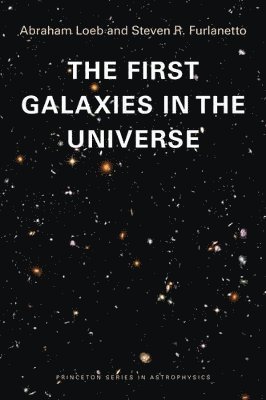
Mer från samma författare
Del 36
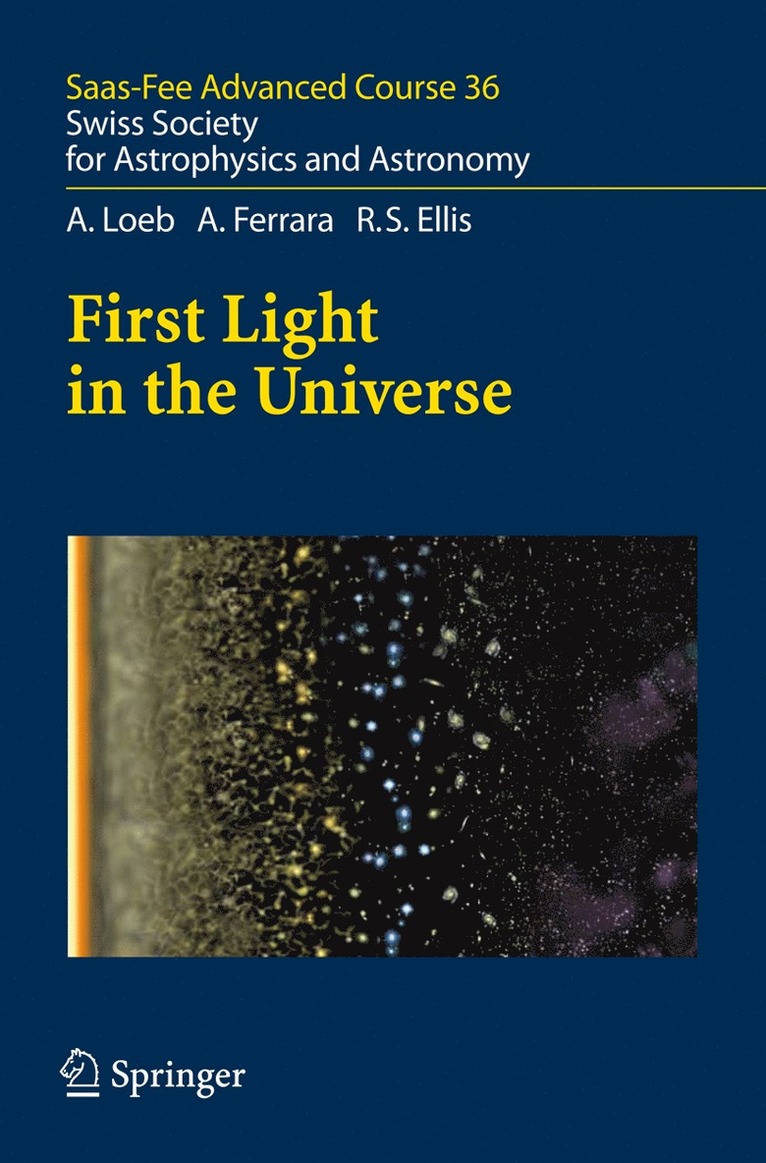
First Light in the Universe
Abraham Loeb, Andrea Ferrara, Richard S. Ellis, Daniel Schaerer, Angela Hempel, Denis Puy
Inbunden, 2007
2 299 kr
Del 36
First Light in the Universe
Abraham Loeb, Andrea Ferrara, Richard S. Ellis, Daniel Schaerer, Angela Hempel, Denis Puy
Häftad, 2016
1 649 kr
Hoppa över listan



Du kanske också är intresserad av
Del 36
First Light in the Universe
Abraham Loeb, Andrea Ferrara, Richard S. Ellis, Daniel Schaerer, Angela Hempel, Denis Puy
Häftad, 2016
1 649 kr
Del 36
First Light in the Universe
Abraham Loeb, Andrea Ferrara, Richard S. Ellis, Daniel Schaerer, Angela Hempel, Denis Puy
Inbunden, 2007
2 299 kr