
History of the Royal College of Nursing 1916–90
A Voice for Nurses
Häftad, Engelska, 2009
499 kr
Beställningsvara. Skickas inom 5-8 vardagar. Fri frakt för medlemmar vid köp för minst 249 kr.
This is the history of one of the largest nursing organizations in the world and one of the largest professional associations of women. The Royal College of Nursing began as a small professional association in 1916. Its work included nurses’ education, professional policy and labour relations. It considers the history of nursing from political, social and economic points of view and sheds light on both gender relations and the position of women in the work place in Britain since 1916. The themes include the struggle to achieve professional status for nurses, the radicalization of nurses from the 1960s, the effect of immigration on nursing as a work force, gender relations within the profession and between nurses, their employers and other health professionals.This book will appeal to anyone interested in nursing studies, gender history and labour history.
Produktinformation
- Utgivningsdatum2009-06-01
- Mått156 x 234 x 19 mm
- Vikt522 g
- FormatHäftad
- SpråkEngelska
- Antal sidor368
- FörlagManchester University Press
- ISBN9780719077968
Tillhör följande kategorier
Hoppa över listan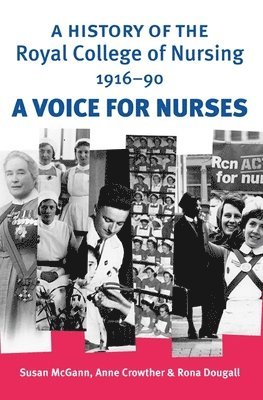








Du kanske också är intresserad av
History of the Royal College of Nursing 1916–90
Susan Mcgann, Anne Crowther, Rona Dougall
Inbunden, 2009
1 499 kr
- Nyhet
Del 7
- Nyhet
Del 11
- Nyhet
Del 4
- Nyhet
- Nyhet
Del 6
- Nyhet
Del 3
- Nyhet