
Del i serien Oxford Studies in American Literary History
History, Abolition, and the Ever-Present Now in Antebellum American Writing
Häftad, Engelska, 2022
569 kr
Beställningsvara. Skickas inom 5-8 vardagar. Fri frakt för medlemmar vid köp för minst 249 kr.
Finns i fler format (1)
The Ever-Present Now examines the meaning and possibilities of the present and its relationship to history and historicity in a number of literary texts; specifically, the writings of several figures in antebellum US literary history, some, but not all of whom, associated with the period's romantic movement. Focusing on nineteenth-century writers who were impatient for social change, like those advocating for the immediate emancipation of slaves, as opposed to those planning for a gradual end to slavery, the book recovers some of the political force of romanticism.Through close readings of texts by Washington Irving, John Neal, Catharine Sedgwick, Frederick Douglass, Ralph Waldo Emerson, and Herman Melville, Insko argues that these writers practiced forms of literary historiography that treat the past as neither a reflection of present interests nor as an irretrievably distant 'other', but as a complex and open-ended interaction between the two. In place of a fixed and linear past, these writers imagine history as an experience rooted in a fluid, dynamic, and ever-changing present. The political, philosophical, and aesthetic disposition Insko calls 'romantic presentism' insists upon the present as the fundamental sphere of human action and experience-and hence of ethics and democratic possibility.
Produktinformation
- Utgivningsdatum2022-09-01
- Mått156 x 234 x 14 mm
- Vikt386 g
- FormatHäftad
- SpråkEngelska
- SerieOxford Studies in American Literary History
- Antal sidor272
- FörlagOUP OXFORD
- ISBN9780192871435
Tillhör följande kategorier
Hoppa över listan
Mer från samma författare
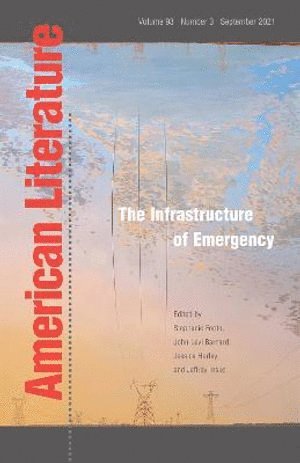
Infrastructure of Emergency
Stephanie Foote, John Levi Barnard, Jessica Hurley, Jeffrey Insko
Häftad, 2021
209 kr
Hoppa över listan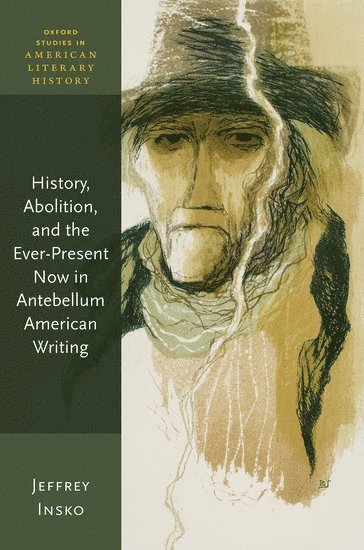



Du kanske också är intresserad av
History, Abolition, and the Ever-Present Now in Antebellum American Writing
Jeffrey Insko
Inbunden, 2018
1 969 kr
Infrastructure of Emergency
Stephanie Foote, John Levi Barnard, Jessica Hurley, Jeffrey Insko
Häftad, 2021
209 kr
- Nyhet
Del 6
Del 7
- Nyhet
Del 1
- Nyhet
Del 4
Del 3
Del 2