
Hindu Widow Marriage
Inbunden, Engelska, 2011
939 kr
Beställningsvara. Skickas inom 5-8 vardagar. Fri frakt för medlemmar vid köp för minst 249 kr.
Before the passage of the Hindu Widow's Re-marriage Act of 1856, Hindu tradition required a woman to live as a virtual outcast after her husband's death. Widows were expected to shave their heads, discard their jewelry, live in seclusion, and undergo regular acts of penance. Ishvarchandra Vidyasagar was the first Indian intellectual to successfully argue against these strictures. A Sanskrit scholar and passionate social reformer, Vidyasagar was a leading proponent of widow marriage in colonial India, urging his contemporaries to reject a ban that caused countless women to suffer needlessly. Vidyasagar's brilliant strategy paired a rereading of Hindu scripture with an emotional plea on behalf of the widow, resulting in an organic reimagining of Hindu law and custom. Vidyasagar made his case through the two-part publication Hindu Widow Marriage, a tour de force of logic, erudition, and humanitarian rhetoric. In this new translation, Brian A. Hatcher makes available in English for the first time the entire text of one of the most important nineteenth-century treatises on Indian social reform.An expert on Vidyasagar, Hinduism, and colonial Bengal, Hatcher enhances the original treatise with a substantial introduction describing Vidyasagar's multifaceted career, as well as the history of colonial debates on widow marriage. He innovatively interprets the significance of Hindu Widow Marriage within modern Indian intellectual history by situating the text in relation to indigenous commentarial practices. Finally, Hatcher increases the accessibility of the text by providing an overview of basic Hindu categories for first-time readers, a glossary of technical vocabulary, and an extensive bibliography.
Produktinformation
- Utgivningsdatum2011-11-22
- Mått152 x 229 x 23 mm
- Vikt504 g
- FormatInbunden
- SpråkEngelska
- Antal sidor272
- FörlagColumbia University Press
- ISBN9780231156332
- ÖversättareBrian A. Hatcher, Brian Hatcher
Tillhör följande kategorier
Hoppa över listan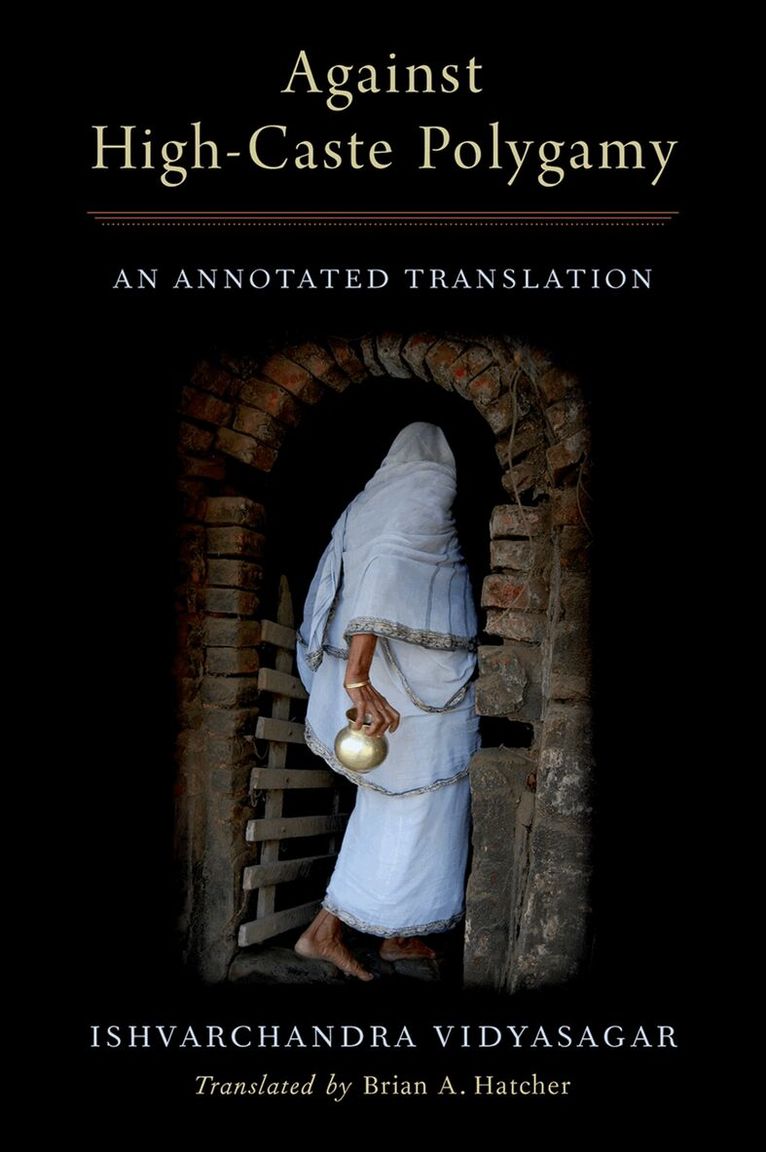








Du kanske också är intresserad av
- Nyhet
Del 3
- Nyhet
Del 11
- Nyhet
Del 6
- Nyhet
Del 4
Del 3
Del 1
Del 2
Del 7
- Nyhet