Beställningsvara. Skickas inom 5-8 vardagar. Fri frakt för medlemmar vid köp för minst 249 kr.
Drawing on the concept of the 'politics of compassion', this Handbook interrogates the political, geopolitical, social and anthropological processes which produce and govern borders and give rise to contemporary border violence.Chapters map different aspects of structural violence and mobilities in some of the world's most contentious border zones, highlighting the forms and practices that connect with labour exploitation, legal exclusion and a severe absence of human rights. International interdisciplinary contributors, including renowned sociologist Saskia Sassen, draw attention to the forms and spaces of resistance available to migrants and activists, contemplating how advocates attempt to provide protection and human security to those subjected to border violence. Offering empirical analyses of critical border spaces, the book covers extensively the US-Mexico border region and border zones around the Mediterranean. Border issues in South, Central and North America, Eastern Europe, Northern Europe, the Middle East, Central Africa and East and Central Asia are also discussed. The Handbook thus provides a truly transnational approach to borders and migration, demonstrating the dynamic but asymmetric relationship between the social structure of border enforcement and the human agency of migrants and global activists.Combining theoretical insights into structural violence and human rights with key case studies of border zones, this comprehensive Handbook is crucial reading for scholars and researchers of social and political science investigating human migration, the humanitarian, border control and human rights. Its practical insights will also benefit policy-makers involved in borders and migration, as well as advocates and NGOs working with migrants and refugees to create secure environments.
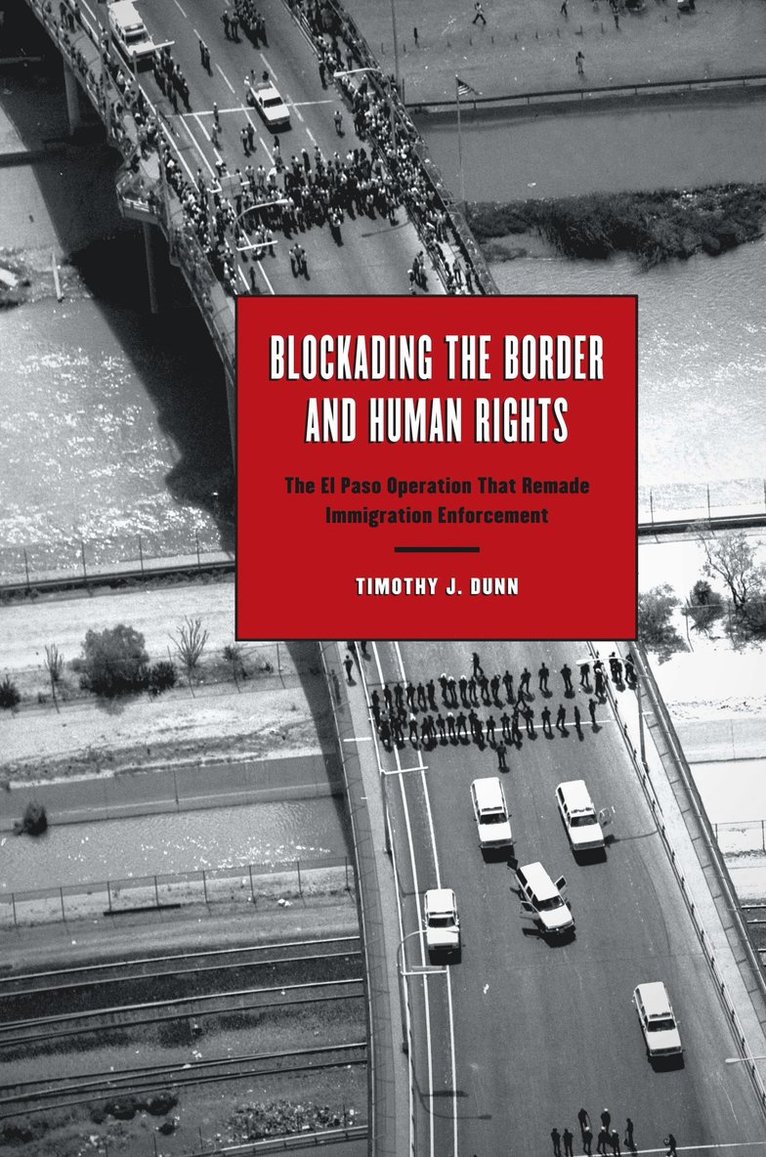
Edited by Natalia Ribas-Mateos, Senior Researcher, TRANSMENA (Research Group), Universitat Autònoma de Barcelona (UAB), Spain and at MESOPOLHIS (Aix-en-Provence, Marseille), France and Timothy J. Dunn, Department of Sociology, Salisbury University, US
Contents:Introduction to the Handbook on Human Security, Borders and Migration 1Natalia Ribas-Mateos and Tim DunnPART I THE ICONIC US–MEXICO BORDER REGION1 The militarization of the US–Mexico border in the twenty-first centuryand implications for human rights 32Timothy J. Dunn2 The U.S.–Mexico border since 2014: overt migration contention andnormalized violence 51Josiah Heyman3 The mantling and dismantling of a tent city at the U.S.–Mexico border 68Cynthia L. Bejarano and Ma. Eugenia Hernández Sánchez4 Undo/redo the violent wall: border-crossing practices and multi-territoriality 87Marlene SolísPART II ON THE WAY TO THE US5 The predatory character of today’s economies: a focus on borders andmigrations 99Saskia Sassen6 New security: threat landscape and the emerging market for force 108Blanca Camps-Febrer and John Andrew Carter, Jr.7 An anti-Latin@ policing machine: enforcing the U.S./Mexico borderalong the Great Lakes and the 49th Parallel 122Geoff Boyce and Todd Miller8 The invisible dimension of institutional violence and the politicalconstruction of impunity: necropopulism and the averted medicolegal gaze 134Bilgesu Sümer9 ‘Migrant trash’ or humanitarian responsibility? Central Americangovernment state responses to deported nationals 145Isabel Rosales Sandoval10 Biopolitical governmentality at Chile’s northern border (Arica–Tacna) 162Luis Iturra ValenzuelaPART III CHALLENGING MEDITERRANEAN BORDERS11 Major changes in “migrations and borders” after the “revolution” ofglobalized liberalism 174Salvatore Palidda12 Documenting and denouncing violence at eastern European borders:the socio-legal relevance of refugee voices through the production ofaudio-visual material 186Chiara Denaro13 Transnational humanitarianism: blurring the boundaries of theMediterranean in Libya 207Natalia Ribas-Mateos14 Migration policies at the Spanish border in Southern Europe: between‘welfare chauvinism’, hate discourse and policies of compassion 222Belén Fernández-Suárez15 The wall and the tunnels: crossings and separation at the borderbetween Egypt, Israel and the Gaza Strip 236Lorenzo Navone16 Spanish–Algerian border relations: tensions between bilateral policiesand population mobilities 250María-Jesús Cabezón-Fernández, Juan-David Sempere-Souvannavong andArslan Mazouni17 Neighbour or stranger? Bordering practices in a small Catalan town 266Martin LundsteenPART IV REGIONS, PARTITIONS, AND EDGES18 Border regions, migrations and the proliferation of violent expulsions 282Saskia Sassen19 Borders and violence in Burundi: regional responses, global responsibilities 298Niamh Gaynor20 Blood, smoke and cocaine? Reflections on the governance of theAmazonian border in contemporary Brazil 310José Miguel Nieto Olivar, Flávia Melo and Marco Tobón21 The borders of Macau in a geohistorical perspective: political dispute,(non)definition of limits and migratory phenomena in an original border-city 326Alfredo Gomes Dias and Jorge Macaísta Malheiros22 The Crimean borderscape: a changing landscape of politicalcompassion and care 345Greta Lynn Uehling23 The Irish border as sign and source of British–Irish tensions 355Katy Hayward, Peter Leary and Milena KomarovaPART V VIOLENCE AND CONTAINMENT: APPROACHES TOYOUTH AND GENDER24 African women on the road to Europe: violence and resilience in border zones 371Kristin Kastner25 Impact of the permanent crisis in the Central African Republic onCameroonian return migrants 382Henri Yambene Bomono26 From Afghanistan border to Iranian cities: the case of migrant childrenin Tehran 397Pooya Alaedini and Ameneh Mirzaei27 Adolescent mobilities and border regimes in the western Mediterranean 410Mercedes G. JiménezAfterword: a brief mapping on borders 419Marcos CorreiaIndex
’Human security is one of the most pressing issues of our time. As the world becomes more connected through globalization, barriers and borders simultaneously stifle and oppress world migrants. This Handbook should be required reading for understanding this problematic, in the U.S, Mexico, Europe and beyond, using a social science lens.’