Beställningsvara. Skickas inom 11-20 vardagar. Fri frakt för medlemmar vid köp för minst 249 kr.
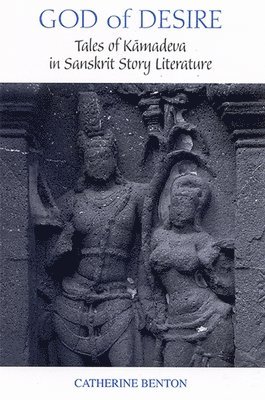
Presents Kamadeva, the Hindu god of desire, in tales, art, and ritual. Also covers Kamadeva's appearance in Buddhist lore.God of Desire presents Sanskrit tales of the Indian deity Kāmadeva as he battles the ascetic god Śiva, assists the powerful goddess Devī, and incarnates as the charming son of Kṛṣṇa. Exploring the imagery and symbolism of the god of desire in art and ritual, Catherine Benton reflects on the connection of Kāmadeva to parrots, makaras (gharials), and apsarases (celestial nymphs), and to playful devotional rituals designed to win his favor. In addition to examining the Hindu literature, Benton also highlights two Buddhist forms of Kamadeva, the demonic Māra, who tries to persuade the Buddha to trade enlightenment for the delights of a woman, and the ever-youthful Mañjuśri, who cuts through ignorance with the bodhisattva sword of wisdom. Tales of Kāmadeva from the Hindu and Buddhist traditions present desire as a powerful force continually redefining the boundaries of chaos and order and gently pulling beyond the ephemeral lure of passionate longings.
Catherine Benton is Lecturer in the Religion Department at Lake Forest College.
Acknowledgments IntroductionStories externalize internal complexities Kamadeva teaches: Sexual desire (kama) as paradigm for generic desire (kama)Stories mold worldviewTale of Yayati: Telling stories about desireA flow of stories with no reliable datesVisual representations of KamadevaStructure of this study of Kama and kama 1. Stories of Beginnings: Kamadeva and his wivesThe birth of KamadevaKamadeva’s wife: RatiKamadeva’s companions: Vasanta and the Maras Kamadeva’s other wife: Priti / Karnotpala Who is Kamadeva?Translation: The tale of Karnotpala 2. Kamadeva, Skilled Marksman Siva wins: Kama turned to ashKama wins: Kama’s power within SivaDevi wins: Kama as devotee of the goddess 3. Kamadeva as Pradyumna, son of Krsna The story of PradyumnaVariant Pradyumnas and SambarasKama marries Mayavati: Desire embedded in and wedded to IllusionThe story of Pradyumna as allegory 4. Kamadeva and Khandasila: rituals and metaphors The story of KhandasilaThe parallel tale of Indra and AhalyaWhy women become stonesReflecting on Khandasila: Siva in the Pine ForestDevotion to Kamadeva What Kama and Khandasila say about desireTranslation: The tale of Khandasila 5. Worshipping KamadevaKamadeva’s festivals and pujas: The DamanakotsavaKamadeva as fertility god, and vratas for prostitutes Rituals for beauty and husbands: Tirthas for couplesWhy rituals of Devotion to KamadevaTranslation: The Damanaka Festival (damanakotsava) 6. Recognizing Kama: Perspectives of early texts—anger, pursartha, invincible power, tentric energyKama in the Rg Veda and Atharva VedaKama in the BrahmanasKama in the UpanisadsKama as a human goal, a purusartha (Mahabharata)Kama and Krodha: Desire and anger (Mahabharata) Kama: Upholder of the earth and cosmic will (Mahabharata) Song of Kama (Kamagita): The power of desire (Mahabharata) Kama in service to a Tantric goddess: ChinnamastaHistorical progression of Kama and his Greek cousin, Eros 7. Kamadeva’s assistants: Celestial beings, birds, and crocodiles ApsarasesGandharvasParrot: Kamadeva’s vehicleMakara: Emblem of the god of desire 8. Kama as the Buddhist Mara and ManjusriAttitudes toward kama in early Buddhist literatureKama and Mara: Desire and DeathUpagupta and Mara: Mara as the BuddhaVimalakirti and Mara: Enlightened MarasManjusri and Kamadeva: Desire as a path to wisdom 9. Conclusions: Kamadeva and the Meaning of Desire What does Kamadeva teach about desire?Attitudes toward desire in Sanskrit story literature Bibliographies: Sanskrit Texts Sanskrit Translations General Sources