
Global Sociology
Inbunden, Engelska, 2012
2 539 kr
Beställningsvara. Skickas inom 10-15 vardagar. Fri frakt för medlemmar vid köp för minst 249 kr.
Finns i fler format (2)
A core introduction to Sociology that puts global issues at the heart of its discussion. From recessions and revolutions to social media and migration, this third edition is fully updated to explore just how these issues can help us to understand the role of Sociology in our world today. With clear writing and infectious enthusiasm for its topic, it evaluates the connections between everyday experiences and larger processes.Combining discussion of global challenges with an emphasis on critical thinking, this lively text offers an engaging introduction, ideally suited for first-year Sociology modules. In addition, it can be used as a standalone text on more specialised modules on Globalisation, or as complimentary reading on courses dealing with issues such as Work, Class and Gender, Race, Crime or Leisure from a global perspective.New to this Edition:- Incorporates coverage of the global financial crisis, the environment, family and intimacy, and technology- An improved companion website with resources for students at more advanced stages and for instructors- Updated further guidelines for primary sources and additional readingAccompanying online resources for this title can be found at bloomsburyonlineresources.com/global-sociology-3e. These resources are designed to support teaching and learning when using this textbook and are available at no extra cost.
Produktinformation
- Utgivningsdatum2012-09-02
- Mått186 x 244 x 26 mm
- Vikt940 g
- FormatInbunden
- SpråkEngelska
- Antal sidor488
- Upplaga3
- FörlagBloomsbury Publishing PLC
- ISBN9780230293731
Tillhör följande kategorier
Hoppa över listan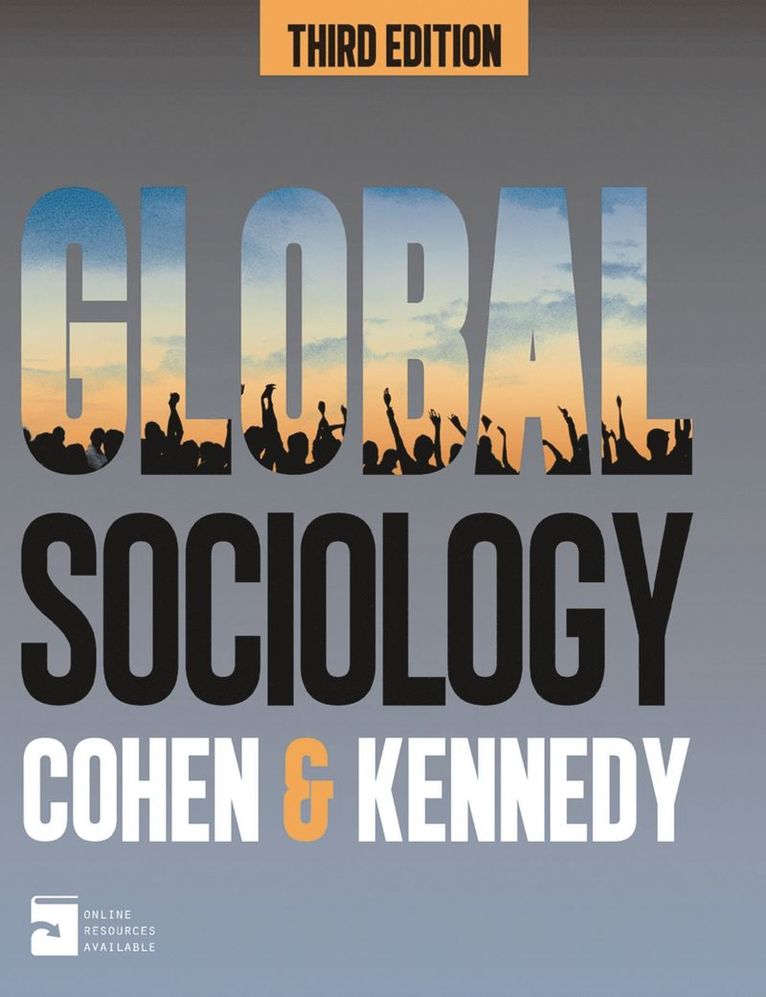








Du kanske också är intresserad av
- Nyhet
Del 3
- Nyhet
Del 11
- Nyhet
Del 1
- Nyhet
Del 4
- Nyhet
Del 4
- Nyhet
Del 6
Del 2