
Del i serien Transits: Literature, Thought & Culture, 1650–1850
Global Romanticism
Origins, Orientations, and Engagements, 1760–1820
Häftad, Engelska, 2016
1 059 kr
Beställningsvara. Skickas inom 10-15 vardagar. Fri frakt för medlemmar vid köp för minst 249 kr.
For several decades, interest in the British Romantics’ theorizations and representations of the world beyond their national borders has been guided by postcolonial and, more recently, transatlantic paradigms. GlobalRomanticism: Origins, Orientations, andEngagements, 1760–1820 charts a new intellectual course by exploring the literature and culture of the Romantic era through the lens of long-durational globalization. In a series of wide-ranging but complementary chapters, this provocative collection of essays by established scholars makes the case that many British Romantics were committed to conceptualizing their world as an increasingly interconnected whole. In doing so, moreover, they were both responding to and shaping early modern versions of the transnational economic, political, sociocultural, and ecological forces known today as globalization.
Produktinformation
- Utgivningsdatum2016-06-02
- Mått151 x 229 x 24 mm
- Vikt494 g
- FormatHäftad
- SpråkEngelska
- SerieTransits: Literature, Thought & Culture, 1650–1850
- Antal sidor342
- FörlagAssociated University Presses
- ISBN9781611486278
Tillhör följande kategorier
Hoppa över listan
Mer från samma författare
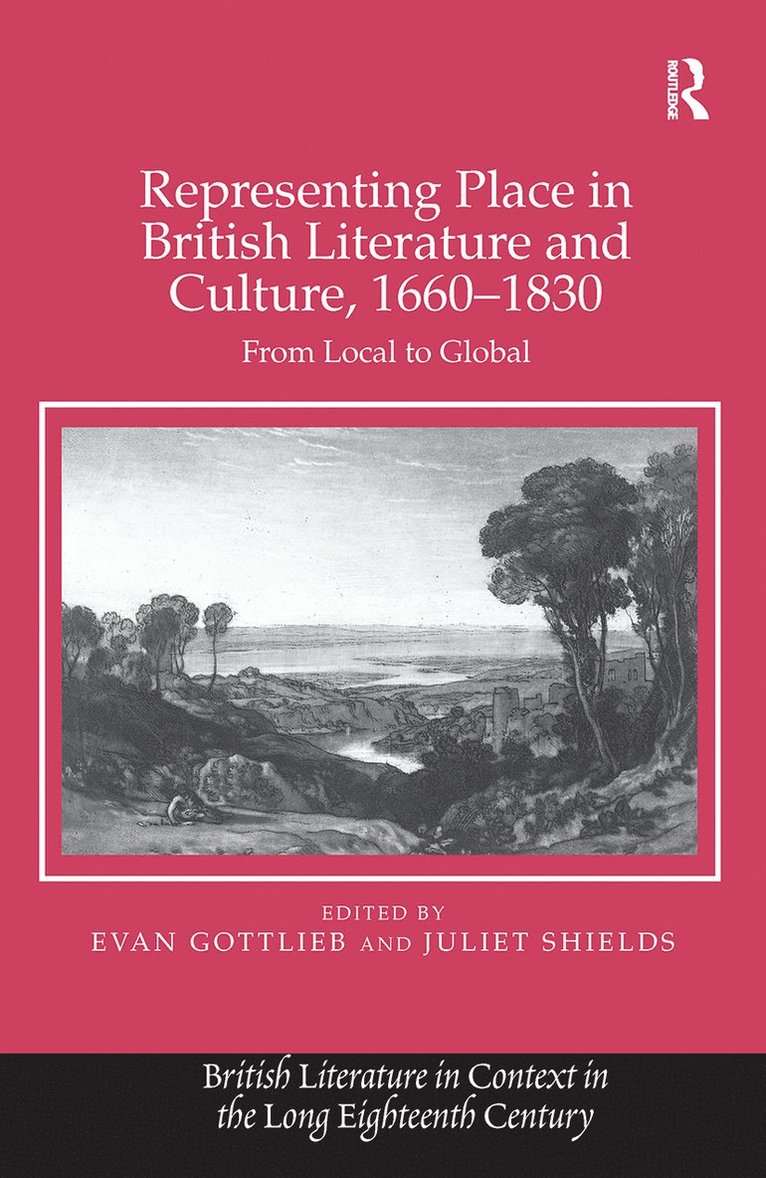
Representing Place in British Literature and Culture, 1660-1830
Evan Gottlieb, Juliet Shields
Häftad, 2016
1 279 kr
Representing Place in British Literature and Culture, 1660-1830
Evan Gottlieb, Juliet Shields
Inbunden, 2013
3 339 kr
Hoppa över listan
Du kanske också är intresserad av
Representing Place in British Literature and Culture, 1660-1830
Evan Gottlieb, Juliet Shields
Inbunden, 2013
3 339 kr
Representing Place in British Literature and Culture, 1660-1830
Evan Gottlieb, Juliet Shields
Häftad, 2016
1 279 kr