
Freedom of Expression in Russia's New Mediasphere
Häftad, Engelska, 2021
829 kr
Beställningsvara. Skickas inom 10-15 vardagar. Fri frakt för medlemmar vid köp för minst 249 kr.
Finns i fler format (1)
In recent years, the Russian government has dramatically expanded its restrictions on the internet, while simultaneously consolidating its grip on traditional media. The internet, however, because of its transnational configuration, continues to evade comprehensive state control and offers ever new opportunities for disseminating and consuming dissenting opinions. Drawing on a wide range of disciplines, including media law, human rights, political science, media and cultural studies, and the study of religion, this book examines the current state of the freedom of speech, freedom of expression, and media freedom in Russia, focusing on digital media and cross-media initiatives that bridge traditional and new media spheres. It assesses how the conditions for free speech are influenced by the dynamic development of Russian media, including the expansion of digital technologies, explores the interaction and transfer of practices, formats, stylistics and aesthetics between independent and state-owned media, and discusses how far traditional media co-opt strategies developed by and associated with independent media to mask their lack of free expression. Overall, the book provides a deep and rich understanding of the changing structures and practices of national and transnational Russian media and how they condition the boundaries of freedom of expression in Russia today.
Produktinformation
- Utgivningsdatum2021-06-30
- Mått156 x 234 x 16 mm
- Vikt421 g
- FormatHäftad
- SpråkEngelska
- SerieBASEES/Routledge Series on Russian and East European Studies
- Antal sidor296
- FörlagTaylor & Francis Ltd
- ISBN9781032085395
Tillhör följande kategorier
Hoppa över listan
Mer från samma författare
Palgrave Handbook of Digital Russia Studies
Daria Gritsenko, Mariëlle Wijermars, Mikhail Kopotev
Inbunden, 2020
1 299 kr
Palgrave Handbook of Digital Russia Studies
Daria Gritsenko, Mariëlle Wijermars, Mikhail Kopotev
Häftad, 2021
579 kr
Hoppa över listan
Mer från samma serie
Russia as a Great Power
Jakob Hedenskog, Vilhelm Konnander, Bertil Nygren, Ingmar Oldberg, Christer Pursiainen
Häftad, 2013
1 109 kr
Russian Revolution of 1917 - Memory and Legacy
Carol S. Leonard, Daniel Orlovsky, Jurej Petrov
Inbunden, 2024
2 869 kr
Siberian Exile and the Invention of Revolutionary Russia, 1825–1917
Ben Phillips
Inbunden, 2021
3 379 kr
Hoppa över listan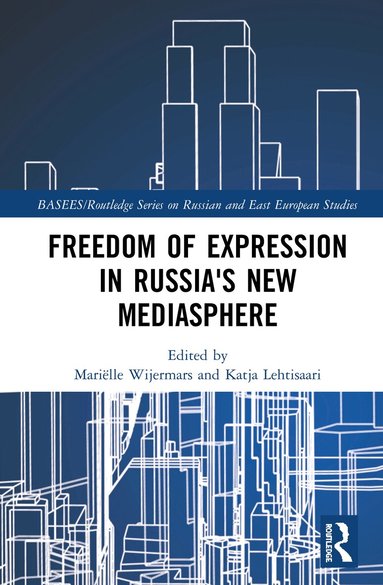

Du kanske också är intresserad av
Freedom of Expression in Russia's New Mediasphere
Mariëlle Wijermars, Katja Lehtisaari
Inbunden, 2019
3 299 kr
Palgrave Handbook of Digital Russia Studies
Daria Gritsenko, Mariëlle Wijermars, Mikhail Kopotev
Inbunden, 2020
1 299 kr
Palgrave Handbook of Digital Russia Studies
Daria Gritsenko, Mariëlle Wijermars, Mikhail Kopotev
Häftad, 2021
579 kr
Philosophical and Cultural Interpretations of Russian Modernisation
Katja Lehtisaari, Arto Mustajoki
Häftad, 2021
899 kr
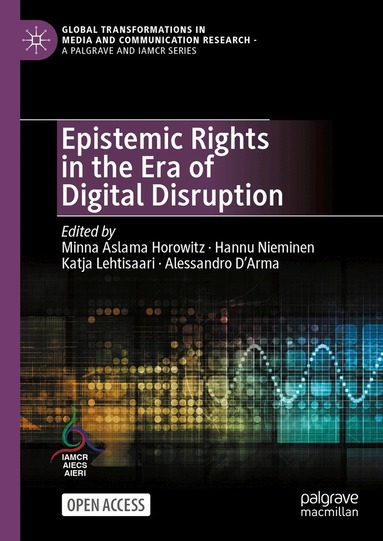
Epistemic Rights in the Era of Digital Disruption
Minna Aslama Horowitz, Hannu Nieminen, Katja Lehtisaari, Alessandro D'Arma
Inbunden, 2024
729 kr
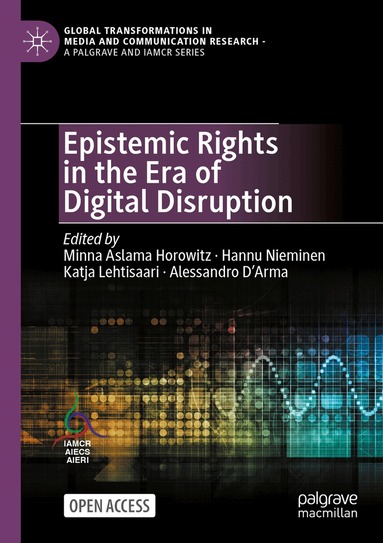
Epistemic Rights in the Era of Digital Disruption
Minna Aslama Horowitz, Hannu Nieminen, Katja Lehtisaari, Alessandro D'Arma
Häftad, 2024
579 kr
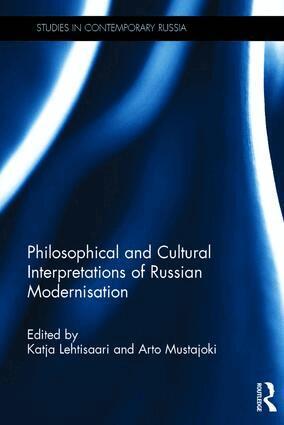
Philosophical and Cultural Interpretations of Russian Modernisation
Katja Lehtisaari, Arto Mustajoki
Inbunden, 2016
3 279 kr
- Nyhet
Del 7