
Frankétienne and Rewriting
A Work in Progress
Inbunden, Engelska, 2009
1 829 kr
Beställningsvara. Skickas inom 10-15 vardagar. Fri frakt för medlemmar vid köp för minst 249 kr.
"Rewriting" in the context of critical work on Caribbean literature has tended to be used to discuss revisionism from a variety of postcolonial perspectives, such as "rewriting history" or "rewriting canonical texts." By shifting the focus to how Caribbean writers return to their own works in order to rework them, this book offers theoretical considerations to postcolonial studies on "literariness" in relation to the near-obsessive degree of rewriting to which Caribbean writers have subjected their own literary texts. Focusing specifically on Frankétienne, this book offers an overview of how the defining aesthetic and thematic components of Frankétienne's major works have emerged over the course of his forty-year writing career. It reveals the marked development of key notions guiding his literary creation since the 1960s, and demonstrates that rewriting illustrates the central aesthetic of the Spiral which has always shaped his œuvre. It is, the book argues, the constantly moving form of the Spiral which Frankétienne explores through his constant reworking of his previously written texts.Frankétienne and Rewriting negotiates between the literary and material ends of the burgeoning field of postcolonial studies, arguing that literary characteristics in Frankétienne connect with changing political, social, economic, and cultural circumstances in the Haiti he rewrites.
Produktinformation
- Utgivningsdatum2009-05-16
- Mått161 x 240 x 18 mm
- Vikt460 g
- FormatInbunden
- SpråkEngelska
- SerieAfter the Empire: The Francophone World and Postcolonial France
- Antal sidor206
- FörlagBloomsbury Publishing Plc
- ISBN9780739125656
Tillhör följande kategorier
Hoppa över listan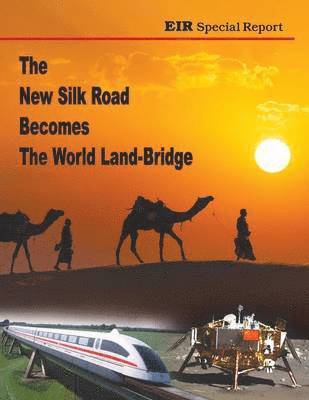




Mer från samma författare
من طريق الحرير الجديد إلى الجسر البري العا
Helga Zepp-Larouche, Michael Billington, Rachel Douglas
Häftad, 2016
829 kr
Hoppa över listan



Du kanske också är intresserad av
من طريق الحرير الجديد إلى الجسر البري العا
Helga Zepp-Larouche, Michael Billington, Rachel Douglas
Häftad, 2016
829 kr
- Nyhet
Del 3
- Nyhet
Del 11
- Nyhet
Del 6
- Nyhet
Del 4
Del 3