
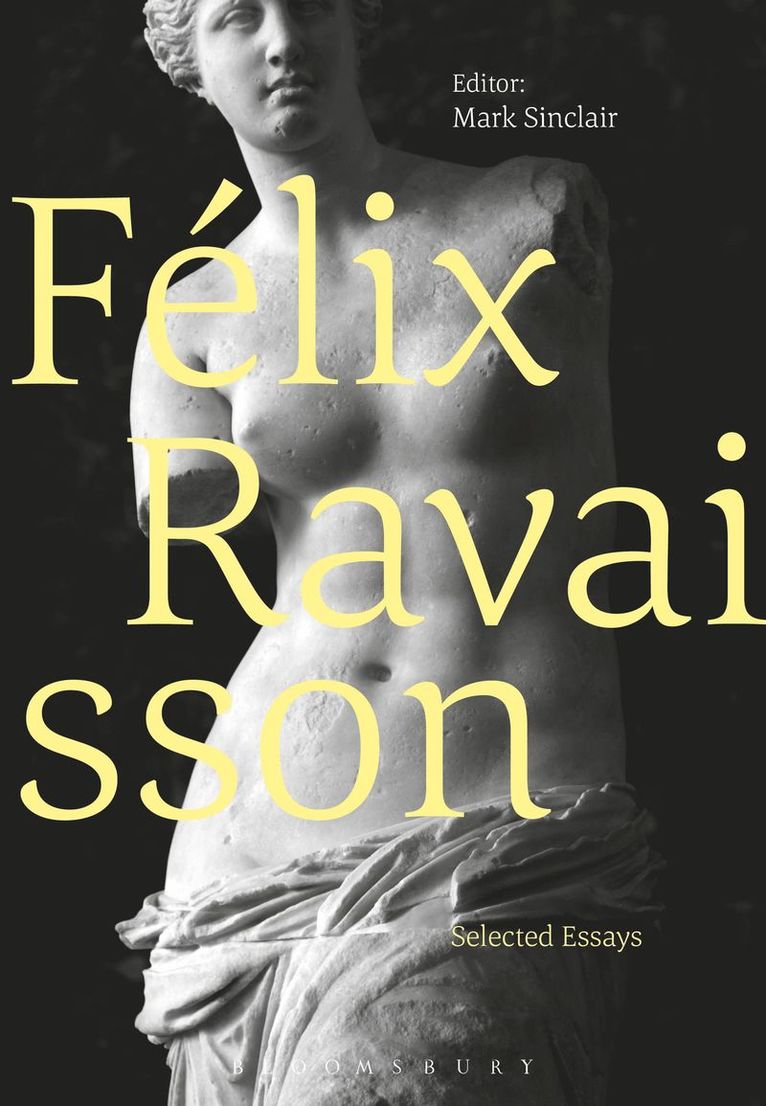
Félix Ravaisson: French Philosophy in the Nineteenth Century
Inbunden, Engelska, 2022
1 519 kr
Beställningsvara. Skickas inom 7-10 vardagar. Fri frakt för medlemmar vid köp för minst 249 kr.
Félix Ravaisson's French Philosophy in the Nineteenth Century is one of the most influential and pivotal texts of modern French thought. Commissioned by the Minister of Public Instruction as one of a series of reports to record the progress of the French sciences and humanities for Paris' second world fair, the 1867 Exposition universelle d'arts et d'industrie, it was published with the others the following year. In the report Ravaisson argues, with verve and generosity, and with an unparalleled command of the century's intellectual developments, that the myriad voices in nineteenth-century French thinking were beginning to form a chorus, one that was advancing towards a new, more concrete form of spiritualist philosophy able to resist materialist, mechanist and sensualist doctrines while incorporating recent developments in the life-sciences. As Henri Bergson noted, it effected a "profound change of orientation in university philosophy" and for decades afterwards students learnt its concluding sections by heart in order to pass public examinations. Bergson's own Creative Evolution, which made him the world's most celebrated living philosopher at the end of the long nineteenth century, is, with its psychological interpretation of biological evolution, a direct expression of the new philosophical orientation that Ravaisson had divined in the report.
Produktinformation
- Utgivningsdatum2022-12-29
- Mått165 x 240 x 17 mm
- Vikt498 g
- FormatInbunden
- SpråkEngelska
- SerieBritish Society for the History of Philosophy:New Texts in the History of Philosophy
- Antal sidor218
- FörlagOUP OXFORD
- ISBN9780192898845
Tillhör följande kategorier
Hoppa över listan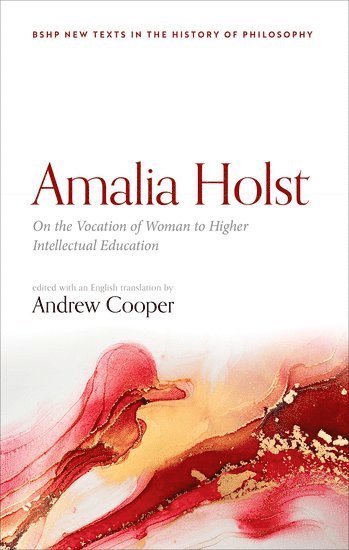


Mer från samma serie
Amalia Holst: On the Vocation of Woman to Higher Intellectual Education
Andrew Cooper
Inbunden, 2023
1 209 kr
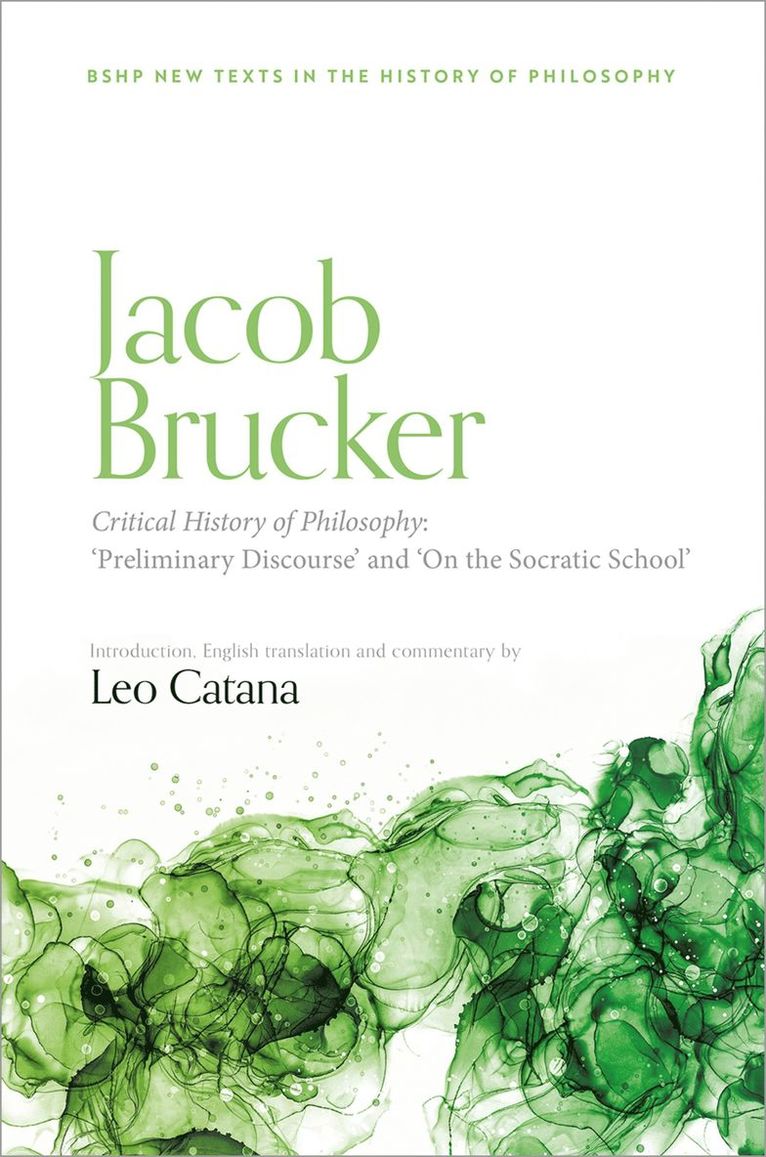
Jacob Brucker, Critical History of Philosophy: 'Preliminary Discourse' and 'On The Socratic School'
Leo Catana
Inbunden, 2024
1 679 kr
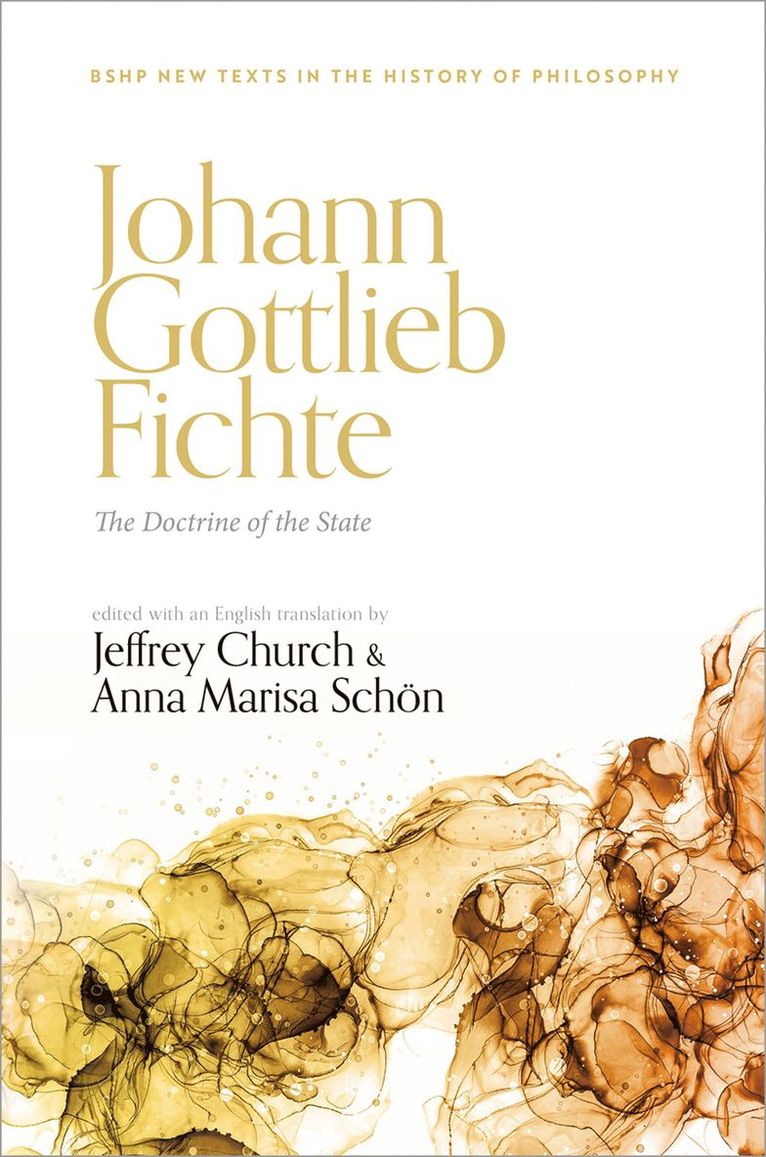
Johann Gottlieb Fichte: The Doctrine of the State
Jeffrey Church, Anna Marisa Schön
Inbunden, 2024
1 679 kr
Leibniz:general Inquiries On Analysis of Notions & Truths Bshp Cloth
Massimo Mugnai, Massimo Mugnai
Inbunden, 2021
1 119 kr
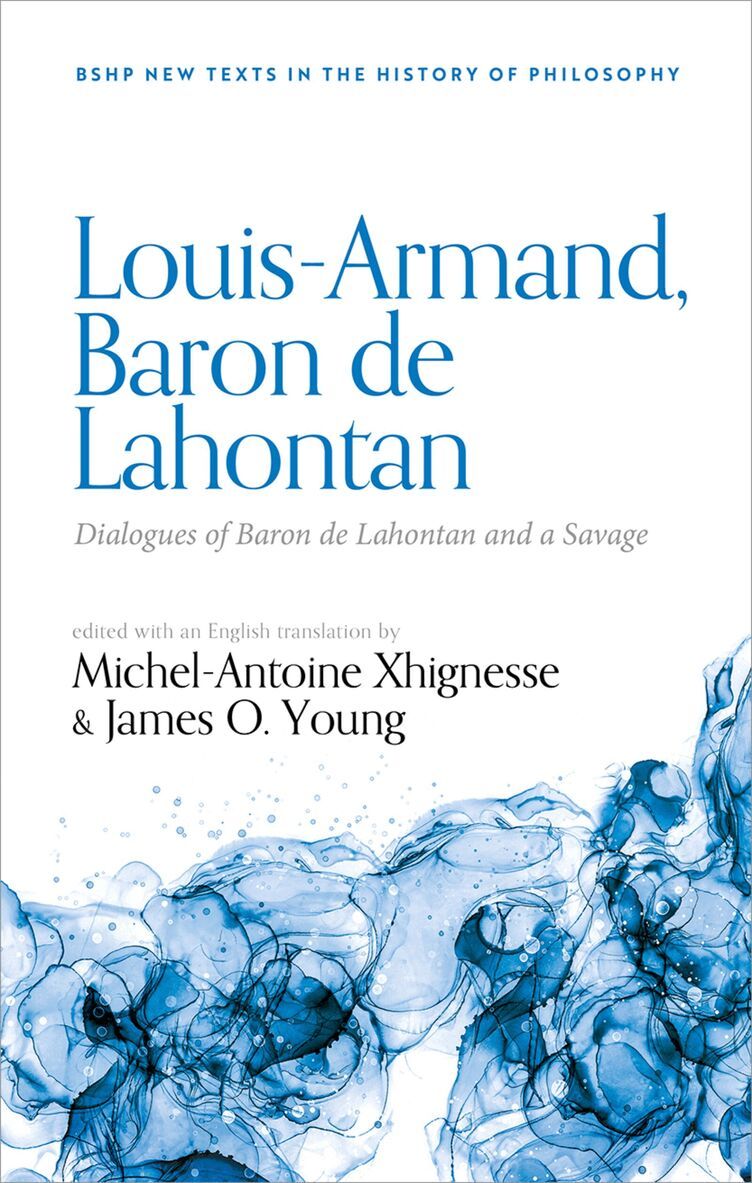
Louis-Armand, Baron de Lahontan: Dialogues of Baron de Lahontan and a Savage
Michel-Antoine Xhignesse, James O. Young
Inbunden, 2026
1 459 kr
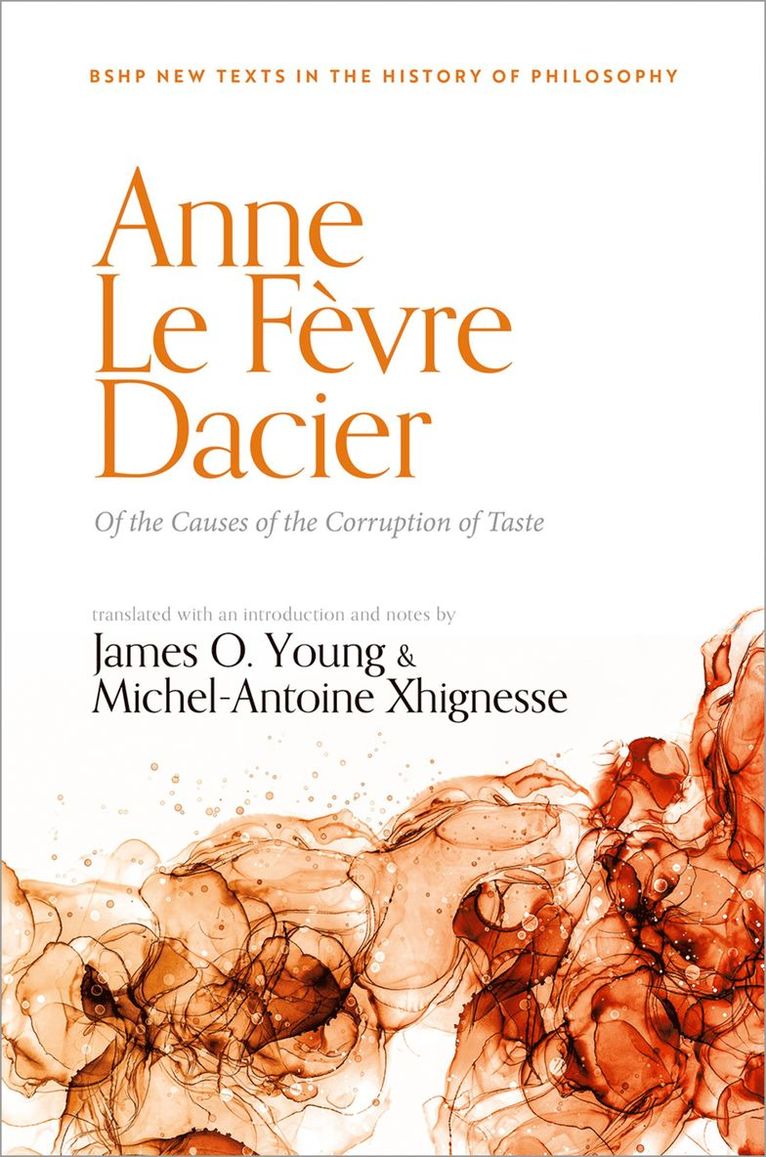
Anne Le Févre Dacier: Of the Causes of the Corruption of Taste
James O. Young, Michel-Antoine Xhignesse
Inbunden, 2025
1 829 kr
Hoppa över listan



Du kanske också är intresserad av
- Nyhet
Seongho Yi Ik: The New Compilation of the Four Beginnings and Seven Emotions
Youngsun Back, So-Jeong Park, Na Ha
Inbunden, 2026
1 459 kr