Beställningsvara. Skickas inom 10-15 vardagar. Fri frakt för medlemmar vid köp för minst 249 kr.
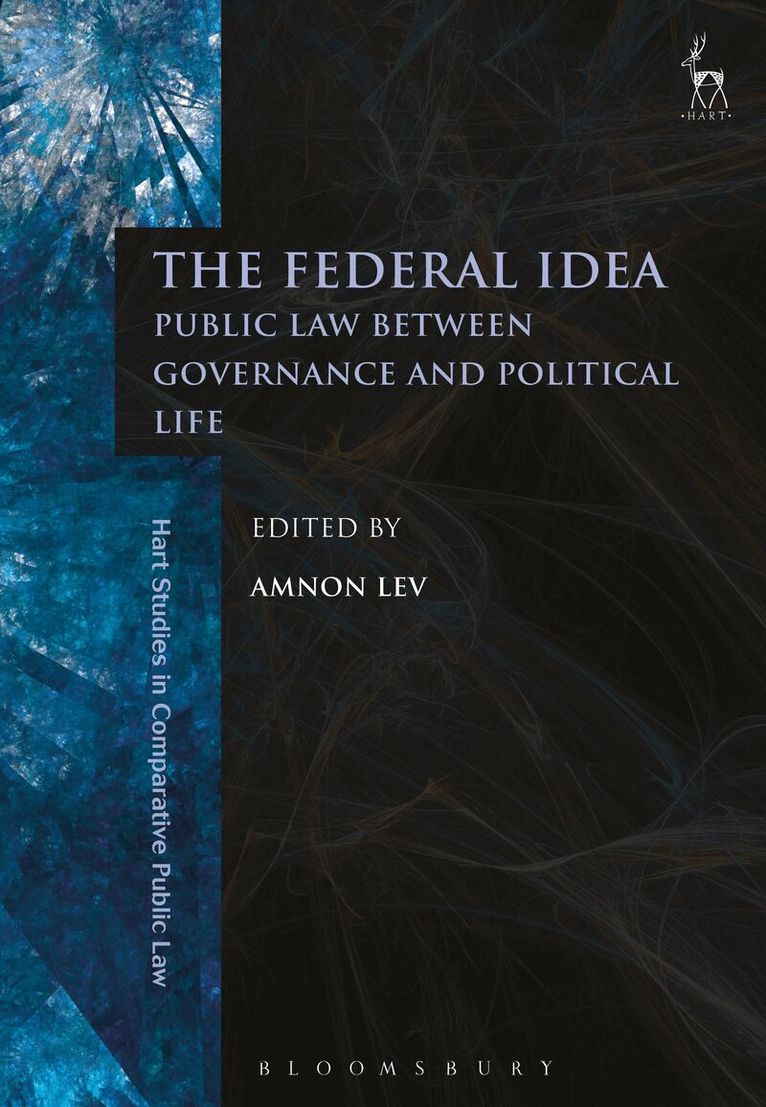
A significant part of the world's population lives under some sort of federal arrangement. And yet, the concepts of federalism and federation remain under-theorised. Federalist theorists have, for the most part, defined their object by opposition to the unitary state. As a result, they have not developed public law theories that capture the specificity of this type of polity. Bringing together contributions from leading public law theorists and intellectual historians, this volume explores the foundations of federalism. It develops novel perspectives on the core problems of traditional federalist theory and charts new departures in federalist theory and federal power-sharing. At a time when we look for more inclusive ways of ordering public life, the volume fills an urgent theoretical and political need.
Amnon Lev is Associate Professor of Law and Philosophy at the University of Copenhagen.
Introduction: Federalism and Public Law Theory Amnon LevI. Making Public Law Work as Theory II. Modes of Federalism III. Aspects of the Federal Idea: An Overview of the Volume Part I: Theorising Federalism1. The Federal Condition Nicholas AroneyI. The Liberal Condition II. The Federal Condition 2. Federation and Empire: About a Conceptual Distinction of Political Forms Olivier BeaudI. The Federation as a Political Form and its Relation to Empire II. The Ideal Typical Opposition between Federation and Empire III. An Illustration in Law: Federative Compact and Federal Treaty IV. Some Remarks on Unity and Diversity 3. Towards a Deontic-Axiomatic Theory of Federal Adjudication Jean-François Gaudreault-DesBiensI. Preliminary Remarks II. Ambitions and Limits of a Normative, Deontic-Axiomatic Theory of Federalism III. Conclusion Part II: Governing the Federation4. Federalism and the Separation of Powers Jessica Bulman-PozenI. Cooperative and Uncooperative Federalism II. Checking the Federal Executive on Behalf of Congress III. Fractal Separation of Powers IV. Conclusion 5. Federalism as a Mode of Governance: Autonomy, Identity, Power, and Rights Edward L RubinI. The Essence of Federalism: Partial Political Autonomy II. The Motivation for Federalism: Divergent Political Identity III. The Features of Federalism as a Modality of Government IV. The Normative Basis for Federalism V. Conclusion 6. Executive Power in Federations Cheryl SaundersI. Federal Design II. Separation of Powers III. Australia IV. Conclusions Part III: Federal Trajectories7. Woodrow Wilson and the Challenge of Federalism in World War One Duncan KellyI. Woodrow Wilson on Democracy and FederalismII. Pan-Nationalism III. Federation and Federalism 8. Federalism and the Ends of EuropeAmnon LevI. Federalism in the European State System II. Theorising the Federation III. Crisis and Post-Humanism: Federalising Europe 9. Federalism and Democracy: The Far-Reaching Dynamism of Democratic Federations Dwight NewmanI. Federalism and Democracy in the Secession Reference II. Federalism as a Response to Divided Demoi III. Federalism and the Construction of Divided Demos-Identities IV. Federalism, Democracy, and Dynamism 10. Federalism and the Plurinational Challenge Stephen TierneyI. Federalism: Why Does it Matter, What is it? II. Inherent Tensions in the Federal Idea III. The Plurinational State and Federalism IV. Why Does this Matter? V. Plurinational Scholarship and the Liberal Theory of the State VI. Implications for Federal Theory and Practice VII. E Pluribus Unum: The Plurinational Challenge VIII. Plurinational Federation and Sovereignty IX. Conclusion