
Del i serien Early American Studies
Faith in Exposure
Privacy and Secularism in the Nineteenth-Century United States
Inbunden, Engelska, 2022
929 kr
Beställningsvara. Skickas inom 10-15 vardagar. Fri frakt för medlemmar vid köp för minst 249 kr.
Recent legal history in the United States reveals a hardening tendency to treat religious freedom and sexual and reproductive freedom as competing, even opposing, claims on public life. They are united, though, by the fact that both are rooted in our culture's understanding of privacy. Faith in Exposure shows how, over the course of the nineteenth century, privacy came to encompass such contradictions—both underpinning the right to sexual and reproductive rights but also undermining them in the name of religious freedom.Drawing on the interdisciplinary field of secular studies, Faith in Exposure brings a postsecular orientation to the historical emergence of modern privacy. The book explains this emergence through two interlocking stories. The first examines the legal and cultural connection of religion with the private sphere, showing how privacy became a moral concept that informs how we debate the right to be shielded from state interference, as well as who will be afforded or denied this protection. This conflation of religion with privacy gave rise, the book argues, to a "secular sensibility" that was especially invested in authenticity and the exposure of hypocrisy in others.The second story examines the development of this "secular sensibility" of privacy through nineteenth-century novels. The preoccupation of the novel form with private life, and especially its dependence on revelations of private desire and sexual secrets, made it the perfect vehicle for suggesting that exposure might be synonymous with morality itself. Each chapter places key authors into wider contexts of popular fiction and periodical press debates. From fears over religious infidelity to controversies over what constituted a modern marriage and conspiracy theories about abolitionists, these were the contests, Justine S. Murison argues, that helped privacy emerge as both a sensibility and a right in modern, secular America.
Produktinformation
- Utgivningsdatum2022-09-20
- Mått152 x 229 x 28 mm
- Vikt567 g
- FormatInbunden
- SpråkEngelska
- SerieEarly American Studies
- Antal sidor280
- FörlagUniversity of Pennsylvania Press
- ISBN9781512823516
- UtmärkelserWinner of Winner of the Midwest Modern Language Association Book Award 2023 (United States)
Tillhör följande kategorier
Hoppa över listan


Mer från samma författare
Del 162
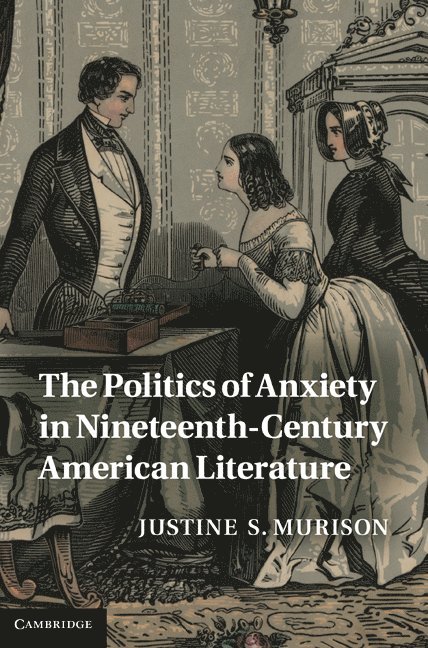
The Politics of Anxiety in Nineteenth-Century American Literature
Justine S. Murison
Inbunden, 2011
2 169 kr
Del 162
The Politics of Anxiety in Nineteenth-Century American Literature
Justine S. Murison
Häftad, 2013
829 kr
Hoppa över listan





Du kanske också är intresserad av
Del 162
The Politics of Anxiety in Nineteenth-Century American Literature
Justine S. Murison
Häftad, 2013
829 kr
Del 162
The Politics of Anxiety in Nineteenth-Century American Literature
Justine S. Murison
Inbunden, 2011
2 169 kr
- Nyhet
Del 3
- Nyhet
Del 11
- Nyhet
Del 6
- Nyhet
Del 4
Del 3
Del 1