
Del 114
Del i serien Edinburgh Critical Studies in Victorian Culture
Exploring Victorian Travel Literature
Disease, Race and Climate
Inbunden, Engelska, 2014
1 929 kr
Beställningsvara. Skickas inom 7-10 vardagar. Fri frakt för medlemmar vid köp för minst 249 kr.
Finns i fler format (1)
This interdisciplinary study explores both the personal and political significance of climate in the Victorian imagination. It analyses foreboding imagery of miasma, sludge and rot across non-fictional and fictional travel narratives, speeches, private journals and medical advice tracts. Well-known authors such as Joseph Conrad are placed in dialogue with minority writers such as Mary Seacole and Africanus Horton in order to understand their different approaches to representing white illness abroad. The project also considers postcolonial texts such as Wilson Harris's Palace of the Peacock to demonstrate that authors continue to 'write back' to the legacy of colonialism by using images of illness from climate.
Produktinformation
- Utgivningsdatum2014-05-14
- Mått156 x 234 x 17 mm
- Vikt567 g
- FormatInbunden
- SpråkEngelska
- SerieEdinburgh Critical Studies in Victorian Culture
- Antal sidor208
- FörlagEdinburgh University Press
- ISBN9780748692958
Tillhör följande kategorier
Hoppa över listan

Mer från samma serie
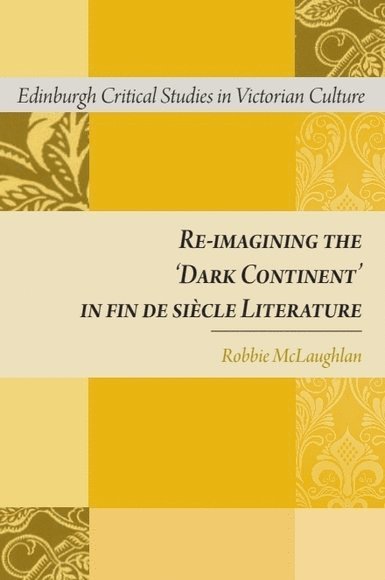
Re-imagining the 'Dark Continent' in fin de siècle Literature
Robbie McLaughlan
Inbunden, 2012
1 929 kr
