
European Labour Movements in Crisis
From Indecision to Indifference
Häftad, Engelska, 2020
429 kr
Beställningsvara. Skickas inom 5-8 vardagar. Fri frakt för medlemmar vid köp för minst 249 kr.
Finns i fler format (1)
In this book, Prosser argues that labour movements respond to European integration in a manner which instigates competition between national labour markets. It bases its hypothesis on analysis of four countries – Germany, Spain, France and Poland – and two processes: the collective bargaining practices of trade unions in the first decade of the Eurozone and the response of trade unions and social-democratic parties to austerity in Southern Europe. In the first process, although unions did not intentionally compete, there was a drift towards zero-sum outcomes which benefited national workforces in stronger structural positions. In the second process, during which a crisis resulting from the earlier actions of labour occurred, lack of solidarity reinforced effects of competition.
Produktinformation
- Utgivningsdatum2020-04-30
- Mått156 x 234 x 11 mm
- Vikt299 g
- FormatHäftad
- SpråkEngelska
- Antal sidor208
- FörlagManchester University Press
- ISBN9781526148056
Tillhör följande kategorier
Hoppa över listan




Mer från samma författare
Railways and the wheels which run upon them, being a brief enquiry into the relative cost in material, of rails and tires ...
Thomas Prosser
Häftad, 2011
249 kr
Hoppa över listan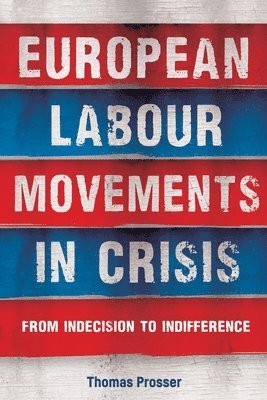


Du kanske också är intresserad av
Railways and the wheels which run upon them, being a brief enquiry into the relative cost in material, of rails and tires ...
Thomas Prosser
Häftad, 2011
249 kr
- Nyhet
Del 3
- Nyhet
Del 4
- Nyhet
Del 11