
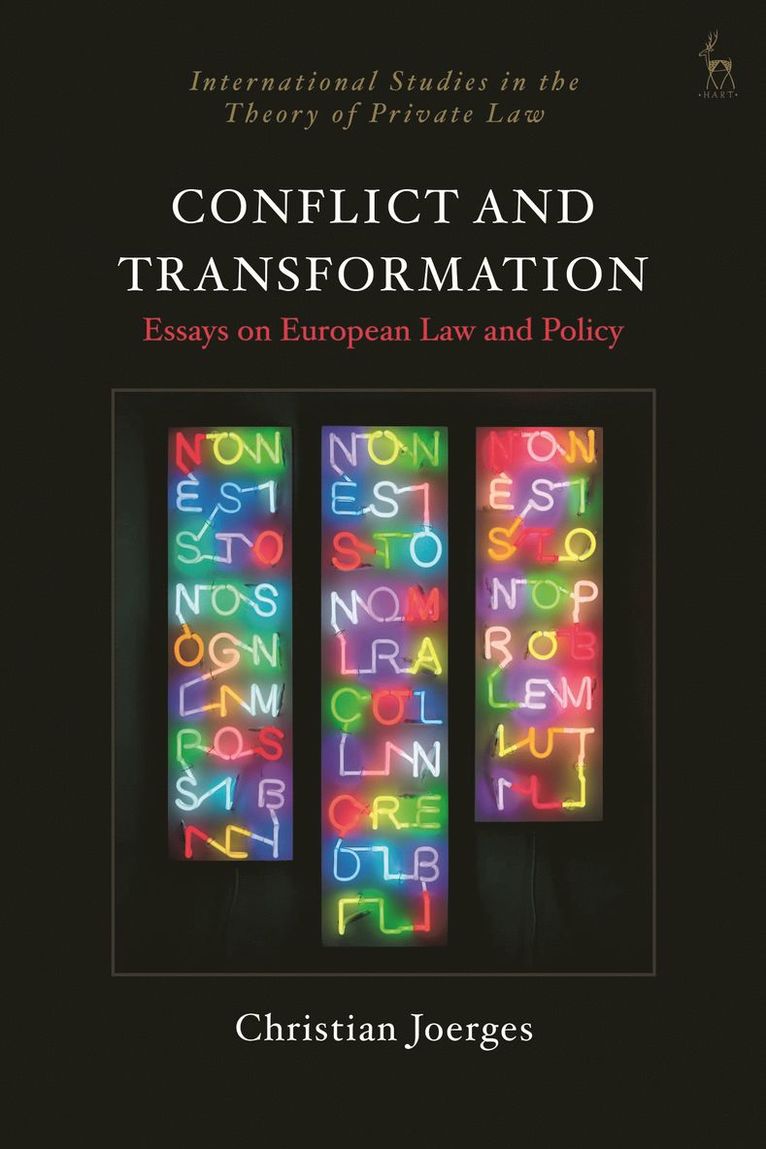
European Crisis and the Transformation of Transnational Governance
Authoritarian Managerialism versus Democratic Governance
Häftad, Engelska, 2017
1 259 kr
Beställningsvara. Skickas inom 10-15 vardagar. Fri frakt för medlemmar vid köp för minst 249 kr.
Finns i fler format (1)
The debate on law, governance and constitutionalism beyond the state is confronted with new challenges. In the EU, confidence in democratic transnational governance has been shaken by the authoritarian and unsocial practices of crisis management. The ambition of this book, which builds upon many years of close co-operation between its contributors, is to promote a viable interdisciplinary alternative to these developments. “Conflicts-law constitutionalism” is a concept of transnational governance which derives democratic legitimacy from the supranational control of the external impact of national decision-making, on the one hand, and the co-operative responses to problem interdependencies on the other. The first section of the book contrasts Europe's new modes of economic governance and crisis management with the conditionality of international investments, and reflects upon the communalities and differences between emergency Europe and global exceptionalism. Subsequent sections substantiate the problématique of executive and technocratic rule, explore conflict constellations of prime importance in the fields of environmental and labour law, and discuss the impact and limits of liberalisation strategies. Throughout the book, European and transnational developments are compared and evaluated.
Produktinformation
- Utgivningsdatum2017-02-23
- Mått155 x 231 x 25 mm
- Vikt1 612 g
- FormatHäftad
- SpråkEngelska
- Antal sidor436
- FörlagBloomsbury Publishing PLC
- ISBN9781509913008
Tillhör följande kategorier
Hoppa över listan

Mer från samma författare
Good Governance in Europe's Integrated Market
Christian Joerges, Renaud Dehousse
Inbunden, 2002
2 699 kr
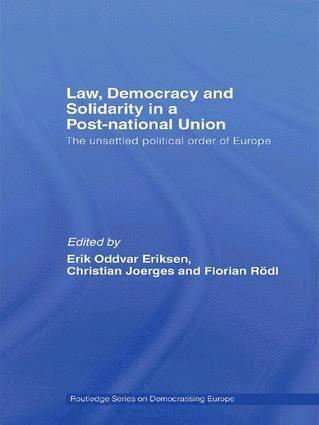
Law, Democracy and Solidarity in a Post-national Union
Erik Oddvar Eriksen, Christian Joerges, Florian Rödl
Inbunden, 2008
1 789 kr
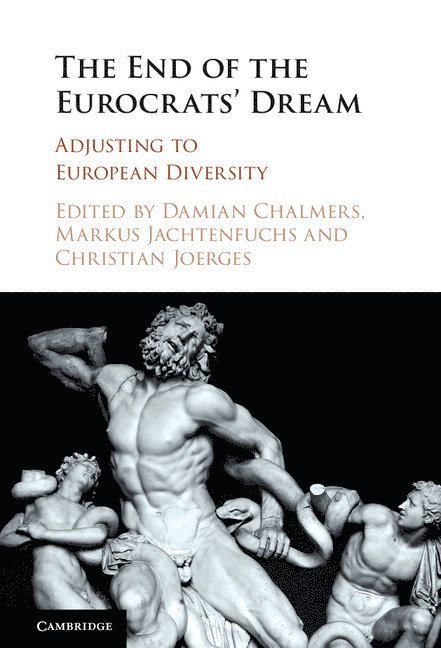
The End of the Eurocrats' Dream
Damian Chalmers, Markus Jachtenfuchs, Christian Joerges
Inbunden, 2016
769 kr
The End of the Eurocrats' Dream
Damian Chalmers, Markus Jachtenfuchs, Christian Joerges
Häftad, 2018
849 kr
Law, Democracy and Solidarity in a Post-national Union
Erik Oddvar Eriksen, Christian Joerges, Florian Rödl
Häftad, 2016
599 kr
Hoppa över listan
Du kanske också är intresserad av
European Crisis and the Transformation of Transnational Governance
Christian Joerges, Carola Glinski
Inbunden, 2014
2 349 kr
Constitutionalism, Multilevel Trade Governance and International Economic Law
Christian Joerges, Ernst-Ulrich Petersmann
Häftad, 2011
1 259 kr
The End of the Eurocrats' Dream
Damian Chalmers, Markus Jachtenfuchs, Christian Joerges
Inbunden, 2016
769 kr
"Schmerzliche Erfahrungen der Vergangenheit" und der Prozess der Konstitutionalisierung Europas
Christian Joerges, Matthias Mahlmann, Ulrich K. Preuß
Häftad, 2008
879 kr
Constitutionalism, Multilevel Trade Governance and Social Regulation
Christian Joerges, Ernst-Ulrich Petersmann
Inbunden, 2006
3 019 kr
Law, Democracy and Solidarity in a Post-national Union
Erik Oddvar Eriksen, Christian Joerges, Florian Rödl
Inbunden, 2008
1 789 kr
The End of the Eurocrats' Dream
Damian Chalmers, Markus Jachtenfuchs, Christian Joerges
Häftad, 2018
849 kr