
Del 1
Essays in the History of Ideas
Häftad, Engelska, 2020
869 kr
Beställningsvara. Skickas inom 5-8 vardagar. Fri frakt för medlemmar vid köp för minst 249 kr.
Originally published in 1948. In the first essay of this collection, Lovejoy reflects on the nature, methods, and difficulties of the historiography of ideas. He maps out recurring phenomena in the history of ideas, which the essays illustrate. One phenomenon is the presence and influence of the same presuppositions or other operative "ideas" in very diverse provinces of thought and in different periods. Another is the role of semantic transitions and confusions, of shifts and of ambiguities in the meanings of terms, in the history of thought and taste. A third phenomenon is the internal tensions or waverings in the mind of almost every individual writer—sometimes discernible even in a single writing or on a single page—arising from conflicting ideas or incongruous propensities of feeling or taste to which the writer is susceptible. These essays do not contribute to metaphysical and epistemological questions; they are primarily historical.
Produktinformation
- Utgivningsdatum2020-01-26
- Mått152 x 229 x 25 mm
- Vikt590 g
- FormatHäftad
- SpråkEngelska
- Antal sidor380
- FörlagJohns Hopkins University Press
- ISBN9781421432373
Tillhör följande kategorier
Hoppa över listan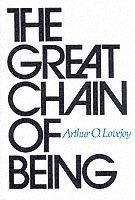





Mer från samma författare
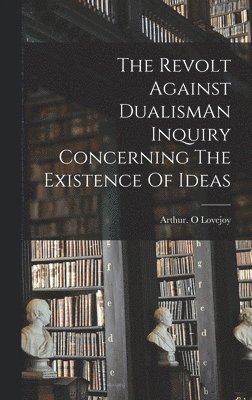
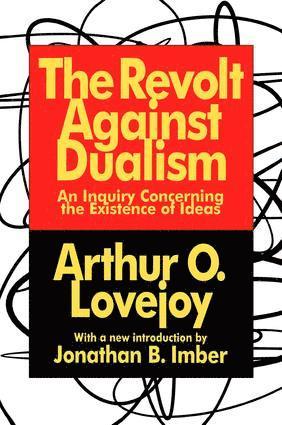
Revolt Against DualismAn Inquiry Concerning The Existence Of Ideas
Arthur O Lovejoy
Inbunden, 2022
499 kr
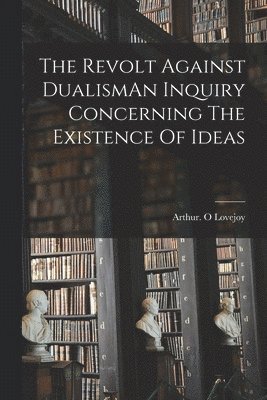
Revolt Against DualismAn Inquiry Concerning The Existence Of Ideas
Arthur O Lovejoy
Häftad, 2022
359 kr
Hoppa över listan
Du kanske också är intresserad av
Del 1
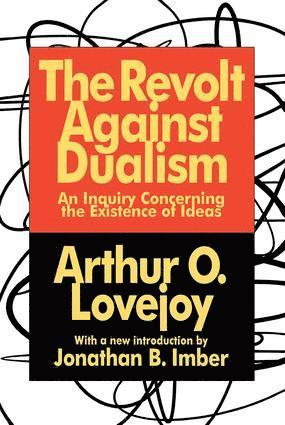
The Revolt Against Dualism: An Inquiry Concerning the Existence of Ideas
Arthur O. Lovejoy
Häftad
749 kr
Revolt Against DualismAn Inquiry Concerning The Existence Of Ideas
Arthur O Lovejoy
Häftad, 2022
359 kr