
Environmental Scenario in India
Successes and Predicaments
Häftad, Engelska, 2015
509 kr
Beställningsvara. Skickas inom 10-15 vardagar. Fri frakt för medlemmar vid köp för minst 249 kr.
India has moved along an impressive growth path over the last decade, marked with falling share of agriculture, stagnating manufacturing, expanding services segment, growing trade orientation, enhanced FDI inflows etc. The consequent growth implications are obvious as far as the numbers like GDP growth rate and Per Capita GDP trend are concerned, but how sustainable the associated development is with respect to resource management and environmental governance?This book captures the economy-wide impacts of various activities on environment in India. The environmental impacts on water, air, soil quality and human health are captured through case studies from different parts of India. Analyzing separately the concern areas within agriculture (cultivation, aquaculture), manufacturing (industrial pollution, power generation), services (waste management, bio-medical waste, e-waste recycling) and external sector (agricultural trade, FDI inflow, trade in waste products) performance of India, the book attempts to find an answer to that crucial question. The methodology adopted to capture the environmental impacts of various economic activities is derived from the relevant branches like environmental economics, agricultural economics, and water resources economics. The book, focusing on particular sectors, indicates the concern areas and possible ways for enhancing environmental governance.
Produktinformation
- Utgivningsdatum2015-03-04
- Mått156 x 234 x undefined mm
- Vikt430 g
- FormatHäftad
- SpråkEngelska
- Antal sidor320
- FörlagTaylor & Francis Ltd
- ISBN9780415705165
Tillhör följande kategorier
Hoppa över listan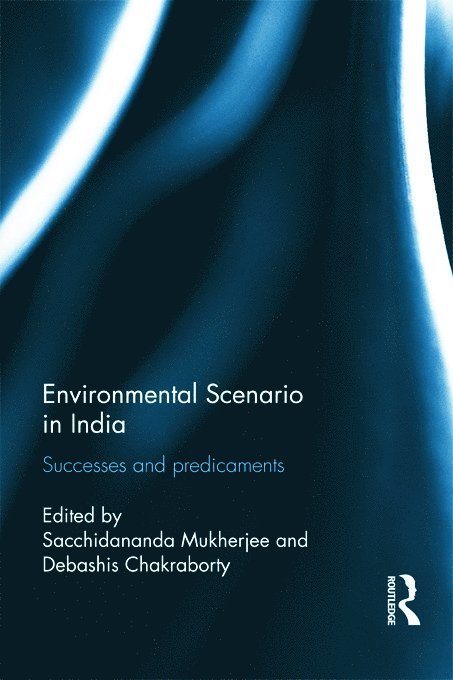



Du kanske också är intresserad av
Environmental Challenges and Governance
Sacchidananda Mukherjee, Debashis Chakraborty
Inbunden, 2015
3 219 kr
Environmental Challenges and Governance
Sacchidananda Mukherjee, Debashis Chakraborty
Häftad, 2017
919 kr
Influence of WTO and Global Dynamics on Trade Flows
Debashis Chakraborty, Oindrila Dey
Häftad, 2025
1 979 kr
Influence of WTO and Global Dynamics on Trade Flows
Debashis Chakraborty, Oindrila Dey
Inbunden, 2024
1 979 kr
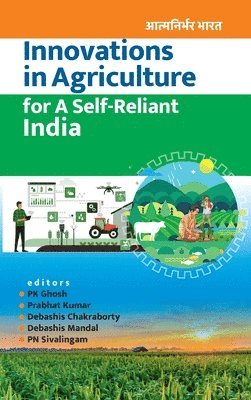
Innovations in Agriculture for a Self-Reliant India
P.K. Ghosh, Prabhat Kumar, Debashis Chakraborty, Debashis Mandal, P.N. Sivalingam
Inbunden, 2021
3 929 kr
Innovations in Agriculture for a Self-Reliant India
Debashis Mandal & P.N. Sivalingam, P.K. Ghosh, Prabhat Kumar, Debashis Chakraborty, P.K. Ghosh, Prabhat Kumar, Debashis Chakraborty, Debashis Mandal, P.N. Sivalingam
Inbunden, 2021
4 649 kr
Trade, Investment and Economic Development in Asia
Debashis Chakraborty, Jaydeep Mukherjee
Häftad, 2018
989 kr
Evolution of Goods and Services Tax in India
R. Kavita Rao, Sacchidananda Mukherjee
Inbunden, 2019
1 979 kr