
Del i serien Hart Studies in Comparative Public Law
Entick v Carrington
250 Years of the Rule of Law
Häftad, Engelska, 2017
639 kr
Beställningsvara. Skickas inom 10-15 vardagar. Fri frakt för medlemmar vid köp för minst 249 kr.
Entick v Carrington is one of the canons of English public law and in 2015 it is 250 years old. In 1762 the Earl of Halifax, one of His Majesty’s Principal Secretaries of State, despatched Nathan Carrington and three other of the King’s messengers to John Entick’s house in Stepney. They broke into his house, seizing his papers and causing significant damage. Why? Because he was said to have written seditious papers published in the Monitor. Entick sued Carrington and the other messengers for trespass. The defendants argued that the Earl of Halifax had given them legal authority to act as they had. Lord Camden ruled firmly in Entick’s favour, holding that the warrant of a Secretary of State could not render lawful actions such as these which were otherwise unlawful. The case is a canonical statement of the common law’s commitment to the constitutional principle of the rule of law. In this collection, leading public lawyers reflect on the history of the case, the enduring importance of the legal principles for which it stands, and the broader implications of Entick v Carrington 250 years on.Winner of the American Society for Legal History Sutherland Prize 2016.
Produktinformation
- Utgivningsdatum2017-12-28
- Mått156 x 234 x 15 mm
- Vikt404 g
- FormatHäftad
- SpråkEngelska
- SerieHart Studies in Comparative Public Law
- Antal sidor288
- FörlagBloomsbury Publishing PLC
- ISBN9781509918324
Tillhör följande kategorier
Hoppa över listan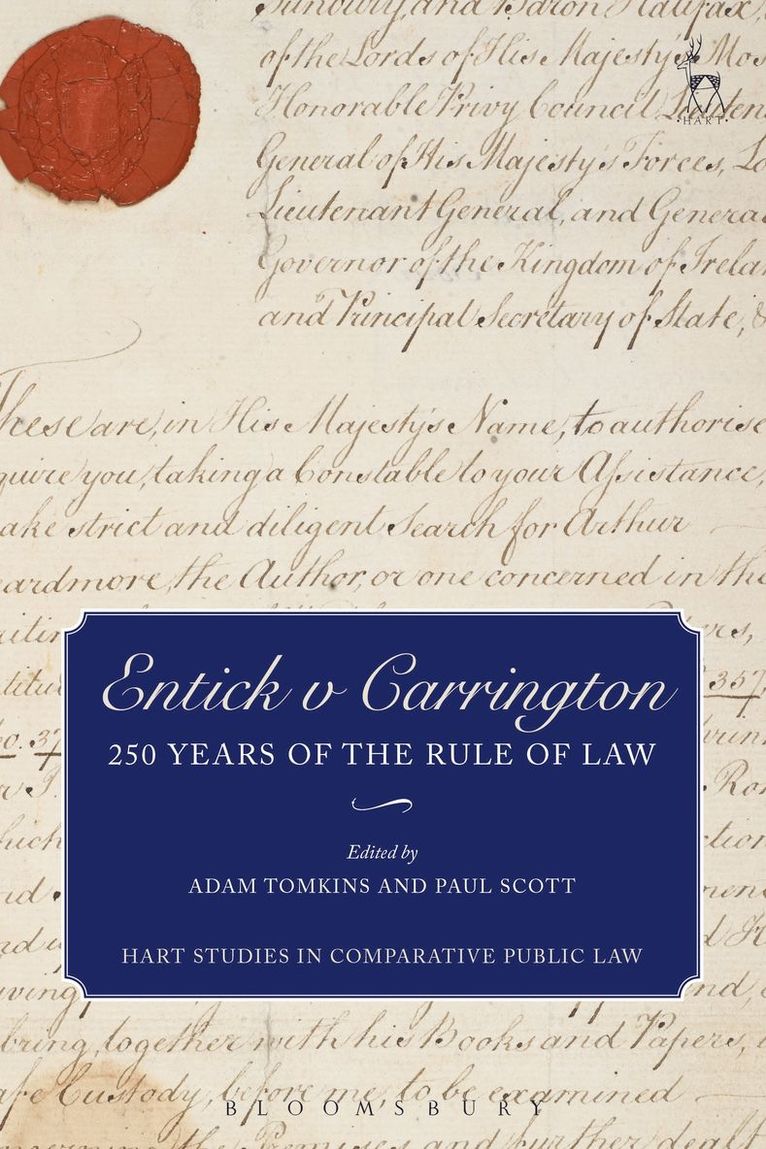
Du kanske också är intresserad av
National Security Constitutionalism in the Commonwealth Five Eyes States
Paul F Scott, Liora Lazarus
Inbunden, 2025
1 669 kr
- Nyhet
National Security Constitutionalism in the Commonwealth Five Eyes States
Paul F Scott, Liora Lazarus, Ben Saul, Natasa Mavronicola
Häftad, 2026
839 kr