
Enterprise Integration and Modeling: The Metadatabase Approach
Inbunden, Engelska, 1995
1 479 kr
Beställningsvara. Skickas inom 10-15 vardagar. Fri frakt för medlemmar vid köp för minst 249 kr.
Finns i fler format (1)
In this text, a general conceptual framework on enterprise integration and modelling is provided in the first chapter, and is used to tie together all of the remaining chapters of the book. The next two chapters present some basics and examples of systems analysis and design for enterprise modelling; which serve the purposes of general discussion on the subject as well as illustrating the modelling methods particular to the Metadatabase approach. The particular methods are discussed fully in Chapter 4. An overview of the Metadatabase Model is provided in Chapter 5 and illustrated with a "paper demonstration" of a basic Metadatabase prototype in Chapter 6. The main technical elements of the model are presented in Chapters 7-9. The model is then applied to manufacturing in Chapter 10, where a core information model for implementing the Metadatabase approach to integration is also included. Chapter 11 extends the Metadatabase technology into the realm of information visualization. The new user interface model developed can be applied to integrate the traditional management of information in an enterprise with new cyberspace applications such as electronic commerce.The Metadatabase model of enterprise information integration (for multiple systems) has been developed at Rensselaer Polytechnic Institute under the sponsorships of Alcoa, Digital, GE, GM, and IBM (from 1986-1995 through the Computer-Integrated Manufacturing and the Adaptive Integrated Manufacturing Enterprises programs), the National Science Foundation (since 1991), Samsung (since 1995), and US Army (since 1995). The technology is being developed into a product for Samsung and the Army. This work is aimed at two types of readers: those who have an interest in the Metadatabase model as an integration technology, and those who are interested in information system analysis and design.
Produktinformation
- Utgivningsdatum1995-11-30
- Mått155 x 235 x 19 mm
- Vikt559 g
- FormatInbunden
- SpråkEngelska
- Antal sidor239
- Upplaga1996
- FörlagKluwer Academic Publishers
- ISBN9780792396475
Tillhör följande kategorier
Hoppa över listan

Mer från samma författare
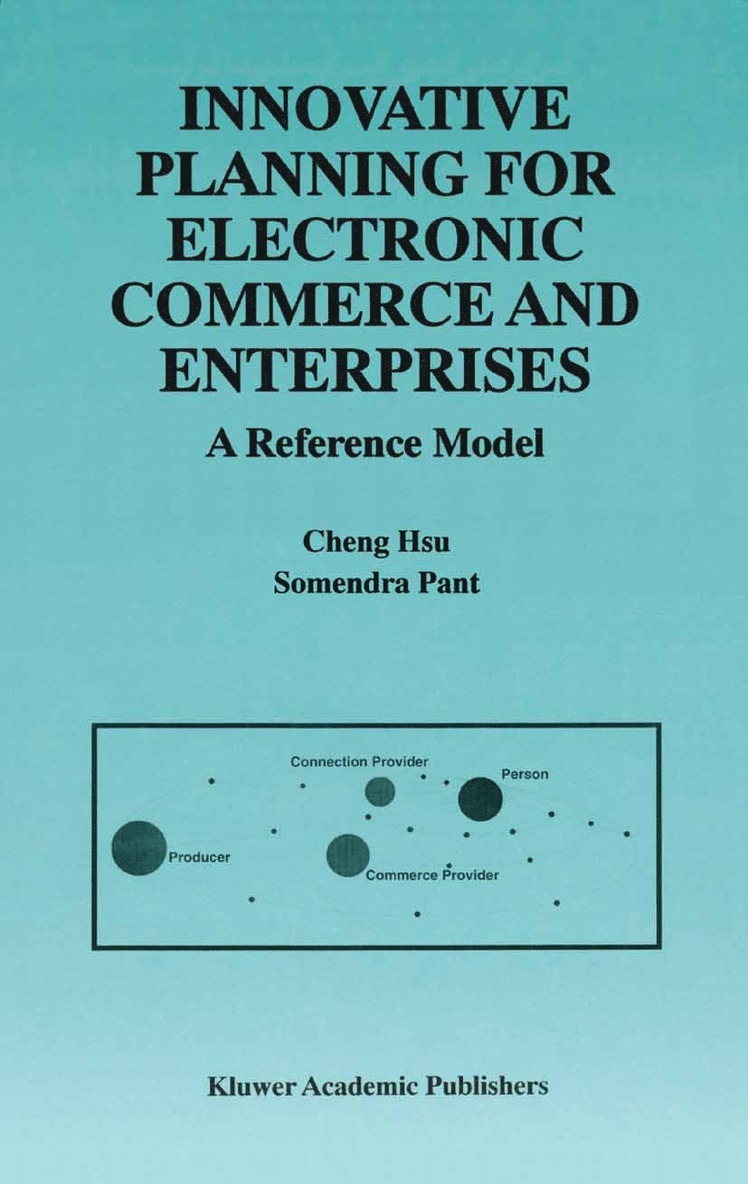
Innovative Planning for Electronic Commerce and Enterprises
Cheng Hsu, Somendra Pant
Inbunden, 2000
1 479 kr
Del 11
Del 16
Innovative Planning for Electronic Commerce and Enterprises
Cheng Hsu, Somendra Pant
Häftad, 2013
1 479 kr
INFORMATION SYSTEMS: THE CONNECTION OF PEOPLE AND RESOURCES FOR INNOVATION - A TEXTBOOK
Cheng Hsu
Inbunden, 2013
1 579 kr
Hoppa över listan

Du kanske också är intresserad av
Del 11
Del 16
INFORMATION SYSTEMS: THE CONNECTION OF PEOPLE AND RESOURCES FOR INNOVATION - A TEXTBOOK
Cheng Hsu
Inbunden, 2013
1 579 kr
Innovative Planning for Electronic Commerce and Enterprises
Cheng Hsu, Somendra Pant
Inbunden, 2000
1 479 kr
Innovative Planning for Electronic Commerce and Enterprises
Cheng Hsu, Somendra Pant
Häftad, 2013
1 479 kr
- Nyhet
Del 3