
Del i serien Elgar Studies in Health and the Law
Ending Childhood Obesity
A Challenge at the Crossroads of International Economic and Human Rights Law
Inbunden, Engelska, 2020
2 879 kr
Beställningsvara. Skickas inom 5-8 vardagar. Fri frakt för medlemmar vid köp för minst 249 kr.
This edited book is the first to reflect on childhood obesity as a global legal challenge. It calls for a thorough commitment to human rights in the face of an ascendant global agri-food industry. The book makes an original contribution to the discussion on obesity as it considers both international economic law and human rights law perspectives on the issue whilst also examining the relationship between these two bodies of international law.After highlighting the importance of a human rights-based approach to obesity prevention, this book discusses the relevance of international economic law to the promotion of healthier food environments. It then examines the potential of international human rights law for more effective regulation of the food industry, arguing for better coordination between UN actors and more systematic reliance on human rights tools, including: the best interests of the child principle, human rights due diligence processes, and the imposition of extraterritorial obligations. The concluding chapter reflects on recurring themes and the added value of a WHO Framework Convention on Obesity Prevention.This book will be of interest to public health scholars, particularly those working on obesity and non-communicable diseases, and those with a broader interest in children's rights, human rights, international trade, investment, consumer or food law and policy. It will also be relevant to policy actors working to improve nutrition and public health globally.
Produktinformation
- Utgivningsdatum2020-12-18
- Mått156 x 234 x undefined mm
- FormatInbunden
- SpråkEngelska
- SerieElgar Studies in Health and the Law
- FörlagEdward Elgar Publishing Ltd
- ISBN9781788114011
Tillhör följande kategorier
Hoppa över listan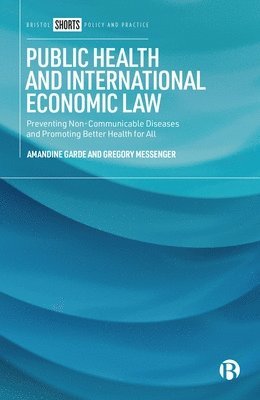
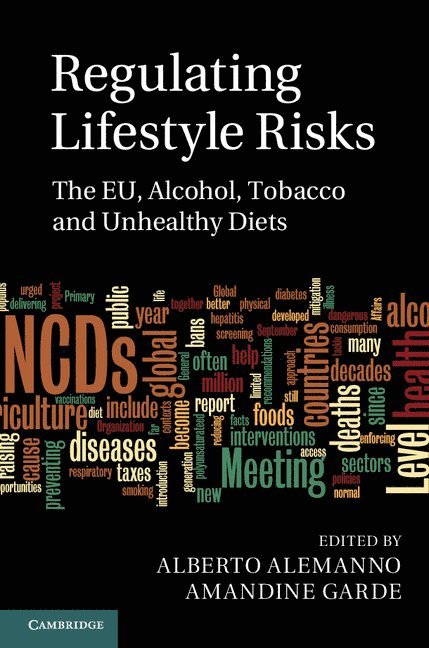







Du kanske också är intresserad av
Foreign Direct Investment and Human Development
Olivier De Schutter, Johan Swinnen, Jan Wouters
Häftad, 2012
999 kr
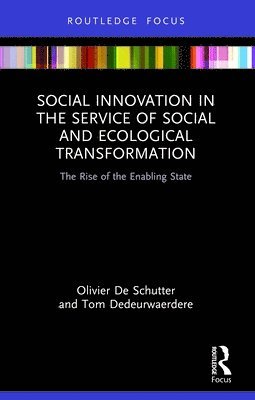
Social Innovation in the Service of Social and Ecological Transformation
Olivier De Schutter, Tom Dedeurwaerdere
Häftad, 2023
419 kr
Foreign Direct Investment and Human Development
Olivier De Schutter, Johan Swinnen, Jan Wouters
Inbunden, 2012
2 959 kr