
Elements of Style
Häftad, Engelska, 2005
89 kr
Beställningsvara. Skickas inom 5-8 vardagar. Fri frakt för medlemmar vid köp för minst 249 kr.
Finns i fler format (10)
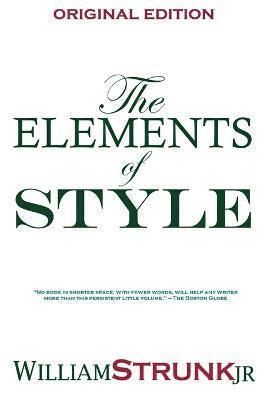
The original edition of the most trusted writer's guide to American English, this is the book that generations of writers have relied upon for timeless advice on grammar, diction, syntax, sentence construction, and other writing essentials. In brief and concise terms, author William Strunk, Jr., identifies the principal requirements of proper American English style and concentrates on the most often violated rules of composition.Originally published in 1918, this authoritative and engagingly written manual retains its immediacy and relevance. Strunk begins with the basic rules of usage, offering accessible explanations of correct punctuation and grammar. His advice on the principles of composition cites concrete examples of how to maintain clarity by eliminating redundancy and unnecessary embellishment. In addition, Strunk provides valuable pointers on avoiding common errors in the usage of words and expressions, and in spelling. The greatest book of its kind, this volume is a must for any student or writer.Reprint of the Harcourt and Brace, New York, 1920 edition.
Produktinformation
- Utgivningsdatum2005-07-28
- Mått136 x 216 x 4 mm
- Vikt100 g
- FormatHäftad
- SpråkEngelska
- Antal sidor64
- FörlagDover Publications Inc.
- ISBN9780486447988
Tillhör följande kategorier
Hoppa över listan
Mer från samma författare
Elements of Style by William Strunk jr. & How To Speak And Write Correctly by Joseph Devlin - Special Edition
William Strunk Jr, Joseph Devlin
Inbunden, 2006
399 kr
The Elements of Style (Classic Edition, 2017)
Richard De A'Morelli, William Strunk Jr
Häftad, 2016
209 kr
Elements of Style by William Strunk jr. & How To Speak And Write Correctly by Joseph Devlin - Special Edition
William Strunk Jr, Joseph Devlin
Häftad, 2006
219 kr
Chicago Manual of Style & The Elements of Style, Special Edition
William Strunk Jr, University of Chicago Press
Häftad, 2007
279 kr