
Del i serien Ecocritical Theory and Practice
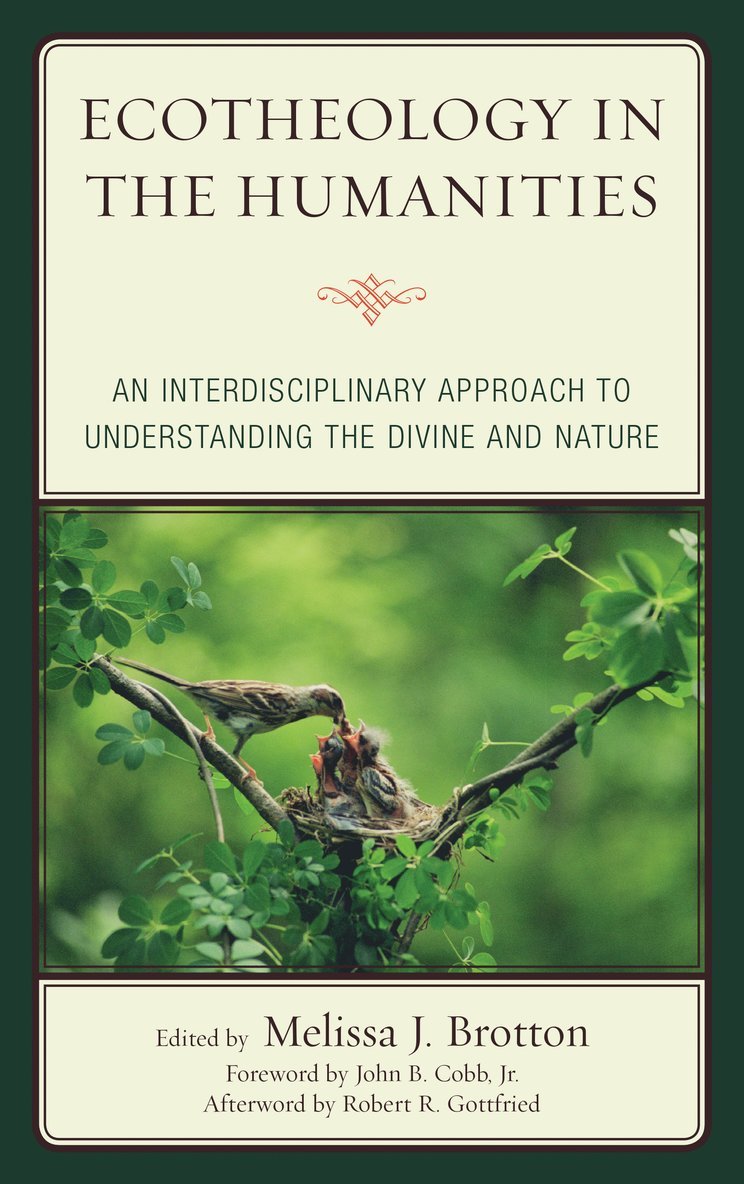
Ecotheology in the Humanities
An Interdisciplinary Approach to Understanding the Divine and Nature
Inbunden, Engelska, 2016
1 819 kr
Beställningsvara. Skickas inom 10-15 vardagar. Fri frakt för medlemmar vid köp för minst 249 kr.
This book is a collection of essays about the interaction between God, humans, and nature in the context of the environmental challenges and Biblical studies. Chapters include topics on creation care and Sabbath, sacramental approaches to earth care, classical and medieval cosmologies, ecotheodicy, how we understand the problem of nonhuman suffering in a world controlled by a good God, ecojustice, and how humans help to alleviate nonhuman suffering. The book seeks to provide a way to understand Judeo-Christian perspectives on human-to-nonhuman interaction through Biblical, literary, cultural, film, and music studies, and as such, offers an interdisciplinary approach with emphasis on the humanities, which provides a broader platform for ecotheology.
Produktinformation
- Utgivningsdatum2016-05-20
- Mått162 x 237 x 26 mm
- Vikt558 g
- FormatInbunden
- SpråkEngelska
- SerieEcocritical Theory and Practice
- Antal sidor272
- FörlagBloomsbury Publishing Plc
- ISBN9781498527934
Tillhör följande kategorier
Hoppa över listan







Du kanske också är intresserad av
- Nyhet
Del 3
- Nyhet
Del 11
- Nyhet
Del 6
- Nyhet
Del 4
Del 3
Del 1
Del 2
Del 7