
Del i serien Routledge Studies in the Modern World Economy
Economic Growth, Inequality and Crony Capitalism
The Case of Brazil
Häftad, Engelska, 2022
899 kr
Beställningsvara. Skickas inom 10-15 vardagar. Fri frakt för medlemmar vid köp för minst 249 kr.
Finns i fler format (1)
Researchers in international development have long argued that the high costs of doing business harms prosperity in developing countries, a claim that invites the question of why governments impose these costs and why societies fail to enact reforms reducing them. This book seeks to answer the question by looking at the case of Brazil, a large and highly unequal economy riddled with state-imposed transaction costs. By delving into the political dynamics underlying a costly business environment, this book provides the reader with novel insights into crony capitalism and inequality. It argues that the root cause of a costly business environment is the collusion between political actors, bureaucrats and business insiders. Politicians and bureaucrats relish their discretion over rules and policies as a power resource, since they can increase or decrease the costs of doing business faced by firms and sectors. Business insiders collude with government agents to access the loopholes that decrease the cost of doing business, thus gaining a competitive edge over outsiders. This gives the insiders weaker preferences for reforms that could decrease the overall cost of doing business. By pursuing their self-interest, these actors create a low-level equilibrium that perpetuates crony capitalism and inequality to the detriment of overall prosperity. The book makes its case with a sophisticated combination of formal modeling, quantitative analyses and in-depth case studies of tax policy and of the pharmaceutical and agricultural sectors in Brazil. Observers have declared the need for reforms that improve the business environment in developing countries for a long time. However, the findings presented in this book suggest they might have underestimated the challenge ahead. Scholars and policy-makers in international development, business politics and political economy will be interested in the innovative perspective of this book.
Produktinformation
- Utgivningsdatum2022-04-29
- Mått156 x 234 x 12 mm
- Vikt453 g
- FormatHäftad
- SpråkEngelska
- SerieRoutledge Studies in the Modern World Economy
- Antal sidor222
- FörlagTaylor & Francis Ltd
- ISBN9780367517021
Tillhör följande kategorier
Hoppa över listan


Mer från samma serie
Ageing and Effecting Long-term Care in China
Sabrina Ching Yuen Luk, Hui Zhang, Peter Pok-Man Yuen
Inbunden, 2021
3 279 kr
North Korea and Economic Integration in East Asia
Yeongseop Rhee, Patrick Messerlin
Inbunden, 2019
3 279 kr
Agricultural Growth, Productivity and Regional Change in India
Surendra Singh, Prem Chhetri
Häftad, 2019
589 kr
Hoppa över listan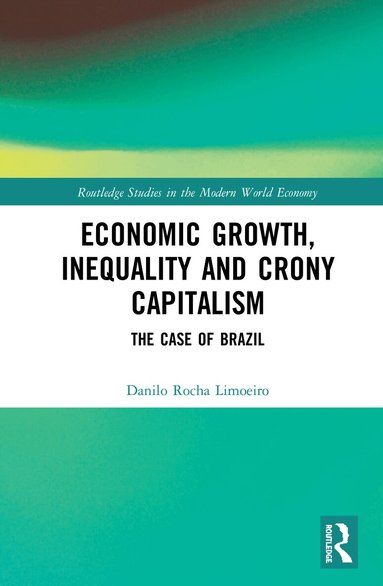









Du kanske också är intresserad av
- Nyhet
Del 3
- Nyhet
Del 7
- Nyhet
Del 3
- Nyhet
Del 4
- Nyhet
- Nyhet
- Nyhet
Del 11
- Nyhet
Del 6
- Nyhet
Del 1