
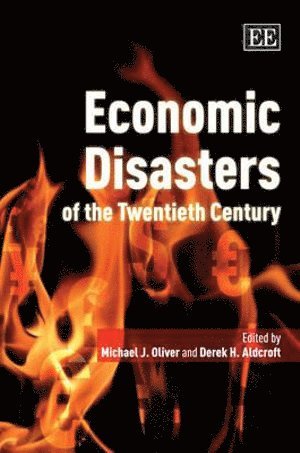
Economic Disasters of the Twentieth Century
Inbunden, Engelska, 2007
3 209 kr
Beställningsvara. Skickas inom 5-8 vardagar. Fri frakt för medlemmar vid köp för minst 249 kr.
How do we define an economic disaster? A difficult question. Most centuries would claim that they have had their share of disasters, but the twentieth century certainly seems to have been more prone to them than the previous one. A number of leading economists and economic historians assemble here to examine nine key disasters with international or global implications. The First and Second World Wars, the great depression, oil shocks, inflation, financial crises, stock market crashes, the collapse of the Soviet command economy and Third World disasters are discussed in this comprehensive book. The contributors subject these disasters to in-depth assessment, carefully considering their costs and impact on specific countries and regions, as well as assessing them in a global context. The book examines the legacy of economic disasters and asks whether economic disasters are avoidable or whether policymakers can learn from their mistakes. The book will appeal to a wide variety of social scientists, including those working in economic history, international relations, international political economy and geopolitics.
Produktinformation
- Utgivningsdatum2007-03-27
- Mått156 x 234 x undefined mm
- FormatInbunden
- SpråkEngelska
- FörlagEdward Elgar Publishing Ltd
- ISBN9781840645897
Tillhör följande kategorier
Hoppa över listan

Du kanske också är intresserad av
Exchange Rate Regimes in the Twentieth Century
Derek H. Aldcroft, Michael J. Oliver
Inbunden, 1998
2 549 kr
Exchange Rate Regimes in the Twentieth Century
Derek H. Aldcroft, Michael J. Oliver
Häftad, 2001
689 kr