
Early Years of Television and the BBC
Häftad, Engelska, 2024
349 kr
Skickas . Fri frakt för medlemmar vid köp för minst 249 kr.
Finns i fler format (1)
The British journalist C. P. Scott once said of television, 'Not a nice word. Greek and Latin mixed. Clumsy.' From its earliest days, when people began to discover ways of 'seeing at a distance' through to the multi-platform media environment of today, television has shown itself to be a resilient and adaptable method of communication. Based on detailed archival research, The Early Years of Television and the BBC explores the relationship between the BBC and television from the mid-1920s through to the outbreak of the Second World War. Jamie Medhurst provides an account of the oft-forgotten 30-line television service (1932 5) and re-evaluates the belief that Sir John Reith, the Corporation's Director-General until 1938, would have nothing to do with television.
Produktinformation
- Utgivningsdatum2024-02-12
- Mått156 x 234 x 11 mm
- Vikt300 g
- FormatHäftad
- SpråkEngelska
- Antal sidor208
- FörlagEdinburgh University Press
- ISBN9781399504119
Tillhör följande kategorier
Hoppa över listan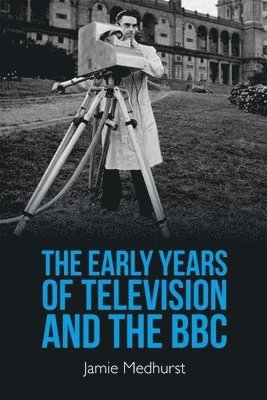






Du kanske också är intresserad av
- Nyhet
- Nyhet
- Nyhet
Del 11
Del 3
- Nyhet
Del 6
Del 1
- Nyhet
Del 2