
Del i serien Manchester Spenser
Early Modern English Sonnet
Ever in Motion
Häftad, Engelska, 2022
529 kr
Skickas . Fri frakt för medlemmar vid köp för minst 249 kr.
This volume questions and qualifies commonly accepted assumptions about the early modern English sonnet: that it was a strictly codified form, most often organised in sequences, which only emerged at the very end of the sixteenth century and declined as fast as it had bloomed, and that minor poets merely participated in the sonnet fashion by replicating established conventions. Drawing from book history and relying on close reading and textual criticism, this collection offers a more nuanced account of the history of the sonnet. It discusses how sonnets were written, published and received in England as compared to mainland Europe, and explores the works of major (Shakespeare, Sidney, Spenser) and minor (Barnes, Harvey) poets alike. Reflecting on current editorial practices, it also provides the first modern edition of an early seventeenth-century Elizabethan miscellany including sonnets presumably by Sidney and Spenser.
Produktinformation
- Utgivningsdatum2022-06-28
- Mått156 x 234 x 13 mm
- Vikt345 g
- FormatHäftad
- SpråkEngelska
- SerieManchester Spenser
- Antal sidor240
- FörlagManchester University Press
- ISBN9781526163837
Tillhör följande kategorier
Hoppa över listan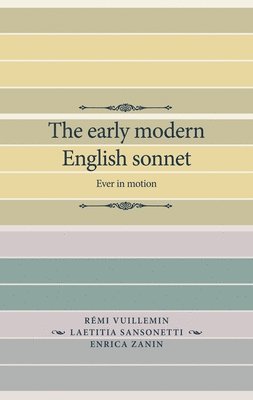







Du kanske också är intresserad av
Del 1
Language Commonality and Literary Communities in Early Modern England
Laetitia Sansonetti, Remi Vuillemin
Inbunden, 2022
1 949 kr
Del 12
- Nyhet
Del 3
- Nyhet
Del 11
- Nyhet
- Nyhet
Del 6
- Nyhet
Del 1
- Nyhet
Del 4