
Dynamics of Identification and Conflict
Anthropological Encounters
Häftad, Engelska, 2025
769 kr
Beställningsvara. Skickas inom 5-8 vardagar. Fri frakt för medlemmar vid köp för minst 249 kr.
Finns i fler format (1)
Dealing with the dynamics of identification and conflict, this book uses theoretical orientations ranging from political ecology to rational choice theory, interpretive approaches, Marxism and multiscalar analysis. Case studies set in Africa, Europe and Central Asia are grouped in three sections devoted to pastoralism, identity and migration. What connects all of these anthropological explorations is a close focus on processes of identification and conflict at the level of particular actors in relation to the behaviour of large aggregates of people and to systemic conditions.
Produktinformation
- Utgivningsdatum2025-03-01
- Mått152 x 229 x 24 mm
- Vikt594 g
- FormatHäftad
- SpråkEngelska
- Antal sidor413
- FörlagBerghahn Books
- ISBN9781836950493
Tillhör följande kategorier
Hoppa över listan


Mer från samma författare
State and the Paradox of Customary Law in Africa
Olaf Zenker, Markus Virgil Hoehne
Inbunden, 2018
3 019 kr
Del 6
Borders and Borderlands as Resources in the Horn of Africa
Markus Virgil Hoehne, Dereje Feyissa, Markus Virgil Hoehne
Inbunden, 2010
1 439 kr
Del 6
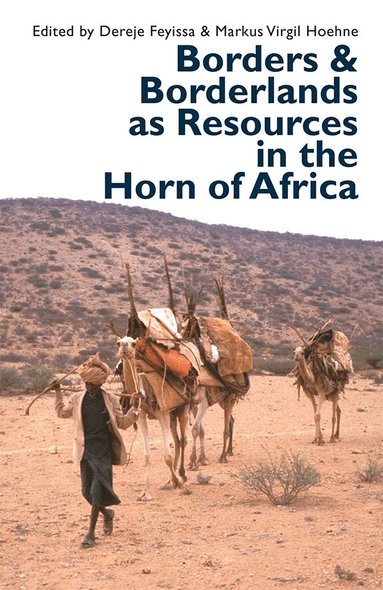
Borders and Borderlands as Resources in the Horn of Africa
Dereje Feyissa, Markus Virgil Hoehne
Häftad, 2015
389 kr
Hoppa över listan





Du kanske också är intresserad av
Dynamics of Identification and Conflict
Markus Virgil Hoehne, Echi Christina Gabbert, John R. Eidson
Inbunden, 2022
2 759 kr
Del 23
Lands of the Future
Echi Christina Gabbert, Fana Gebresenbet, John G. Galaty, Günther Schlee
Inbunden, 2021
2 759 kr
Del 23
Lands of the Future
Echi Christina Gabbert, Fana Gebresenbet, John G. Galaty, Günther Schlee
Häftad, 2023
389 kr
Del 6
Borders and Borderlands as Resources in the Horn of Africa
Dereje Feyissa, Markus Virgil Hoehne
Häftad, 2015
389 kr
State and the Paradox of Customary Law in Africa
Olaf Zenker, Markus Virgil Hoehne
Inbunden, 2018
3 019 kr
Del 6
Borders and Borderlands as Resources in the Horn of Africa
Markus Virgil Hoehne, Dereje Feyissa, Markus Virgil Hoehne
Inbunden, 2010
1 439 kr
- Nyhet
Del 7
- Nyhet
Del 4
- Nyhet
Del 6