
Dwelling on the Green Line
Privatize and Rule in Israel/Palestine
Häftad, Engelska, 2024
659 kr
Beställningsvara. Skickas inom 5-8 vardagar. Fri frakt för medlemmar vid köp för minst 249 kr.
Finns i fler format (1)
Concealed within the walls of settlements along the Green-Line, the border between Israel and the occupied West-Bank, is a complex history of territoriality, privatisation and multifaceted class dynamics. Since the late 1970s, the state aimed to expand the heavily populated coastal area eastwards into the occupied Palestinian territories, granting favoured groups of individuals, developers and entrepreneurs the ability to influence the formation of built space as a means to continuously develop and settle national frontiers. As these settlements developed, they became a physical manifestation of the relationship between the political interest to control space and the ability to form it. Telling a socio-political and economic story from an architectural and urban history perspective, Gabriel Schwake demonstrates how this production of space can be seen not only as a cultural phenomenon, but also as one that is deeply entangled with geopolitical agendas.
Produktinformation
- Utgivningsdatum2024-07-04
- Mått150 x 228 x 15 mm
- Vikt440 g
- FormatHäftad
- SpråkEngelska
- Antal sidor296
- FörlagCambridge University Press
- ISBN9781009069397
Tillhör följande kategorier
Hoppa över listan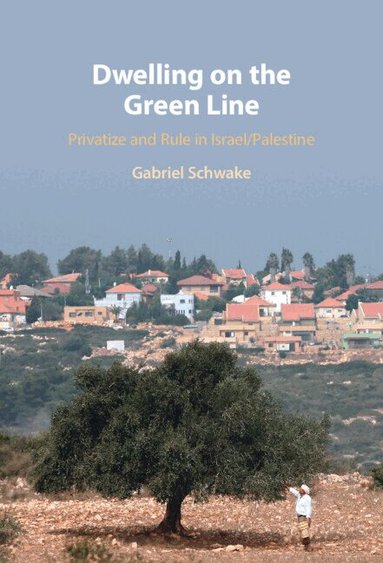





Du kanske också är intresserad av
- Nyhet
Del 3
- Nyhet
Del 6
- Nyhet
Del 4
- Nyhet
Del 7
- Nyhet
- Nyhet
Del 11
- Nyhet
- Nyhet
Del 1