
Del 100
Dispersed but not Destroyed
A History of the Seventeenth-Century Wendat People
Inbunden, Engelska, 2013
1 519 kr
Skickas . Fri frakt för medlemmar vid köp för minst 249 kr.
Finns i fler format (1)
Situated within the area stretching from Georgian Bay in the north to Lake Simcoe in the east, the Wendat Confederacy flourished for two hundred years. By the mid-seventeenth century, however, Wendat society was under attack. Disease and warfare plagued the people, culminating in a series of Iroquois assaults that led to their ultimate dispersal.Yet the Wendat did not disappear, as many historians have maintained. In Dispersed but Not Destroyed, Kathryn Magee Labelle examines the creation of a Wendat diaspora in the wake of the Iroquois attacks. In the latter half of the century, Wendat leaders continued to appear at councils, trade negotiations, and diplomatic ventures, relying on established customs of accountability and consensus. Women also continued to assert their authority during this time, guiding their communities toward paths of cultural continuity and accommodation. Turning the story of Wendat conquest on its head, this book demonstrates the resiliency of the Wendat people and writes a new chapter in North American history.
Produktinformation
- Utgivningsdatum2013-04-29
- Mått152 x 229 x 24 mm
- Vikt550 g
- FormatInbunden
- SpråkEngelska
- Antal sidor288
- FörlagUniversity of British Columbia Press
- ISBN9780774825559
- UtmärkelserShort-listed for Aboriginal History Prize, Canadian Historical Association 2014 (Canada)
Tillhör följande kategorier
Hoppa över listan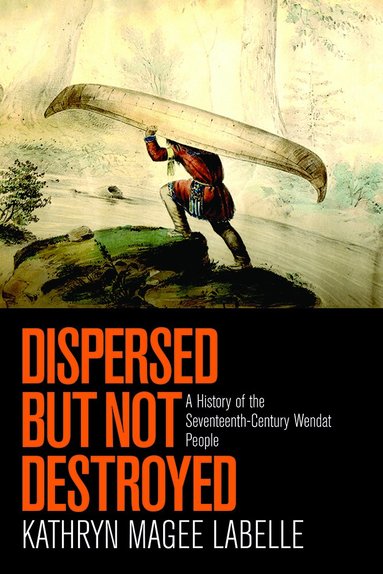





Du kanske också är intresserad av
Del 100
- Nyhet
Del 3
- Nyhet
Del 7
- Nyhet
Del 4
- Nyhet
- Nyhet
Del 6
- Nyhet
Del 11
- Nyhet
- Nyhet
Del 3