
Del i serien Disability, Culture, and Equity Series
Discipline Disparities Among Students with Disabilities
Creating Equitable Environments
Häftad, Engelska, 2022
869 kr
Beställningsvara. Skickas inom 3-6 vardagar. Fri frakt för medlemmar vid köp för minst 249 kr.
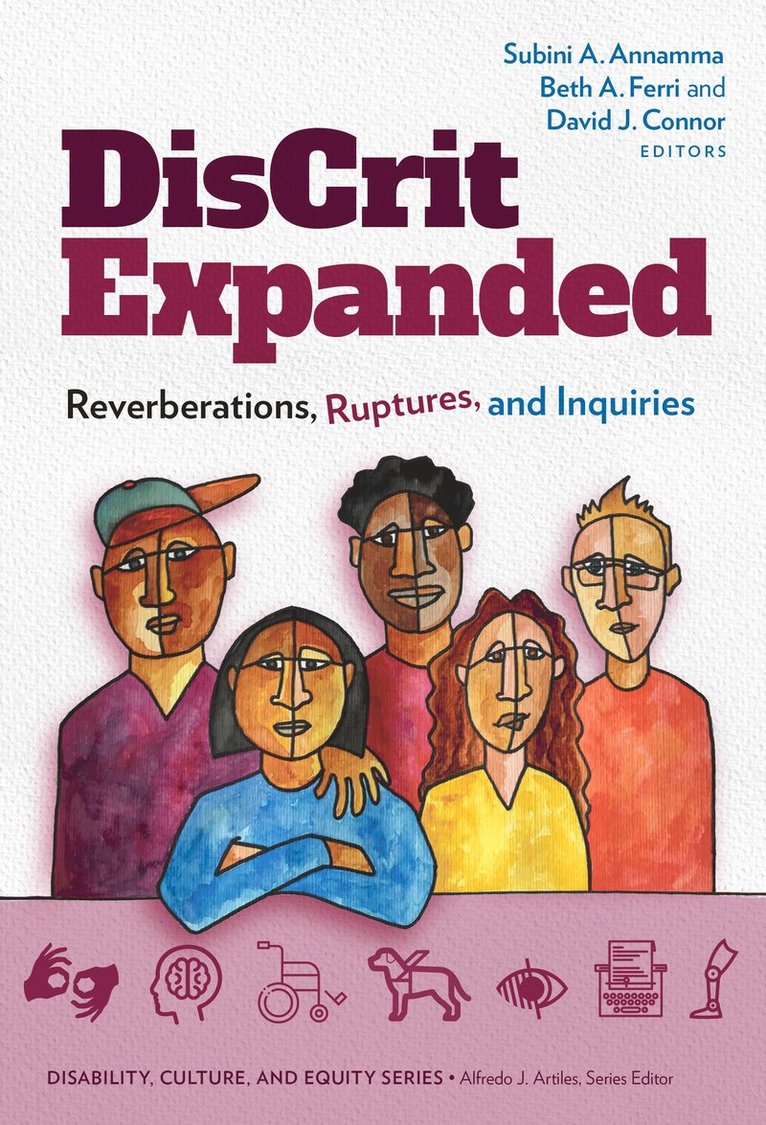
The decades-long problem of disproportionate school discipline and school-based arrests of students with disabilities, particularly those who also identify as Black or Native American, is explored in this authoritative book. A team of interdisciplinary scholars, attorneys, and education practitioners focus on how disparities based on disability intersect with race and ethnicity, why such disparities occur, and the impacts these disparities have over time. A DisCrit and research-based perspective frames key issues at the beginning of the book, and the chapters that follow suggest promising practices and approaches to reduce the inequitable use of school discipline and increase the use of evidence-supported alternatives to prevent and respond to behaviors of students with disabilities. The final chapter recommends future research, policy, legal, and practice goals, suggesting an agenda for moving the field forward in years to come.Book Features:Explores how students' disabilities, race, ethnicity, and gender intersect to explain how they are negatively impacted by the overuse of suspension, expulsion, and school policing. Focuses on practical changes to the approaches of research, practice, and policy to remedy this long-standing problem.Presents an interdisciplinary approach, bringing together the expertise of scholars, attorneys, and educational practitioners to address the issues from a variety of perspectives.Draws on DisCrit (Disability Studies and Critical Race Theory) to explore the intersection of race and ethnicity, particularly among students who are Black or from a Native American background and are considered "disabled."
Produktinformation
- Utgivningsdatum2022-05-27
- Mått154 x 226 x 20 mm
- Vikt399 g
- FormatHäftad
- SpråkEngelska
- SerieDisability, Culture, and Equity Series
- Antal sidor288
- FörlagTeachers' College Press
- MedarbetareKent McIntosh
- ISBN9780807766422
Tillhör följande kategorier
Hoppa över listan


Du kanske också är intresserad av
Dismantling Disproportionality in Practice
María G. Hernández, Reed Swier, Hui-Ling S. Malone
Häftad, 2024
559 kr
Teaching for Inclusion
Srikala Naraian, Alfredo J Artiles, Elizabeth B Kozleski
Inbunden, 2017
1 449 kr