
Del i serien Studies in Major Literary Authors
D.H. Lawrence's Border Crossing
Colonialism in His Travel Writing and Leadership Novels
Häftad, Engelska, 2014
1 359 kr
Beställningsvara. Skickas inom 10-15 vardagar. Fri frakt för medlemmar vid köp för minst 249 kr.
Finns i fler format (1)
D.H. Lawrence's Border Crossing builds upon developments within postcolonial theory to argue for a reconsideration of the concept of "spirit of place" in D. H. Lawrence’s travel books and "leadership" novels – works that record Lawrence’s various encounters with racial and geographical "others." Exploring his relationship to colonialism, Dr. Oh shows how Lawrence’s belief in different "spirits" belonging to these disparate places enables him to transcend the hierarchies between metropolis and colony, between civilized and "primitive" worlds.
Produktinformation
- Utgivningsdatum2014-06-09
- Mått156 x 234 x undefined mm
- Vikt294 g
- FormatHäftad
- SpråkEngelska
- SerieStudies in Major Literary Authors
- Antal sidor160
- FörlagTaylor & Francis Ltd
- ISBN9780415762830
Tillhör följande kategorier
Hoppa över listan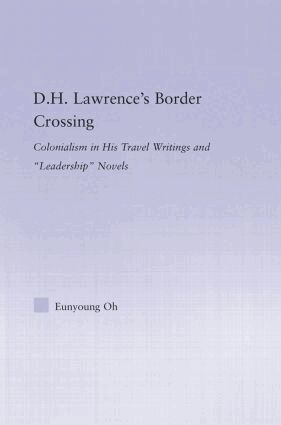









Du kanske också är intresserad av
- Nyhet
Del 3
- Nyhet
Del 1
- Nyhet
Del 7
- Nyhet
Del 4
- Nyhet
- Nyhet
Del 6
- Nyhet
Del 11