
Del i serien Institution for Social and Policy Studies
Democratic Justice
Häftad, Engelska, 2001
719 kr
Beställningsvara. Skickas inom 5-8 vardagar. Fri frakt för medlemmar vid köp för minst 249 kr.
How and why democracy and justice and must be pursued together Democracy and justice are often mutually antagonistic ideas, but in this innovative book Ian Shapiro shows how and why they should be pursued together. Justice must be sought democratically if it is to garner legitimacy in the modern world, he claims, and democracy must be justice-promoting if it is to sustain allegiance over time. Democratic Justice meets these criteria, offering an attractive vision of a practical path to a better future. Wherever power is exercised in human affairs, Shapiro argues, the lack of democracy will be experienced as injustice. The challenge is to democratize social relations so as to diminish injustice, but to do this in ways that are compatible with people’s values and goals. Shapiro shows how this can be done in different phases of the human life cycle, from childhood through the adult worlds of work and domestic life, retirement, old age, and approaching death. He spells out the implications for pressing debates about authority over children, the law of marriage and divorce, population control, governing the firm, basic income guarantees, health insurance, retirement policies, and decisions made by and for the infirm elderly. This refreshing encounter between political philosophy and practical politics will interest all those who aspire to bequeath a more just world to our children than the one we have inherited.
Produktinformation
- Utgivningsdatum2001-03-20
- Mått156 x 235 x 21 mm
- Vikt517 g
- FormatHäftad
- SpråkEngelska
- SerieInstitution for Social and Policy Studies
- Antal sidor352
- FörlagYale University Press
- ISBN9780300089080
Tillhör följande kategorier
Hoppa över listan








Mer från samma författare
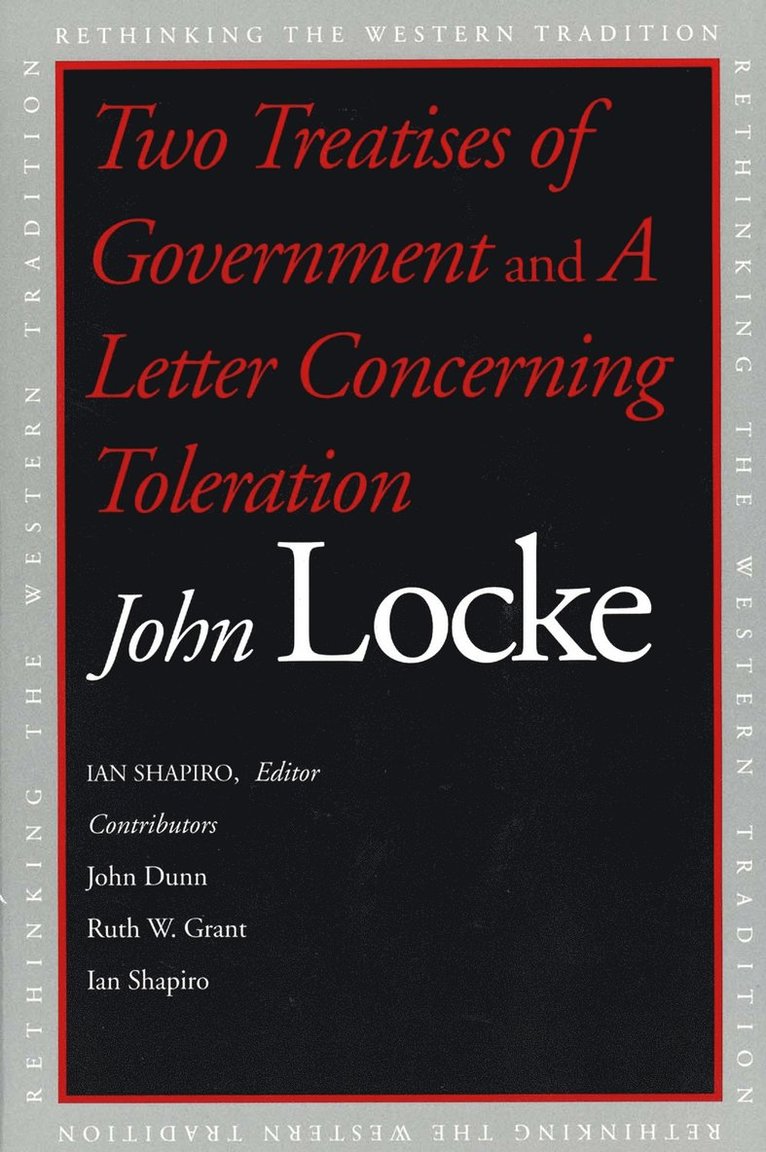
Two Treatises of Government and A Letter Concerning Toleration
John Locke, Ian Shapiro
Häftad, 2003
319 kr
Responsible Parties – Saving Democracy from Itself
Frances McCall Rosenbluth, Ian Shapiro
Inbunden, 2018
359 kr
Hoppa över listan








Mer från samma serie
Quantitative Evaluation of HIV Prevention Programs
Edward H. Kaplan, Ron Brookmeyer
Inbunden, 2002
1 369 kr
Yale Guide to Careers in Medicine and the Health Professions
Robert Donaldson Jr., Kathleen Lundgren, Howard Spiro
Häftad, 2003
949 kr
Hoppa över listan

Du kanske också är intresserad av
Progressives' Century
Stephen Skowronek, Stephen Skowronek, Stephen M. Engel, Bruce A. Ackerman
Häftad, 2017
1 009 kr
Quantitative Evaluation of HIV Prevention Programs
Edward H. Kaplan, Ron Brookmeyer
Inbunden, 2002
1 369 kr
- Nyhet
Del 3
Yale Guide to Careers in Medicine and the Health Professions
Robert Donaldson Jr., Kathleen Lundgren, Howard Spiro
Häftad, 2003
949 kr