
Del i serien Studies in Philosophy and Religion
Democracy and the “Kingdom of God”
Inbunden, Engelska, 1993
2 149 kr
Beställningsvara. Skickas inom 10-15 vardagar. Fri frakt för medlemmar vid köp för minst 249 kr.
Finns i fler format (1)
There is a consensus among Christian theologians that the symbol of the "kingdom of God" inherited from the Judaic tradition, is the key to understanding Christianity, but theologians have for millenia differed among themselves as to the interpretation of this symbol. Political ramifications of, or reactions to, this Judaeo-Christian idea have included the Holy Roman Empire, the Crusades, the "Third Rome", American manifest destiny, Zionism, the Third Reich, and Liberation Theology. This text focuses on the question of whether the Kingdom of God is necessarily related to certain political implementations, and its possible implications for democracy and democratic theory. It examines the development of the symbol in the Old and New Testaments, the diversity of related theological interpretations and political concomitants, and the significance of the "Kingdom of God" in the development of present and future political formations and political theory.
Produktinformation
- Utgivningsdatum1993-02-28
- Mått155 x 235 x 19 mm
- Vikt565 g
- FormatInbunden
- SpråkEngelska
- SerieStudies in Philosophy and Religion
- Antal sidor252
- Upplaga1993
- FörlagKluwer Academic Publishers
- ISBN9780792321064
Tillhör följande kategorier
Hoppa över listan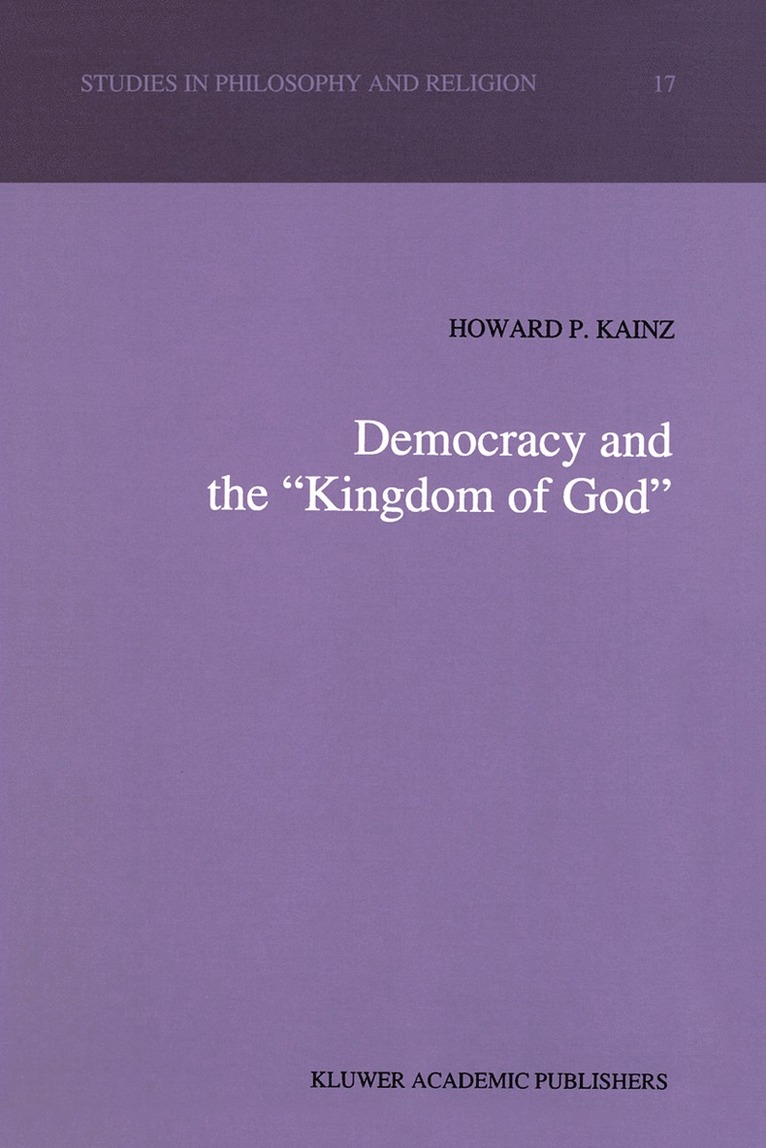
Du kanske också är intresserad av
Del 17
Del 11
Beyond Theism and Atheism: Heidegger’s Significance for Religious Thinking
R.S. Gall
Inbunden, 1987
1 439 kr