
Del i serien Political Theory and Contemporary Philosophy
Democracy and Its Others
Häftad, Engelska, 2017
709 kr
Beställningsvara. Skickas inom 10-15 vardagar. Fri frakt för medlemmar vid köp för minst 249 kr.
Finns i fler format (1)
Today's unprecedented levels of human migration present urgent challenges to traditional conceptualizations of national identity, nation-state sovereignty, and democratic citizenship. Foreigners are commonly viewed as outsiders whose inclusion within or exclusion from “the people” of the democratic state rests upon whether they benefit or threaten the unity of the nation. Against this instrumentalization of the foreigner, this book traces the historical development of the concepts of sovereignty and foreignness through the thought of philosophers such as Plato, Locke, Hobbes, Rousseau, Derrida, and Benhabib in order to show that foreignness is a structural feature of sovereignty that cannot be purged or assimilated. Understood in this light, foreignness allows for new forms of democratic political unity to be imagined that reject local practices which deprive individuals of political membership solely on the basis of national citizenship. This cosmopolitan model for citizenship provides a novel conceptual framework that simultaneously upholds the legal importance of democratic citizenship for political justice while ceaselessly contesting the exclusionary logic of the nation-state that reserves democratic rights for members of the nation alone.
Produktinformation
- Utgivningsdatum2017-08-24
- Mått148 x 226 x 18 mm
- Vikt460 g
- FormatHäftad
- SpråkEngelska
- SeriePolitical Theory and Contemporary Philosophy
- Antal sidor320
- FörlagBloomsbury Publishing PLC
- ISBN9781350061095
Tillhör följande kategorier
Hoppa över listan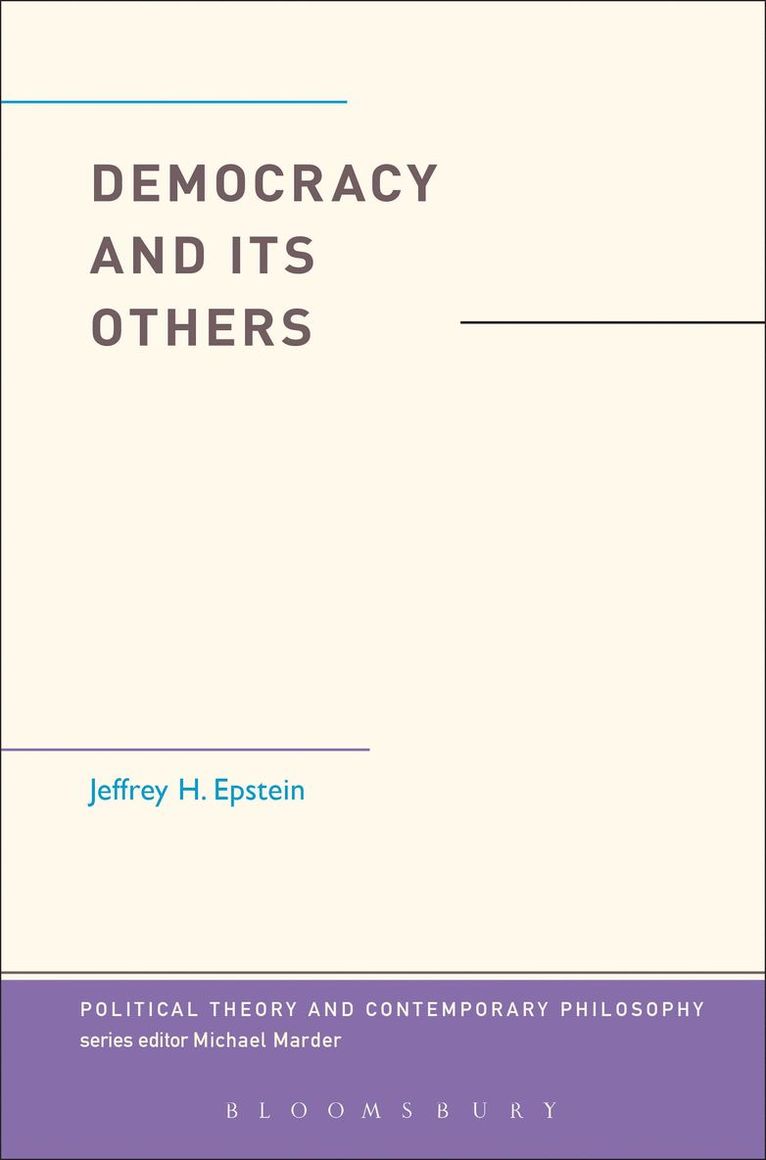









Du kanske också är intresserad av
- Nyhet
Del 11
- Nyhet
Del 3
- Nyhet
- Nyhet
Del 6
- Nyhet
Del 4
Del 1
Del 3
Del 2
- Nyhet