
Del i serien Decolonizing Research series
Decolonizing Planning
Power and Knowledge in the Informal City
Inbunden, Engelska, 2025
2 569 kr
Beställningsvara. Skickas inom 5-8 vardagar. Fri frakt för medlemmar vid köp för minst 249 kr.
This pioneering book challenges dominant technocratic approaches to planning, focusing on the transformative potential of innovative, alternative, and community-centered initiatives. It outlines planning processes founded on endogenous knowledge, ontologies, and social relations that point towards decolonizing urban pedagogy and practice.With contributions from scholars and their community partners working in marginalized societies across the globe, the book presents diverse approaches to planning from transnational and transdisciplinary perspectives. Chapters draw on detailed case studies to examine a wide range of methodologies and praxes, including planning derived from Indigenous epistemologies and the role of grassroots planners. They cut across traditional categories, modes of planning, and regional divisions, rethinking dominant paradigms and highlighting the value of decolonial thinking in the field.Students and scholars in planning, urban geography, development studies and urban design will greatly benefit from the cutting-edge insights presented in this book. It is also a useful resource for planning practitioners, as well as professionals in international development agencies and NGOs working with low-income communities, particularly in the Global South.
Produktinformation
- Utgivningsdatum2025-10-03
- Mått230 x 20 x 160 mm
- Vikt555 g
- FormatInbunden
- SpråkEngelska
- SerieDecolonizing Research series
- FörlagEdward Elgar Publishing Ltd
- ISBN9781035319961
Tillhör följande kategorier
Hoppa över listan


Du kanske också är intresserad av
- Nyhet
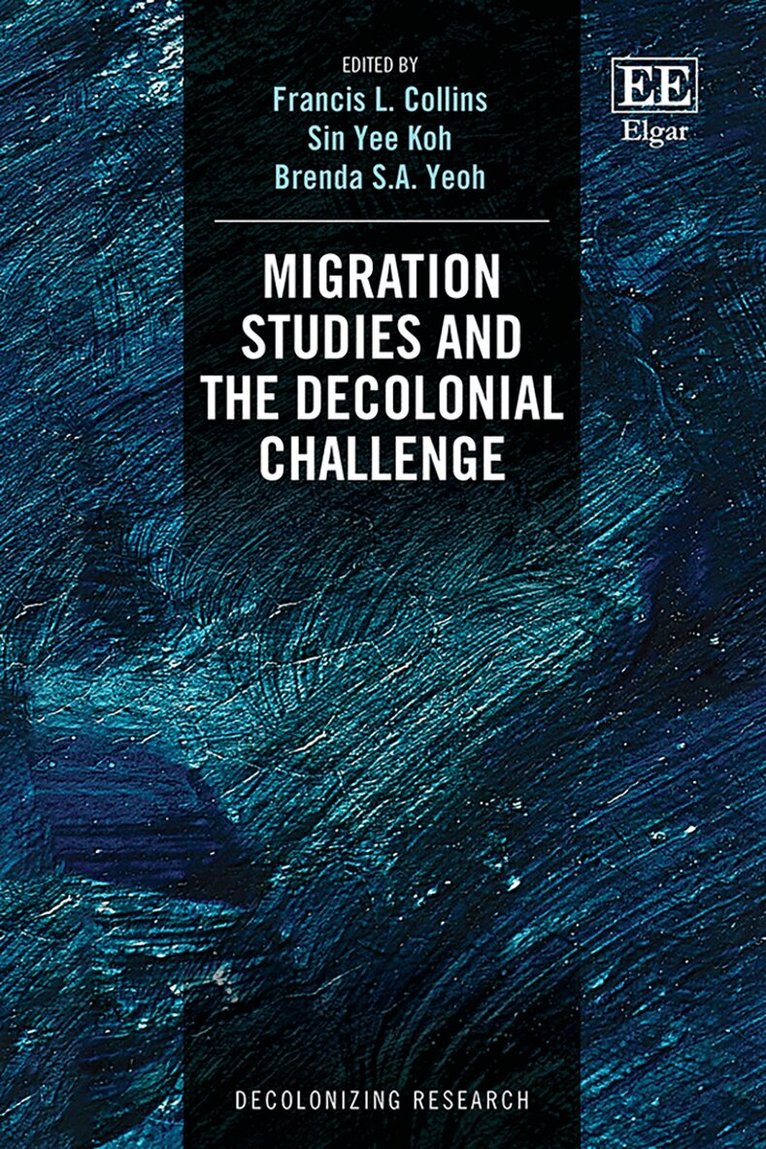
Migration Studies and the Decolonial Challenge
Francis L. Collins, Sin Yee Koh, Brenda S.A. Yeoh
Inbunden, 2026
2 899 kr
- Nyhet
Del 3
- Nyhet
Del 11
- Nyhet
Del 6