
Decolonizing Ear
Documentary Film Disrupts the Archive
Inbunden, Engelska, 2022
869 kr
Beställningsvara. Skickas inom 5-8 vardagar. Fri frakt för medlemmar vid köp för minst 249 kr.
The recording of Indigenous voices is one of the most well-known methods of colonial ethnography. In A Decolonizing Ear, Olivia Landry offers a sceptical account of listening as a highly mediated and extractive act, influenced by technology and ideology. Returning to early ethnographic practices of voice recording and archiving at the turn of the twentieth century, with a particular focus on the German paradigm, she reveals the entanglement of listening in the logic of Euro-American empire and the ways in which contemporary films can destabilize the history of colonial sound reproduction.Landry provides close readings of several disparate documentary films from the late 1990s and the early 2000s. The book pays attention to technology and knowledge production to examine how these films employ recordings plucked from different colonial sound archives and disrupt their purposes. Drawing on film and documentary studies, sound studies, German studies, archival studies, postcolonial studies, and media history, A Decolonizing Ear develops a method of decolonizing listening from the insights provided by the films themselves.
Produktinformation
- Utgivningsdatum2022-11-09
- Mått152 x 234 x 25 mm
- Vikt460 g
- FormatInbunden
- SpråkEngelska
- Antal sidor232
- FörlagUniversity of Toronto Press
- ISBN9781487544850
Tillhör följande kategorier
Hoppa över listan

Mer från samma författare
Del 24
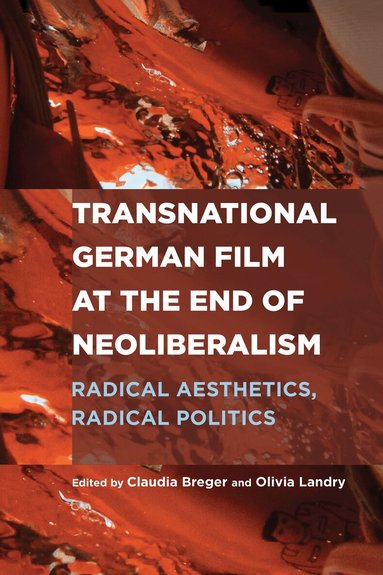
Transnational German Film at the End of Neoliberalism
Claudia Breger, Olivia Landry
Inbunden, 2024
1 699 kr
Hoppa över listan

Du kanske också är intresserad av
Del 24
Transnational German Film at the End of Neoliberalism
Claudia Breger, Olivia Landry
Inbunden, 2024
1 699 kr
- Nyhet
Del 3
- Nyhet
Del 6
- Nyhet
Del 11
- Nyhet